Presentation Slides
Chinese Medicine Research Hub
Review Article
A 6-week course of acupuncture proves as effective as 6-month drug prophylaxis for migraines, with specific Chinese point selection and stimulation appearing less important.
2022 Expert Review of Neurotherapeutics Role of acupuncture in the treatment of migraine
Endres HG, Diener HC, Molsberger A
Chinese Medicine Research Hub
Randomised Controlled Trial
Acupuncture could be as effective as pharmacological drugs for migraine prevention, with improved patient compliance and fewer adverse events.
2021 Frontiers in Neurology A Randomized Clinical Trial on Acupuncture Versus Best Medical Therapy in Episodic Migraine Prophylaxis: The ACUMIGRAN Study
Giannini G, Favoni V, Merli E, Nicodemo M, Torelli P, Matrà A, Giovanardi CM, Cortelli P, Pierangeli G, Cevoli S
Chinese Medicine Research Hub
Systematic Review
Acupuncture reduced more headache days and the times of using painkiller and was more effective in reducing the frequency and degree of headache than western medicine and sham acupuncture.
2020 Pain Research & Management Effectiveness and Safety of Acupuncture for Migraine: An Overview of Systematic Reviews
Li YX, Xiao XL, Zhong DL, Luo LJ, Yang H, Zhou J, He MX, Shi LH, Li J, Zheng H, Jin RJ
Chinese Medicine Research Hub
Systematic Review
There is growing evidence that acupuncture is just as effective and has fewer side effects than many of the standard pharmaceutical agents that are currently used.
2019 Headache Systematic Review: Acupuncture vs Standard Pharmacological Therapy for Migraine Prevention
Niushen Zhang, Tim Houle, Nada Hindiyeh, & Sheena K. Aurora
Chinese Medicine Research Hub
Systematic Review
Acupuncture has the advantage for acute and preventive treatment of migraine in pain improvement and safety.
2019 Pain Research & Management An Overview of Systematic Reviews of Randomized Controlled Trials on Acupuncture Treating Migraine
Xia-tian Zhang, Xin-yi Li, Chen Zhao, Ye-yin Hu, Yi-yi Lin, He-qing Chen, Zhao-feng Shi, Xiao-yu Zhang, Hong-cai Shang, Gui-hua Tian
Chinese Medicine Research Hub
Review Article
Currently, acupuncture is considered to be a safe, helpful, and available alternative option for patients who have not responded to or complied with conventional pharmacotherapy.
2019 Neuropediatrics Acupuncture in Adult and Pediatric Headache: A Narrative Review
Doll, E., Threlkeld, B., Graff, D., Clemons, R., Mittel, O., Sowell, M. K.
Chinese Medicine Research Hub
Systematic Review
Acupuncture has a clinically relevant effect on chronic pain that persists over time. Referral for acupuncture treatment is a reasonable option for chronic pain patients.
2017 The Journal of Pain Acupuncture for Chronic Pain: Update of an Individual Patient Data Meta-Analysis
Vickers, Andrew J. et al.
Chinese Medicine Research Hub
Randomised Controlled Trial
A 14-session course of needling at Fengchi is relatively safe for treating posterior circulation ischemia with vertigo.
2016 Neural Regeneration Research Safety of different acupuncture manipulations for posterior circulation ischemia with vertigo
Wen Y, Zhang C, Zhao Xf, Deng Sz, He S, Huang Lh, Tian G, Meng Zh
Executive Summary
Write an executive summary in the form of a blog article on the topic of "Research into Chinese medicine treatment for Headache & Migraine" summarising the research below and using language that can be easily understood by patients and avoiding medical jargon using a professional and caring tone of voice.
Write an executive summary in the form of a blog article on the topic of "Researched Chinese medicine treatments for Headache & Migraine" summarising the research below in an objective and easy to understand way, and using language that can be easily understood by patients. Group the article into Chinese medicine treatments first, followed by nutrition and other treatments. Avoid using medical jargon and use a professional and caring tone of voice.
Write me a concise but easy to understand executive summary on the topic of "Chinese medicine treatments for Headache & Migraine" based on the following research that I will give you. Your summary should be 2 paragraphs long in Australian English spelling and include references to the studies.
A Review Article published in 2022 in the journal Expert Review of Neurotherapeutics found that A 6-week course of acupuncture proves as effective as 6-month drug prophylaxis for migraines, with specific Chinese point selection and stimulation appearing less important. The study began by revisiting previous research on acupuncture as a treatment for headache, finding shortcomings in many of these studies. It explored the influence of acupuncture on migraine and how it potentially functions. The methodology involved running several large, randomized trials comparing the use of acupuncture to conventional prophylactic drug treatments, spanning a time frame of six weeks to six months, respectively.
In the discussion of the results, it was found that the 6-week acupuncture treatment was just as effective in treating migraines as the 6-month drug treatment. Specific attributes of the acupuncture treatment, such as the selection and stimulation of Chinese points and the depth of the needles, were found to have lower significance than traditionally believed. The paper therefore suggested the integration of acupuncture into existing migraine therapy protocols.
A Randomised Controlled Trial published in 2021 in the journal Frontiers in Neurology found that Acupuncture could be as effective as pharmacological drugs for migraine prevention, with improved patient compliance and fewer adverse events. In the study, patients experiencing migraines who hadn't undergone preventive treatment in the prior 3 months were randomly divided into two groups. Group A underwent 12 acupuncture sessions, while Group B received a range of suitable medications for each individual. The frequency of headaches was compared at the beginning and end of treatment, and both groups were assessed after three and six months post-treatment.
Results highlighted that both treatments led to a significant decrease in headache frequency. Of the patients, around 34% saw a 50% reduction of headache days post-treatment. The improvements seen at the end of treatment were maintained in 57.3% of patients three months after and in 38.8% of patients six months after, notably in the acupuncture group. Based on this data, acupuncture can be seen as an effective alternative for migraine prophylaxis.
A Systematic Review published in 2020 in the journal Pain Research & Management found that Acupuncture reduced more headache days and the times of using painkiller and was more effective in reducing the frequency and degree of headache than western medicine and sham acupuncture. Based on high quality of evidence, we conclude that acupuncture is more effective and safer than medication or sham acupuncture in the treatment of migraine. However, the methodological quality, risk of bias, and reporting quality of SRs in acupuncture for migraine still needs improvement in future.
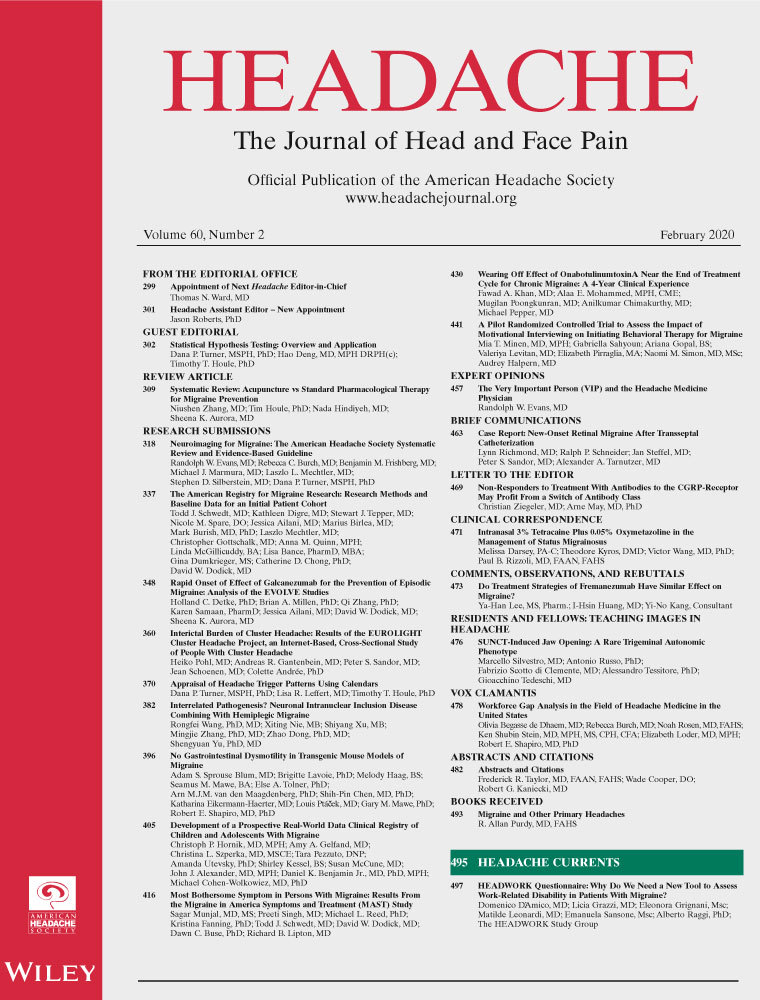
A Systematic Review published in 2019 in the journal Headache found that There is growing evidence that acupuncture is just as effective and has fewer side effects than many of the standard pharmaceutical agents that are currently used. Out of the 706 search results, 7 clinical trials, with a total of 1430 participants, met inclusion criteria for trials comparing the effectiveness of acupuncture to standard pharmacologic treatment. Several of the studies showed acupuncture to be more effective than standard pharmacological treatments for migraine prevention; however, methodological heterogeneity precluded aggregation of these data.
A Systematic Review published in 2019 in the journal Pain Research & Management found that Acupuncture has the advantage for acute and preventive treatment of migraine in pain improvement and safety. This overview included a considerable number of systematic reviews/meta analyses (SR/MAs), illustrating that acupuncture has the advantage in pain improvement of VAS score, headache days/frequency, analgesic use and efficacy of response rate, and effective rate according to the present evidence.
In terms of conclusion, the results of all 15 (100%) SR/MAs were positive. For treatment, 6 SR/MAs reported acupuncture had superiority relative to drugs; 4 SR/MAs reported acupuncture had superiority relative to sham acupuncture, drugs; 3 SR/MAs reported acupuncture had superiority relative to sham acupuncture; 1 SR/MA reported acupuncture had superiority relative to drugs, other TCM treatments. 1 SR/MA reported that acupuncture had superiority in treating migraine, but did not mention the control group in the conclusions.
Based on previous evidence we reviewed, we supposed acupuncture might be a kind of available treatment for migraine in preventive or acute treatment, but in consideration of low methodological quality of present SR/MAs or RCTs of acupuncture for migraine, we need more high-quality evidence to demonstrate the effect of acupuncture for migraine.
A Review Article published in 2019 in the journal Neuropediatrics found that Currently, acupuncture is considered to be a safe, helpful, and available alternative option for patients who have not responded to or complied with conventional pharmacotherapy. The authors conducted an exhaustive review of existing literature exploring the use of acupuncture to address migraine headaches in children. This review encompassed understanding the neurobiological mechanisms of acupuncture, studies on adult headaches, pediatric headache studies, consideration of acupuncture's safety, and its application in other health conditions present in children.
The findings of this review suggested that acupuncture emerges as a safe and effective treatment option for migraine in children. Evidence proposes that it can be effectively integrated into the primary treatment regime to reduce the child's discomfort and pain. The effectiveness of acupuncture comes with the added advantage of being safe, with negligible risks, especially important when dealing with young patients. These insights support acupuncture to be seriously considered as an auxiliary treatment strategy for migraines in children.
A Systematic Review published in 2017 in the journal The Journal of Pain found that Acupuncture has a clinically relevant effect on chronic pain that persists over time. Referral for acupuncture treatment is a reasonable option for chronic pain patients. We included randomized trials of acupuncture needling versus either sham acupuncture or no acupuncture control for nonspecific musculoskeletal pain, osteoarthritis, chronic headache, or shoulder pain. Trials were only included if allocation concealment was unambiguously determined to be adequate. Raw data were obtained from study authors and entered into an individual patient data meta-analysis. The main outcome measures were pain and function. An additional 13 trials were identified, with data received for a total of 20,827 patients from 39 trials. Acupuncture was superior to sham as well as no acupuncture control for each pain condition (all P < .001) with differences between groups close to .5 SDs compared with no acupuncture control and close to .2 SDs compared with sham. We also found clear evidence that the effects of acupuncture persist over time with only a small decrease, approximately 15%, in treatment effect at 1 year.
Acupuncture is effective for the treatment of chronic musculoskeletal, headache, and osteoarthritis pain. Treatment effects of acupuncture persist over time and cannot be explained solely in terms of placebo effects. Referral for a course of acupuncture treatment is a reasonable option for a patient with chronic pain.
A Randomised Controlled Trial published in 2016 in the journal Neural Regeneration Research found that A 14-session course of needling at Fengchi is relatively safe for treating posterior circulation ischemia with vertigo. Acupuncture at Fengchi (GB20) in the posterior neck improves vertigo. However, subarachnoid hemorrhage and spinal epidural hematoma have been reported to occur after acupuncture in the posterior neck. Therefore, in the present study, we assessed the safety of acupuncture at Fengchi.
Of the 136 patients, 120 completed the study. There were no significant differences between pretreatment and posttreatment test results in any of the groups. Only five patients suffered from minor adverse events (needling pain, slight hematoma and transient chest tightness). No serious adverse events were found. Our results indicate that a 14-session course of needling at Fengchi is relatively safe for treating posterior circulation ischemia with vertigo.



Hi Denise, the Objective/Conclusions don't appear to match this paper, can you please review? —Jinnan C 26 Jul 2021