Presentation Slides
Chinese Medicine Research Hub
Experimental Study
Suanzao Ren Decoction can alleviate anxiety behaviour in rats under chronic unpredictable stress by improving cognitive dysfunction and reducing oxidative stress and autophagy.
2026 Brain and Behavior Suanzao Ren Decoction Alleviates Anxiety‐Like Behavior and Cognitive Dysfunction in Chronic Unpredictable Stress Rats by Modulating Oxidative Stress and Autophagy
Luo T, Xiang G, Liu Q
Chinese Medicine Research Hub
Experimental Study
The n-butanol extract of Pulsatilla Decoction protects vaginal epithelial cells by regulating HIF-1α signaling and glucose metabolism during Candida albicans infection.
2026 Journal of Ethnopharmacology Mechanism of N-butanol extract of Pulsatilla decoction protected vaginal epithelial cells against Candida albicans infection by HIF-1α signaling and glucose metabolism revealed by transcriptomics and molecular docking
Chu F, Wu H, Li C, Zhao Y, Wu D, Feng X, Wang T, Wang C
Chinese Medicine Research Hub
Systematic Review
Cangfu Daotan Decoction, a traditional Chinese herbal formula, improves fertility in individuals with Polycystic Ovary Syndrome when combined with conventional treatments.
2026 Journal of Ovarian Research The efficacy and safety of Cangfu Daotan decoction in the treatment of infertility associated with polycystic ovary syndrome: a systematic review and meta-analysis
Xie Q, Wang Y, Tang Y, Xu J, Yang L, Wu J
Chinese Medicine Research Hub
Randomised Controlled Trial
Positive expectations can enhance the therapeutic efficacy of acupuncture treatment in knee osteoarthritis through identifiable changes in specific brain regions.
2026 Brain Imaging and Behavior Brain functional basis of the association between positive expectation and acupuncture efficacy in knee osteoarthritis
Wang ZY, Liu CZ, Wei XY, Zhang N, Li JL, Lee C, Zhou H, Tu JF, Wang X
Chinese Medicine Research Hub
Experimental Study
Suanzaoren Tang may alleviate insomnia by balancing neurotransmitters, and suppressing inflammation and oxidative stress, possibly through gut microbiota-metabolite-brain axis modulation and glial cell activity restoration.
2026 Journal of Pharmaceutical and Biomedical Analysis Revealing the mechanism of suanzaoren tang against insomnia via integrated metabolomics and gut microbiota analysis
Fang H, Wang YH, Yang L, Che YH, Liu FL, Liu H
Chinese Medicine Research Hub
CSS, a traditional Chinese multi-herbal formulation, alleviates perimenopausal symptoms in rats by regulating hormone levels and interactions with the FMO3 enzyme.
2026 Journal of Ethnopharmacology Exploring the effective substances and mechanisms of action of ChaiHu ShuGan San in treating perimenopausal syndrome based on in vivo exposure profiles and steroid hormone metabolic networks
Lyu H, Li T, Chen Y, Xue Y, Liu W, Yuan Y, Chen S, Lu D, Ren Y, Wang H, Cao F, Wu C, Chen B, Chen X
Chinese Medicine Research Hub
Experimental Study
Zhichi Suanzaoren Decoction, a traditional Chinese medicine, alleviates insomnia and anxiety by restoring hippocampal astrocyte cilia through Foxj1 upregulation.
2026 Journal of Ethnopharmacology Zhichi Suanzaoren Decoction alleviates perimenopausal insomnia via restoring astrocytic primary cilia and modulating Wnt/GSK-3β/GR signaling axis
Zhang Z, Liu Y, Zhao B, Fu H, Wang J, Zhang MJ, Zhang Y, Hu L, Zhang X
Chinese Medicine Research Hub
Network Pharmacology
The traditional Chinese medicine, Jiawei Suanzaoren, potentially protects against depression-related neurodegeneration by targeting immune regulation and reducing cell apoptosis.
2025 BMC Complementary Medicine and Therapies Exploring the neuroprotective mechanisms of Jiawei Suanzaoren decoction in depression: insights from network pharmacology and molecular docking
Ma R, Zhang W, Chen L, Tong L
Chinese Medicine Research Hub
Data Mining
The treatment of chronic insomnia disorder, through pharmacotherapy, influences the functional activity in different parts of the patient's brain.
2025 The World Journal of Biological Psychiatry Altered cerebral functional activity and its associated genetic profiles underlying chronic insomnia disorder before and after treatment
Zhang L, Guo Z, Han Y, Yan H, Lv D, Yao P, Zhao J, Chen L, Guo W
Chinese Medicine Research Hub
ICAM, a Traditional Chinese Medicine compound, has demonstrated a strong capability of inhibiting growth and biofilm formation of Candida albicans, a fungal pathogen implicated in vulvovaginal candidiasis.
2025 Journal of Ethnopharmacology Chemical composition of the traditional Chinese medicine compound (ICAM), its antifungal effects against Candida albicans, and the underlying Mechanisms: Therapeutic potential and safety evaluation for vulvovaginal candidiasis
Zhu S, Sun J, Bi X, Wang Z, Yang F, Ta R, Su C, Wu X, Han K, Lan M, Hu H, Li H, Li Y
Chinese Medicine Research Hub
Experimental Study
Suanzaoren Decoction, a traditional Chinese herbal formulation, can improve insomnia and depression by modifying gut microbiome and balancing metabolic pathways associated with both disorders.
2024 Frontiers in Neuroscience Integrated gut microbiome and metabolomic analyses elucidate the therapeutic mechanisms of Suanzaoren decoction in insomnia and depression models
Zhang H, Gao T, Zhao F, Wang N, Li Z, Qin X, Liu Y, Wang R
Chinese Medicine Research Hub
Systematic Review
Guizhi Fuling Wan, a traditional Chinese herbal formula, can inhibit endometriosis growth and enhance the effects of western medicines used to treat the condition.
2024 Journal of Ethnopharmacology Potential Mechanisms of Guizhi Fuling Wan in Treating Endometriosis: An Analysis Based on TCMSP and DisGeNET Databases
Yee JL, Huang CY, Yu YC, Huang SJ
Chinese Medicine Research Hub
Review Article
Beer, specifically low-purine and high-active ingredient beer such as ginger, ginseng, and coix-lily, possess functional ingredients contributing to controlling chronic human diseases.
2024 Molecules Physiological Mechanisms by Which the Functional Ingredients in Beer Impact Human Health
Zeng Y, Ahmed HGMD, Li X, Yang L, Pu X, Yang X, Yang T, Yang J
Chinese Medicine Research Hub
The extract from Pulsatilla decoction significantly inhibits fungal growth in vulvovaginal candidiasis, preserves vaginal mucosa, and reduces inflammation by activating the Protein kinase C delta/NLR family CARD domain-containing protein 4/Interleukin-1 receptor antagonist axis.
2024 Phytomedicine Effect of Pulsatilla decoction on vulvovaginal candidiasis in mice. Evidences for its mechanisms of action
Hu K, Jiang X, Zhang J, Xia D, Wu D, Shao J, Wang T, Wang C
Chinese Medicine Research Hub
Animal Study
Jujube fruit extracts significantly alleviate oxidative stress in rodent models, potentially offering a valuable dietary supplement against diseases linked to oxidative stress.
2024 Food Science & Nutrition Effects of jujube (Ziziphus jujuba mill.) fruit extracts on oxidative stress: A systematic review and meta‐analysis of rodent studies
Zhu D, Zhu Y, Tan H, Ding R, Dai Q, Du X, Liu Y, Yue R
Chinese Medicine Research Hub
Animal Study
SuanZaoRen Decoction (SZRD) showed therapeutic improvements on Alzheimer's-related neuronal loss, synaptic damage, and ferroptosis, by regulating the DJ-1/Nrf2 signaling pathway.
2024 Journal of Ethnopharmacology SuanZaoRen decoction alleviates neuronal loss, synaptic damage and ferroptosis of AD via activating DJ-1/Nrf2 signaling pathway
Long Q, Li T, Zhu Q, He L, Zhao B
Chinese Medicine Research Hub
Systematic Review
Noni fruit and its compounds demonstrate significant potential in cancer therapy by inducing apoptosis, arresting cell cycle, inhibiting angiogenesis, and modulating immune system.
2024 Phytotherapy Research Anticancer and chemopreventive potential of Morinda citrifolia L. bioactive compounds: A comprehensive update
Kitic D, Miladinovic B, Randjelovic M, Szopa A, Seidel V, Prasher P, Sharma M, Fatima R, Arslan Ateşşahin D, Calina D, Sharifi‐Rad J
Chinese Medicine Research Hub
Review Article
Pumpkin seeds are recognised for their medicinal, nutritional, and cosmetic benefits, including anti-diabetic, heart disease prevention, anti-cancer, and antioxidant qualities.
2024 The Natural Products Journal Pumpkin Seeds (Cucurbita spp.) as a Nutraceutical Used In Various Lifestyle
Disorders
Wal A, Singh MR, Gupta A, Rathore S, Rout RR, Wal P
Chinese Medicine Research Hub
Review Article
Jujube, a Chinese native plant with numerous active components, exhibits calming effects, nourishes blood, and strengthens the spleen and stomach, alongside promising neuroprotective and cardiovascular benefits.
2024 Foods A Literature Review of the Pharmacological Effects of Jujube
Zhu D, Jiang N, Wang N, Zhao Y, Liu X
Chinese Medicine Research Hub
Network Pharmacology
The Suanzaoren Decoction seems to address Alzheimer's coupled with diabetes through particular ingredients interacting with specific genes involved in disease and therapeutic response.
2024 Hereditas Network pharmacology to unveil the mechanism of suanzaoren decoction in the treatment of alzheimer’s with diabetes
Chen T, Lei Y, Li M, Liu X, Zhang L, Cai F, Gong X, Zhang R
Chinese Medicine Research Hub
Experimental Study
Suanzaoren Decoction (SZRD), a traditional Chinese prescription, behaves differently in the system of healthy rats compared to depression model rats, providing insight into its potential as a treatment for depression.
2024 Journal of Ethnopharmacology Screening the components in multi-biological samples and the comparative pharmacokinetic study in healthy and depression model rats of Suan-Zao-Ren decoction combined with a network pharmacology
Du Y, Wang J, Jiang L, Li J, Li J, Ren C, Yan T, Jia Y, He B
Chinese Medicine Research Hub
Systematic Review
Consuming carrots can significantly decrease the risk of cancer.
2023 Critical Reviews in Food Science and Nutrition Carrot intake is consistently negatively associated with cancer incidence: A systematic review and meta-analysis of prospective observational studies
Ojobor CC, O’Brien GM, Siervo M, Ogbonnaya C, Brandt K
Chinese Medicine Research Hub
Systematic Review
Pomegranate fruit and its phytochemicals may offer a novel, natural alternative for the treatment of pathological anxiety, with fewer adverse effects than traditional medications.
2023 Brain Research Pomegranate (Punica granatum L.) and its phytochemicals as anxiolytic; an underreported effect with therapeutic potential: A systematic review
Flores-Bazán T, Betanzos-Cabrera G, Guerrero-Solano JA, Negrete-Díaz JV, German-Ponciano LJ, Olivo-Ramírez D
Chinese Medicine Research Hub
Experimental Study
The compound (Z)-5’-Hydroxyjasmone 5’-O-β-D-Glucopyranoside from chrysanthemum flowers demonstrated superior antioxidant and anti-osteoporosis effects.
2023 Journal of Science and Technology - HaUI Investigate the antioxidant and anti-osteoporosis activities of compounds isolated from chrysanthemum indicum flowers
Le The Hoai, Nguyen Thi Huong, Bui Thi Thu Trang
Chinese Medicine Research Hub
Experimental Study
Qi Shen Tang, a traditional Chinese medicine, was found to suppress retinal cell death in retinitis pigmentosa by inhibiting a process called ferroptosis.
2023 Heliyon Qi-Shen-Tang alleviates retinitis pigmentosa by inhibiting ferroptotic features via the NRF2/GPX4 signaling pathway
Xiong M, Ou C, Yu C, Qiu J, Lu J, Fu C, Peng Q, Zeng M, Song H
Chinese Medicine Research Hub
Cohort Study
Long-term consumption of green tea can potentially lessen the risk of depression in postmenopausal women by decreasing inflammation and boosting estradiol levels.
2023 Nutrients Long-Term Consumption of Green Tea Can Reduce the Degree of Depression in Postmenopausal Women by Increasing Estradiol
Wan Z, Qin X, Tian Y, Ouyang F, Wang G, Wan Q
Chinese Medicine Research Hub
Theoretical Article
Traditional Chinese medicine has been found to effectively treat ulcerative colitis by repairing various components of the damaged intestinal mucosal barrier.
2023 Frontiers in Pharmacology Repairing the intestinal mucosal barrier of traditional Chinese medicine for ulcerative colitis: a review
Zong Y, Meng J, Mao T, Han Q, Zhang P, Shi L
Chinese Medicine Research Hub
Systematic Review
Peppermint, particularly its component menthol, has been indicated to possess anti-inflammatory properties, potentially improving management of chronic disorders like diabetes and cancer.
2023 Phytotherapy Research Peppermint as a promising treatment agent in inflammatory conditions: A comprehensive systematic review of literature
Goudarzi MA, Radfar M, Goudarzi Z
Chinese Medicine Research Hub
Experimental Study
Phenolic extracts from turmeric and ginger have significant anti-inflammatory effects and enhance wound healing in Wistar rats.
2023 Cosmetics Effect of Phenolic Compounds Extracted from Turmeric (Curcuma longa L.) and Ginger (Zingiber officinale) on Cutaneous Wound Healing in Wistar Rats
Bouchama C, Zinedine A, Rocha JM, Chadli N, El Ghadraoui L, Chabir R, Raoui SM, Errachidi F
Chinese Medicine Research Hub
Systematic Review
Intermittent fasting may potentially influence autoimmune diseases like type 1 diabetes and rheumatoid arthritis, by reducing inflammation and supporting cellular repair mechanisms.
2023 Autoimmunity Reviews Intermittent fasting: A promising dietary intervention for autoimmune diseases
Barati M, Ghahremani A, Namdar Ahmadabad H
Chinese Medicine Research Hub
Experimental Study
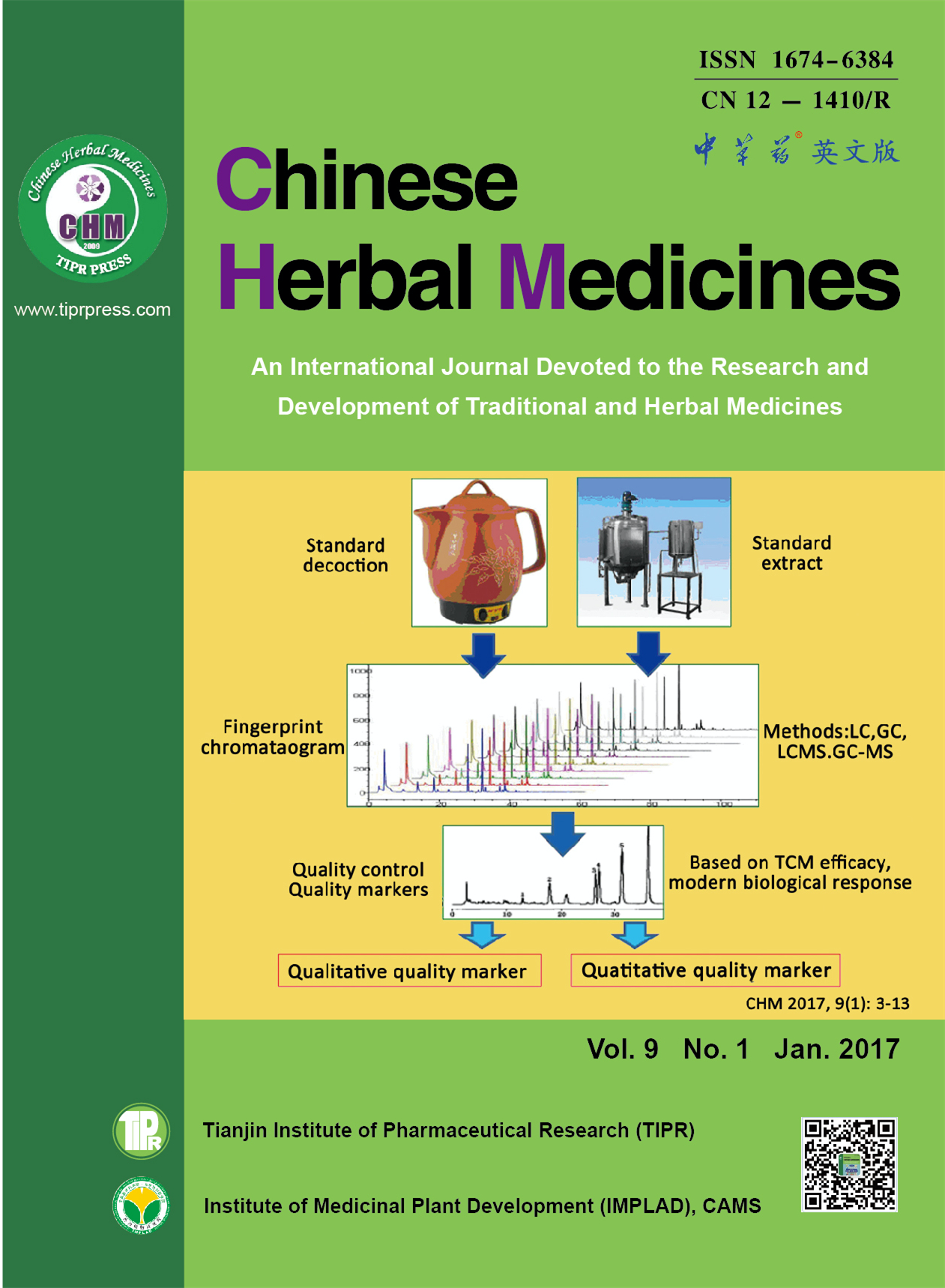
Chinese herbal medicines (CHMs) possess multiple advantages, including multiple targets, pathways, and low toxicity, for the treatment of prostate cancer.
2023 Chinese Herbal Medicines Chinese herbal medicines for prostate cancer therapy: From experimental research to clinical practice
Kong F, Wang C, Zhang J, Wang X, Sun B, Xiao X, Zhang H, Song Y, Jia Y
Chinese Medicine Research Hub
Network Pharmacology
The research unveils luteolin, quercetin, and kaempferol in RALRG as promising complementary components for RP treatment, with a key role in managing oxidative stress and PI3K/AKT signaling pathways.
2023 Annals of Translational Medicine Mechanism and ingredients prediction of Radix Salviae-Angelicae Sinensis Radix-Lycii Fructus-Rehmanniae Radix Praeparata-Ginkgo Folium for retinitis pigmentosa therapy using network pharmacology and molecular docking analysis
Wu J, Sun Z, Zhang D, Liu H, Wu J, Zhang S
Chinese Medicine Research Hub
Review Article
The bioactive peptides found in walnuts have potential neuroprotective effects, including reducing oxidative stress and neuroinflammation, and promoting autophagy and balance in the cholinergic system.
2023 Nutrients Isolation, Identification, Activity Evaluation, and Mechanism of Action of Neuroprotective Peptides from Walnuts: A Review
Zhang L, Bai YY, Hong ZS, Xie J, Tian Y
Chinese Medicine Research Hub
Experimental Study
Theabrownin from dark tea can potentially reverse insulin resistance and regulate glycolipid metabolism, with longer fermented samples showing greater effects.
2023 Nutrients Theabrownin from Dark Tea Ameliorates Insulin Resistance via Attenuating Oxidative Stress and Modulating IRS-1/PI3K/Akt Pathway in HepG2 Cells
Liu J, Wang X, Zhu Y, Deng H, Huang X, Jayavanth P, Xiao Y, Wu J, Jiao R
Chinese Medicine Research Hub
Randomised Controlled Trial
Daily consumption of pecans for a month can help protect against post-meal oxidative stress in aging adults.
2023 Journal of Medicinal Food A 4-Week Pecan-Enriched Diet Improves Postprandial Lipid Peroxidation in Aging Adults
Cogan B, Pearson RC, Jenkins NT, Paton CM, Cooper JA
Chinese Medicine Research Hub
Review Article
Plums, which are rich in bioactive compounds, antioxidants, and vitamins, can help maintain blood glucose level, bone health, heart health and even treat certain cancers.
2023 International Journal of Food Properties A comprehensive review on the availability of bioactive compounds, phytochemicals, and antioxidant potential of plum (
Prunus Domestica
)
Ayub H, Nadeem M, Mohsin M, Ambreen S, Khan F, Oranab S, Rahim M, Zubair khalid M, Zongo E, Zarlasht M, Ullah S
Chinese Medicine Research Hub
Review Article
Theabrownins, a major ingredient in dark tea, significantly contribute to multiple health benefits by modulating lipid metabolism, reducing weight gain, and preventing diseases, surpassing other tea types.
2023 Critical Reviews in Food Science and Nutrition State-of-the-art review of theabrownins: from preparation, structural characterization to health-promoting benefits
Cheng L, Wei Y, Peng L, Wei K, Liu Z, Wei X
Chinese Medicine Research Hub
Network Pharmacology
Gold kiwifruit extracts contained different bioactive materials which showed selective cytotoxic activity against human oral tumor cells and displayed anti-HIV, antioxidant, and antibacterial activities.
2023 Journal of Ethnopharmacology Cancer prevention and therapy with kiwifruit in Chinese folklore medicine: a study of kiwifruit extracts
Motohashi N, Shirataki Y, Kawase M, Tani S, Sakagami H, Satoh K, Kurihara T, Nakashima H, Mucsi I, Varga A, Molnár J
Chinese Medicine Research Hub
Network Pharmacology
Suanzaoren decoction demonstrates significant anxiolytic effect and reveals potential therapeutic mechanisms via improved component targeting and application strategies.
2023 Phytomedicine Screening the effective components of Suanzaoren decoction on the treatment of chronic restraint stress induced anxiety-like mice by integrated chinmedomics and network pharmacology
Yan Y, Li J, Zhang Y, Wang H, Qin X, Zhai K, Du C
Chinese Medicine Research Hub
Review Article
Crocin, a compound derived from saffron, has shown considerable potential in hindering tumor growth and improving immune status, across various malignant tumors.
2023 PeerJ Advances on the anti-tumor mechanisms of the carotenoid Crocin
Bao X, Hu J, Zhao Y, Jia R, Zhang H, Xia L
Chinese Medicine Research Hub
Chaihu Shugan powder, a common treatment for functional dyspepsia in China, works by increasing protein levels of AKT1 and reducing serum levels of IL-6.
2023 Technology and Health Care Network pharmacology and experimental studies for deciphering the molecular targets and mechanisms of Chaihu Shugan powder in the treatment of functional dyspepsia
Wang Y, Wang X, Jiang K, Yang K, Ling J
Chinese Medicine Research Hub
Review Article
Green tea helps alleviate symptoms in multiple benign gynecological disorders, primarily due to a compound called Epigallocatechin-3-gallate.
2023 Nutrients Green Tea and Benign Gynecologic Disorders: A New Trick for An Old Beverage?
Hazimeh D, Massoud G, Parish M, Singh B, Segars J, Islam MS
Chinese Medicine Research Hub
Experimental Study
Long-term intake of traditionally made Doenjang, particularly high in certain species, may improve symptoms of estrogen deficiency more effectively than unfermented soybeans.
2023 Foods Improvement of Estrogen Deficiency Symptoms by the Intake of Long-Term Fermented Soybeans (Doenjang) Rich in Bacillus Species through Modulating Gut Microbiota in Estrogen-Deficient Rats
Zhang T, Yue Y, Jeong SJ, Ryu MS, Wu X, Yang HJ, Li C, Jeong DY, Park S
Chinese Medicine Research Hub
Experimental Study
Chrysanthemum morifolium contains natural bioactive compounds, including 29 types of phenolics, which display significant antioxidant activity.
2023 Egyptian Journal of Chemistry Chemical Investigation of Phenolic Profiles and Antioxidant Activity of Chrysanthemum morifolium
Youssef H, Ali S, Sanad M, Dawood D
Chinese Medicine Research Hub
Randomised Controlled Trial
Acupuncture can improve both perimenopausal depression and insomnia with short-medium term effects while being a safe treatment.
2023 Frontiers in Public Health Acupuncture for comorbid depression and insomnia in perimenopause: A feasibility patient-assessor-blinded, randomized, and sham-controlled clinical trial
Zhao FY, Zheng Z, Fu QQ, Conduit R, Xu H, Wang HR, Huang YL, Jiang T, Zhang WJ, Kennedy GA
Chinese Medicine Research Hub
Animal Study
Kiwifruit polysaccharides may alleviate the toxic effects of acrylamide by improving gut health and enhancing bile acid metabolism.
2023 Frontiers in Nutrition Effects of kiwi fruit (Actinidia chinensis) polysaccharides on metabolites and gut microbiota of acrylamide-induced mice
Chen M, Chen X, Wang K, Cai L, Liu N, Zhou D, Jia W, Gong P, Liu N, Sun Y
Chinese Medicine Research Hub
Systematic Review
Saffron supplementation significantly decreased oxidative stress markers and has beneficial effects in reducing oxidative stress.
2023 Frontiers in Medicine Effect of saffron supplementation on oxidative stress markers (MDA, TAC, TOS, GPx, SOD, and pro-oxidant/antioxidant balance): An updated systematic review and meta-analysis of randomized placebo-controlled trials
Abedi A, Ghobadi H, Sharghi A, Iranpour S, Fazlzadeh M, Aslani MR
Chinese Medicine Research Hub
Systematic Review
Blending traditional Chinese medicine with Western medicine shows potential for treating heart enlargement
2023 Frontiers in Pharmacology Comparative clinical-related outcomes of Chinese patent medicines for cardiac hypertrophy: A systematic review and network meta-analysis of randomized clinical trials
Zhang T, Xu H, Zhen D, Fu D, Zhao M, Wei C, Bai X
Chinese Medicine Research Hub
Review Article
Honey exhibits multifaceted benefits for brain health, acting as a memory booster, neuroprotective agent, anti-stress, and anti-nociceptive substance, fostering potential therapeutic applications to enhance overall cognitive well-being.
2023 Frontiers in Aging Neuroscience Honey on brain health: A promising brain booster
Zamri NA, Ghani N, Ismail CAN, Zakaria R, Shafin N
Chinese Medicine Research Hub
Clinical Study
Chrysanthemum extract can be utilised as a natural ingredient to lessen post-meal cholesterol levels and enhance antioxidant status, after eating a high-fat meal.
2023 Molecules Analysis of Chemical Constituents of Chrysanthemum morifolium Extract and Its Effect on Postprandial Lipid Metabolism in Healthy Adults
Chen L, Sun J, Pan Z, Lu Y, Wang Z, Yang L, Sun G
Chinese Medicine Research Hub
Experimental Study
A novel compound in walnuts, defined as 3-hydroxy-4-iminobutyric acid, can enhance sleep duration by disturbing motor activity and adjusting certain neurotransmitters in the brain of mice.
2023 Research Sleep Promotion by 3-Hydroxy-4-Iminobutyric Acid in Walnut
Diaphragma juglandis Fructus
Ji J, Ye Y, Sheng L, Sun J, Hong Q, Liu C, Ding J, Geng S, Xu D, Zhang Y, Sun X
Chinese Medicine Research Hub
Review Article
Noni fruit juice enhances immune system function, primarily by boosting natural killer cell activity and increasing interferon-gamma production, which promotes phagocytosis.
2023 Journal of Biosciences and Medicines The Influence of Noni Fruit Juice on Immune System Function
West BJ, Uwaya A, Isami F, Tomida N, Swartz F, Deng S, Cox-Lovesy B
Chinese Medicine Research Hub
Review Article
Pomegranate and its active components can protect against natural and chemical toxic agents, impacting mechanisms such as oxidative stress, inflammation, apoptosis, and liver or cardiac function regulation.
2023 Phytomedicine Protective effects of pomegranate (Punica granatum) and its main components against natural and chemical toxic agents: A comprehensive review
Hosseini A, Razavi BM, Hosseinzadeh H
Chinese Medicine Research Hub
Review Article
Consumption of tea and coffee may possibly provide anti-inflammatory effects, contributing to reduced cardiovascular risk and mortality.
2023 Pharmacological Research Coffee or tea: Anti-inflammatory properties in the context of atherosclerotic cardiovascular disease prevention
Surma S, Sahebkar A, Banach M
Chinese Medicine Research Hub
Experimental Study
Goji berry leaves have stronger anti-colitis effects than mulberry leaves, ameliorating tissue damage and better regulating inflammatory responses and gut microbiota.
2023 Food & Function Goji berry leaf exerts a comparable effect against colitis and microbiota dysbiosis to its fruit in dextran-sulfate-sodium-treated mice
Yu C, Chen Y, Ahmadi S, Wu D, Wu J, Ding T, Liu D, Ye X, Chen S, Pan H
Chinese Medicine Research Hub
Network Pharmacology
Compound Chrysanthemum extract may alleviate visual fatigue through its interaction with several components, targets, and pathways.
2022 Computational and Mathematical Methods in Medicine Network Pharmacology, Molecular Docking, and Molecular Dynamic-Based Investigation on the Mechanism of Compound Chrysanthemum in the Treatment of Asthenopia
Qiu J, Zheng B, Zhou H, Ye C, Shi M, Shi S, Wu S
Chinese Medicine Research Hub
Experimental Study
Chaihu Shugan powder, a traditional Chinese medicine, presents potential advantages in treating post-stroke depression, showing potential as an alternative to conventional antidepressants.
2022 Medicina A Chinese Classical Prescription Chaihu Shugan Powder in Treatment of Post-Stroke Depression: An Overview
Gao Z, Wang Y, Yu H
Chinese Medicine Research Hub
Systematic Review
Antioxidant therapy significantly reduces disease-related symptoms for patients with knee osteoarthritis.
2022 Frontiers in Nutrition The effects of antioxidants on knee osteoarthritis: A systematic review and meta-analysis
Nejadhosseinian M, Djalalinia S, Haerian H, Alikhani M, Mansour A, Mousavian AH, Mardani-Fard HA, Kasaeian A, Faezi ST
Chinese Medicine Research Hub
Review Article
Carrot's bioactive compounds can regulate immune response, reduce oxidative stress, and prevent damaging oxidative destruction, making it a potential preventive tool for various diseases.
2022 Journal of Functional Foods Critical review on the immunomodulatory activities of carrot’s β-carotene and other bioactive compounds
Anjani G, Ayustaningwarno F, Eviana R
Chinese Medicine Research Hub
Experimental Study
Pomegranate has been found to alleviate morphological and functional changes in the thyroid glands induced by Lithium Carbonate by controlling apoptosis and oxidative stress.
2022 The Anatomical Record Pomegranate (Punica granatum) peel alleviates lithium‐induced alterations in the thyroid gland of rats by modulating apoptosis and oxidative stress
El‐Din WAN, Fadel R, Rashid A, Al‐Mahameed AE, Othman MA
Chinese Medicine Research Hub
Network Pharmacology
Two varieties of chrysanthemum have similar therapeutic effects but operate through distinct mechanisms, revealing potential for precise applications in both traditional and modern medicine.
2022 International Journal of Molecular Sciences Comparison of the Chemical Components, Efficacy and Mechanisms of Action of Chrysanthemum morifolium Flower and Its Wild Relative Chrysanthemum indicum Flower against Liver-Fire Hyperactivity Syndrome of Hypertension via Integrative Analyses
Wang Y, Li Y, Guo W, Yang X, Qu J, Gao M, Chen S, Dong J, Li Q, Wang T
Chinese Medicine Research Hub
Network Pharmacology
Manuka honey exhibits a dual role in immune modulation, triggering a pro-inflammatory response by elevating cytokine expression and neutrophil recruitment via TLR signaling, while also influencing the phenotypic and functional maturation of macrophages.
2022 Frontiers in Immunology Characterization of immunomodulatory responses induced by manuka honey
Masad RJ, Nasser RA, Bashir G, Mohamed YA, Al-Sbiei A, Al-Saafeen BH, Fernandez-Cabezudo MJ, Al-Ramadi BK
Chinese Medicine Research Hub
Experimental Study
Pu-erh tea, through the increase of Cinnabarinic acid, can improve obesity induced by circadian rhythm disorders by enhancing fat metabolism and altering gut microbes.
2022 Food Chemistry Pu-erh tea increases the metabolite Cinnabarinic acid to improve circadian rhythm disorder-induced obesity
Hu S, Hu C, Luo L, Zhang H, Zhao S, Liu Z, Zeng L
Chinese Medicine Research Hub
Systematic Review
Acupuncture covering the depth ranges for BL18, BL20, and BL22 and their targeting of various tissues potentially alleviates sympathetic nerve issues and ischemia with assistance of the diaphragm.
2022 Medicine Anatomical structures and needling method of the back-shu points BL18, BL20, and BL22 related to gastrointestinal organs: A PRISMA-compliant systematic review of acupoints and exploratory mechanism analysis
Cho Y, Han Y, Kim Y, Han S, Oh K, Chae H, Hongmin C, Ryu M
Chinese Medicine Research Hub
Network Pharmacology
The Chinese medicine formulas Zuo Gui Wan and You Gui Wan have the potential to treat premature ovarian failure through different pharmacological pathways.
2022 Combinatorial Chemistry & High Throughput Screening A Network Pharmacology Study on the Similarities and Differences in the Mechanisms of Zuo Gui Wan/You Gui Wan for the Treatment of Premature Ovarian Failure
Shanshan Mei, Chaoqin Yu, Jie Ding, Wen Cheng
Chinese Medicine Research Hub
Review Article
Walnuts, rich in anti-inflammatory ingredients, potentially regulate neuroinflammation, improve cognitive function, reduce oxidative stress, and maintain gut health, thereby suggesting their use against neurodegenerative diseases.
2022 Nutrients Recent Studies on Protective Effects of Walnuts against Neuroinflammation
Tan B, Wang Y, Zhang X, Sun X
Chinese Medicine Research Hub
Randomised Controlled Trial
The combined use of chamomile and saffron with usual medication enhances the efficacy against depression and ensures long term improvement.
2022 Heliyon A randomized clinical trial to test efficacy of chamomile and saffron for neuroprotective and anti-inflammatory responses in depressive patients
Ahmad S, Azhar A, Tikmani P, Rafique H, Khan A, Mesiya H, Saeed H
Chinese Medicine Research Hub
Network Pharmacology
Kelulut honey, either alone or in combination with metformin or clomiphene, can alleviate oxidative stress and reproductive and metabolic abnormalities in rats with polycystic ovary syndrome.
2022 Antioxidants Kelulut Honey Ameliorates Oestrus Cycle, Hormonal Profiles, and Oxidative Stress in Letrozole-Induced Polycystic Ovary Syndrome Rats
Kamal DAM, Ibrahim SF, Ugusman A, Mokhtar MH
Chinese Medicine Research Hub
Review Article
Traditional Chinese medicinal practices like acupuncture, moxibustion, and herbal remedies show therapeutic effects on infertility caused by endometrial factors.
2022 Evidence-Based Complementary and Alternative Medicine The Treatment of Complementary and Alternative Medicine on Female Infertility Caused by Endometrial Factors
Lin J, Ma H, Li H, Han J, Guo T, Qin Z, Jia L, Zhang Y
Chinese Medicine Research Hub
Review Article
A 6-week course of acupuncture proves as effective as 6-month drug prophylaxis for migraines, with specific Chinese point selection and stimulation appearing less important.
2022 Expert Review of Neurotherapeutics Role of acupuncture in the treatment of migraine
Endres HG, Diener HC, Molsberger A
Chinese Medicine Research Hub
Review Article
Pomegranate extract and its phytochemicals can potentially inhibit severe acute respiratory syndrome coronavirus 2 (SARS-COV-2) and improve gut microbiota, preventing obesity and diabetes.
2022 Biomedicine & Pharmacotherapy Medicinal uses, pharmacological activities, phytochemistry, and the molecular mechanisms of Punica granatum L. (pomegranate) plant extracts: A review
Maphetu N, Unuofin JO, Masuku NP, Olisah C, Lebelo SL
Chinese Medicine Research Hub
Randomised Controlled Trial
Dietary modifications, combining increased intake of anti-inflammatory foods and decreased intake of pro-inflammatory foods, effectively impede subclinical inflammation in ulcerative colitis patients in clinical remission.
2022 Nutrients Anti-Inflammatory Diet Prevents Subclinical Colonic Inflammation and Alters Metabolomic Profile of Ulcerative Colitis Patients in Clinical Remission
Keshteli A, Valcheva R, Nickurak C, Park H, Mandal R, van Diepen K, Kroeker K, van Zanten S, Halloran B, Wishart D, Madsen K, Dieleman L
Chinese Medicine Research Hub
Review Article
Honey, owing to its bioactive compounds, demonstrates potential in treating COVID-19 symptoms by reducing oxidative damage and enhancing the immune system.
2022 Applied Sciences Honey as an Adjuvant in the Treatment of COVID-19 Infection: A Review
Soares S, Bornet M, Grosso C, Ramalhosa MJ, Gouvinhas I, Garcia J, Rodrigues F, Delerue-Matos C
Chinese Medicine Research Hub
Review Article
Xiao Yao San has potential as an effective and safe alternative treatment for depression, offering multiple mechanisms of action for its antidepressant effects.
2022 Frontiers in Pharmacology Research progress on classical traditional chinese medicine formula xiaoyaosan in the treatment of depression
Chen J, Lei C, Li X, Wu Q, Liu C, Ma Q, Chen J.
Chinese Medicine Research Hub
Bananas and plantains contain compounds with anti-inflammatory, anti-apoptotic, and antioxidative properties that hold promise for potentially reversing neurological disorders.
2022 Foods Suitability of Banana and Plantain Fruits in Modulating Neurodegenerative Diseases: Implicating the In Vitro and In Vivo Evidence from Neuroactive Narratives of Constituent Biomolecules
Oyeyinka BO, Afolayan AJ
Chinese Medicine Research Hub
Review Article
Various traditional Chinese medicine treatment strategies could potentially provide an effective alternative in slowing the progression of Chronic Kidney Disease.
2022 Frontiers in Pharmacology Traditional Chinese Medicine in the Treatment of Chronic Kidney Diseases: Theories, Applications, and Mechanisms
Yunlai Wang, Ye Feng, Manman Li, Mo Yang, Gaoxiang Shi, Zihua Xuan, Dengke Yin, Fan Xu
Chinese Medicine Research Hub
Network Pharmacology
The Jian Pi Yi Shen formula in traditional Chinese medicine demonstrates a protective effect on kidneys by modulating tryptophan metabolism and Aryl hydrocarbon receptor activation.
2022 Frontiers in Pharmacology Jian-Pi-Yi-Shen Formula Improves Adenine-Induced Chronic Kidney Disease via Regulating Tryptophan Metabolism and Aryl Hydrocarbon Receptor Signaling
Liu X, Deng R, Chen Y, Huang S, Lu J, Zheng L, Xiong G, Li S
Chinese Medicine Research Hub
Network Pharmacology
The traditional Chinese medicine formula, Chaihu-Shugan-San, provides effective treatment for liver fibrosis through modulating inflammation responses, inhibiting angiogenesis, and regulating ECM remodeling.
2022 Bioscience Reports Exploring mechanisms of Chaihu-Shugan-San against liver fibrosis by integrated multi-omics and network pharmacology approach
Xie Z, Xie Z, Trujillo NP, Yang T, Yang C
Chinese Medicine Research Hub
Review Article
Chinese Herbal Medicine Prescriptions (CHMPs) have demonstrated to be potentially effective in managing Inflammatory Bowel Disease (IBD) with a comprehensive, holistic approach.
2022 Phytomedicine Holism of Chinese herbal medicine prescriptions for inflammatory bowel disease: A review based on clinical evidence and experimental research
Zhang S, Luo H, Tan D, Peng B, Zhong Z, Wang Y
Chinese Medicine Research Hub
Review Article
Jujube nutrients may offer potential therapeutic benefits including antioxidant, antibacterial, anti-inflammatory functions, and improving sleep quality and learning.
2022 Journal of Agricultural and Food Chemistry Wild Jujube (Ziziphus jujuba var. spinosa): A Review of Its Phytonutrients, Health Benefits, Metabolism, and Applications
Hua Y, Xu X, Guo S, Xie H, Yan H, Ma X, Niu Y, Duan JA
Chinese Medicine Research Hub
Animal Study
Cooked adzuki beans contribute notably to preventing obesity and regulating gut microbiota composition, while also alleviating systemic inflammation and metabolic disorders.
2022 Frontiers in Nutrition Cooked Adzuki Bean Reduces High-Fat Diet-Induced Body Weight Gain, Ameliorates Inflammation, and Modulates Intestinal Homeostasis in Mice
Zhao Q, Liu Z, Zhu Y, Wang H, Dai Z, Yang X, Ren X, Xue Y, Shen Q
Chinese Medicine Research Hub
Review Article
The underutilized pomegranate peel, full of abundant bioactive substances, could be repurposed for its potential health benefits like anti-inflammatory, anti-cancer, cardiovascular protection, and antibacterial activities.
2022 Frontiers in Nutrition Pomegranate Peel as a Source of Bioactive Compounds: A Mini Review on Their Physiological Functions
Mo Y, Ma J, Gao W, Zhang L, Li J, Li J, Zang J
Chinese Medicine Research Hub
Cohort Study
Shenling Baizhu San (SBS), combined with mesalamine, can treat ulcerative colitis effectively by changing gut microbiota structures and increasing tryptophan metabolite levels.
2022 Journal of Ethnopharmacology Shenling Baizhu San ameliorates ulcerative colitis by regulating the gut microbiota and its tryptophan metabolites: A complementary medicine to mesalamine
Jiao C, Zhang Q, Yang M, Ma J, Zhao X, Tang N, Dai M, Li Q, Jiang Z, Huang X, Zhang H, Sun L
Chinese Medicine Research Hub
Experimental Study
Berries, largely due to their phenolic compounds, enhance internal antioxidant status and positively influence gut microbiota composition, promoting beneficial bacteria and suppressing harmful types.
2022 Antioxidants Evaluation of Antioxidant Capacity and Gut Microbiota Modulatory Effects of Different Kinds of Berries
Chen J, Shu Y, Chen Y, Ge Z, Zhang C, Cao J, Li X, Wang Y, Sun C
Chinese Medicine Research Hub
Review Article
Cherries and blueberries, rich in phenolic compounds, can be effectively used in pharmaceutical products, smart foods, functional beverages, and nutraceuticals to prevent or treat diseases.
2022 Molecules Cherries and Blueberries-Based Beverages: Functional Foods with Antidiabetic and Immune Booster Properties
Gonçalves AC, Nunes AR, Flores-Félix JD, Alves G, Silva LR
Chinese Medicine Research Hub
Systematic Review
Ginger, native to Southeast Asia, possesses antioxidant and antiviral properties, contributing to healthy ageing and potential prevention of age-related disorders.
2022 Oxidative Medicine and Cellular Longevity Ginger for Healthy Ageing: A Systematic Review on Current Evidence of Its Antioxidant, Anti-Inflammatory, and Anticancer Properties
Ozkur M, Benlier N, Takan I, Vasileiou C, Georgakilas AG, Pavlopoulou A, Cetin Z, Saygili EI
Chinese Medicine Research Hub
Systematic Review
Chinese herbal medicine shows evident efficacy in treating coronary heart disease patients with anxiety or depression, notably improving symptoms of angina pectoris.
2022 Frontiers in Pharmacology Evidence and Characteristics of Traditional Chinese Medicine for Coronary Heart Disease Patients With Anxiety or Depression: A Meta-Analysis and Systematic Review
Wang B, Teng Y, Li Y, Lai S, Wu Y, Chen S, Li T, Han X, Zhou H, Wang Y, Lu Z, Li H, Ding Y, Ma L, Zhao M, Wang X
Chinese Medicine Research Hub
Animal Study
Walnut seed skin extract demonstrates potential hepato-renal protective effects, inhibiting inflammatory responses, oxidative stress and apoptosis, in kidney-damaged Sprague-Dawley rats.
2022 Cytokine The hepato-renal protective potential of walnut seed skin extract against acute renal ischemia/reperfusion damage
Askin S, Askin H, Dursun E, Palabiyik E, Uguz H, Cakmak , Koc K
Chinese Medicine Research Hub
Review Article
Acupuncture, particularly when used alongside antidepressants, can effectively alleviate various types of depression symptoms and reduce side effects of medication.
2022 Frontiers in Pharmacology Potential Mechanisms and Clinical Effectiveness of Acupuncture in Depression
Yang, Na-Na; Lin, Lu-Lu; Li, Yue-Jie; Li, Hong-Ping; Cao, Yan; Tan, Chun-Xia; Hao, Xiao-Wan; Ma, Si-Ming; Wang, Lu; Liu, Cun-Zhi
Chinese Medicine Research Hub
Xiang Fu, a traditional Chinese herbal medicine, shows significant antidepressant effects.
2022 Journal of Ethnopharmacology The association study of chemical compositions and their pharmacological effects of Cyperi Rhizoma (Xiangfu), a potential traditional Chinese medicine for treating depression
Lu J, Li W, Gao T, Wang S, Fu C, Wang S
Chinese Medicine Research Hub
Review Article
Acupuncture could help manage different types of depression by increasing neuroplasticity, decreasing brain inflammation, and reducing side effects of conventional antidepressant treatment.
2022 Current Neuropharmacology Potential Mechanisms and Clinical Effectiveness of Acupuncture in
Depression
Yang NN, Lin LL, Li YJ, Li HP, Cao Y, Tan CX, Hao XW, Ma SM, Wang L, Liu CZ
Chinese Medicine Research Hub
Review Article
Pu-erh tea possesses therapeutic mechanisms potentially beneficial for metabolic diseases due to its interaction with liver and gut microbiome.
2022 Journal of Traditional Chinese Medical Sciences Pu-erh tea: A review of a healthful brew
Jia W, Rajani C, Lv A, Fan TP, Zheng X
Chinese Medicine Research Hub
Review Article
Purple carrot roots, rich in bioactive compounds like anthocyanin, may be effective in preventing metabolic syndrome and cancer by reducing inflammation and metabolic changes.
2022 Applied Sciences Delving into the Nutraceutical Benefits of Purple Carrot against Metabolic Syndrome and Cancer: A Review
Rasheed H, Shehzad M, Rabail R, Kowalczewski P, Kidoń M, Jeżowski P, Ranjha MMAN, Rakha A, Din A, Aadil RM
Chinese Medicine Research Hub
Experimental Study
Coconut water and coconut milk ameliorate the negative impacts of heat stress on gastrointestinal health by reducing oxidative stress and suppressing inflammatory responses.
2022 Journal of Food Biochemistry Effect of coconut water and milk on heat stress‐induced gastrointestinal tract dysmotility in rats: Role of oxidative stress and inflammatory response
Ajeigbe KO, Oladokun OO, Owonikoko MW, Adegoke GA
Chinese Medicine Research Hub
Experimental Study
The Chaihu Shugan Formula, a traditional Chinese medicine, not only effectively modulates intestinal gut microbiota but also strengthens gut barrier integrity and contains powerful anti-inflammatory properties.
2022 Frontiers in Pharmacology The Modulation of Chaihu Shugan Formula on Microbiota Composition in the Simulator of the Human Intestinal Microbial Ecosystem Technology Platform and its Influence on Gut Barrier and Intestinal Immunity in Caco-2/THP1-Blue™ Cell Co-Culture Model
Liu L, Lu Y, Xu C, Chen H, Wang X, Wang Y, Cai B, Li B, Verstrepen L, Ghyselinck J, Marzorati M, Yao Q
Chinese Medicine Research Hub
Review Article
Acupuncture shows promising results in managing autoimmune diseases by potentially regulating immune responses.
2022 The American Journal of Chinese Medicine Therapeutic Effect and Mechanism of Acupuncture in Autoimmune Diseases
Jing Wang, Fangyi Zhu, Wei Huang, Zhengyi Chen, Ping Zhao, Yanting Lei, Yumei Liu, Xijun Liu, Bo Sun, Hulun Li
Chinese Medicine Research Hub
Network Pharmacology
Asthma severity can be notably reduced by Xi Xin essential oil, which decreases inflammation, immunoglobulins, and fibrotic mediators, while also alleviating airway obstruction.
2022 Pharmaceutics Exploring the Potential Effects and Mechanisms of Asarum sieboldii Radix Essential Oil for Treatment of Asthma
Han JM, Kim MH, Choi LY, Kim G, Yang WM
Chinese Medicine Research Hub
Review Article
The Jing Si Herbal Drink, composed of various antiviral, antioxidant and anti-inflammatory herbs, has been confirmed as potentially effective in treating COVID-19 symptoms.
2022 Pharmacological Research - Modern Chinese Medicine Jing Si Herbal Drink as a prospective adjunctive therapy for COVID-19 treatment: Molecular evidence and mechanisms
Lu PH, Tseng CW, Lee JL, Lee EY, Lin YP, Lin IH, Yu MC, Lu KC, Kuo KL
Chinese Medicine Research Hub
Systematic Review
Edible medicinal plants like saffron, chamomile, dill seeds, and castor oil have demonstrated positive effects on various aspects of labor, indicating potential natural alternatives for aiding childbirth.
2022 Current Drug Discovery Technologies Edible Medicinal Plants on Facilitating Childbirth: A Systematic Review
Ivari FR, Vatanchi AM, Yousefi M, Badaksh F, Salari R
Chinese Medicine Research Hub
Review Article
Apple juice consumed in moderation has been found to positively impact markers of cardiovascular health, potentially influencing risk of cancer and neurodegenerative diseases.
2022 Nutrients Health Benefits of Apple Juice Consumption: A Review of Interventional Trials on Humans
Vallée Marcotte B, Verheyde M, Pomerleau S, Doyen A, Couillard C
Chinese Medicine Research Hub
Systematic Review
Raspberry consumption can help to reduce blood glucose levels and stabilize the blood lipid profile due to its bioactive compounds.
2022 Journal of Medicinal Food Raspberry (Rubus idaeus L.), a Promising Alternative in the Treatment of Hyperglycemia and Dyslipidemias
Piña-Contreras N, Martínez-Moreno AG, Ramírez-Anaya JDP, Espinoza-Gallardo AC, Valdés EHM
Chinese Medicine Research Hub
Review Article
Carrots, rich in carotenoids, flavonoids, and vitamins, have numerous health benefits including antioxidants, immune enhancement, and anti-cancer properties.
2022 International Journal of Innovative Research in Engineering & Management An Analysis of Health Benefits of Carrot
Varshney K, Mishra K
Chinese Medicine Research Hub
Systematic Review
Plums, specifically European and Japanese species, exhibit anti-inflammatory and antioxidant properties that may be used for the treatment and prevention of cancer.
2022 Biomedicine & Pharmacotherapy Cancer protective effects of plums: A systematic review
Bahrin AA, Moshawih S, Dhaliwal JS, Kanakal MM, Khan A, Lee KS, Goh BH, Goh HP, Kifli N, Ming LC
Chinese Medicine Research Hub
Network Pharmacology
The Gui Zhi-Shao Yao herb pair in traditional Chinese medicine potentially treats chronic pain, anxiety, and depression through interactions with nine key targets.
2022 Annals of Medicine A network pharmacology approach to predict potential targets and mechanisms of “Ramulus Cinnamomi (cassiae) – Paeonia lactiflora” herb pair in the treatment of chronic pain with comorbid anxiety and depression
Pan HT, Xi ZQ, Wei XQ, Wang K
Chinese Medicine Research Hub
Review Article
Acupuncture can regulate both innate and adaptive immunity of IBD patients, including the balance of Th17/Treg and Th1/Th2 cells, and also modulate intestinal flora.
2022 Evidence-Based Complementary and Alternative Medicine A Review on the Immunomodulatory Mechanism of Acupuncture in the Treatment of Inflammatory Bowel Disease
Liu Z, Jiao Y, Yu T, Wang H, Zhang Y, Liu D, Xu Y, Guan Q, Lu M
Chinese Medicine Research Hub
Systematic Review
Noni, a medicinal plant, has illustrated diverse anticancer properties across different cancer models through numerous mechanisms including antitumor and immunomodulatory activities.
2022 Integrative Cancer Therapies Efficacy and Safety of Morinda citrifolia L. (Noni) as a Potential Anticancer Agent
Chanthira Kumar H, Lim XY, Mohkiar FH, Suhaimi SN, Mohammad Shafie N, Chin Tan TY
Chinese Medicine Research Hub
Experimental Study
Saffron petal extract and anthocyanins can alleviate symptoms of Polycystic Ovary Syndrome by rectifying hormonal imbalances and reducing inflammation in PCOS mice.
2022 Journal of Ethnopharmacology Crocus sativus (saffron) petals extract and its active ingredient, anthocyanin improves ovarian dysfunction, regulation of inflammatory genes and antioxidant factors in testosterone-induced PCOS mice
Moshfegh F, Balanejad SZ, Shahrokhabady K, Attaranzadeh A
Chinese Medicine Research Hub
Review Article
Chrysanthemums, popular floricultural crops, not only hold significant ornamental value but also exhibit various therapeutic potentials including antioxidant, antimicrobial, and anticancer activities.
2022 South African Journal of Botany Chrysanthemum, an ornamental genus with considerable medicinal value: A comprehensive review
Hadizadeh H, Samiei L, Shakeri A
Chinese Medicine Research Hub
Theoretical Article
The jujube tree bears fruit endowed with substantial nutritional value and contains numerous phytochemical components with reported antioxidant, anti-cancer and neuroprotective properties.
2022 Traditional Medicine Research Jujube (Ziziphus jujuba Mill. (Rhamnaceae)): a review on its pharmacological properties and phytochemistry
Aafi E, Reza M, Mirabzadeh M
Chinese Medicine Research Hub
Experimental Study
Consuming oats significantly lessens total and LDL cholesterol levels and mediates a prebiotic effect on the gut microbiome, contributing to its cholesterol-lowering ability.
2021 Frontiers in Immunology The Prebiotic Effects of Oats on Blood Lipids, Gut Microbiota, and Short-Chain Fatty Acids in Mildly Hypercholesterolemic Subjects Compared With Rice: A Randomized, Controlled Trial
Xu D, Feng M, Chu YF, Wang S, Shete V, Tuohy KM, Liu F, Zhou X, Kamil A, Pan D, Liu H, Yang X, Yang C, Zhu B, Lv N, Xiong Q, Wang X, Sun J, Sun G, Yang Y
Chinese Medicine Research Hub
Review Article
Fresh Hass avocados have been found to reduce cardiovascular disease risk, assist weight loss, improve cognitive function, and promote colonic microbiota health.
2021 Nutrients A Comprehensive Review of Hass Avocado Clinical Trials, Observational Studies, and Biological Mechanisms
Dreher ML, Cheng FW, Ford NA
Chinese Medicine Research Hub
Review Article
Pomegranate juice and its bioactive components may serve as cost-effective, next-generation non-pharmacologic anticancer therapies, particularly against colorectal and prostate cancer.
2021 Current Drug Delivery Pomegranate, its Components, and Modern Deliverable Formulations as Potential Botanicals in the Prevention and Treatment of Various Cancers
Hussein L, Gouda M, Buttar HS
Chinese Medicine Research Hub
Systematic Review
Cinnamomum cassia, or cinnamon, exhibits promising therapeutic benefits in combating gastritis by targeting inflammation pathways, according to preclinical studies.
2021 Applied Biological Chemistry Potential and beneficial effects of Cinnamomum cassia on gastritis and safety: Literature review and analysis of standard extract
Lee JH, Park DH, Lee S, Seo HJ, Park SJ, Jung K, Kim SY, Kang KS
Chinese Medicine Research Hub
Review Article
Allergic rhinitis in children, according to traditional Chinese medicine, is interrelated with the functionality of lungs, spleen, and kidney and can be treated with combined Western and Chinese herbal medicines.
2021 Translational Pediatrics Current status of Chinese herbal medicine to treat allergic rhinitis in children: from the perspective of Western medicine—a narrative review
Liang J, Gu Q
Chinese Medicine Research Hub
Network Pharmacology
Luteolin, a component of traditional Chinese medicine herb Zi Su Ye, has been found to alleviate kidney disease stage 3-5 by reducing renal tubular epithelial cell apoptosis.
2021 Frontiers in Pharmacology Exploring the Critical Components and Therapeutic Mechanisms of Perilla frutescens L. in the Treatment of Chronic Kidney Disease via Network Pharmacology
Yong C, Zhang Z, Huang G, Yang Y, Zhu Y, Qian L, Tian F, Liu L, Wu Q, Xu Z, Chen C, Zhao J, Gao K, Zhou E
Chinese Medicine Research Hub
Systematic Review
Anti-inflammatory diets can lead to significantly lower levels of pain than regular diets for those with rheumatoid arthritis.
2021 Nutrients Effect of Anti-Inflammatory Diets on Pain in Rheumatoid Arthritis: A Systematic Review and Meta-Analysis
Schönenberger KA, Schüpfer AC, Gloy VL, Hasler P, Stanga Z, Kaegi-Braun N, Reber E
Chinese Medicine Research Hub
Experimental Study
Modified Suanzaoren Decoction (MSZRD), an improved traditional Chinese herbal recipe, effectively enhances sleep and regulates circadian rhythm disorders in mice experiencing insomnia.
2021 Biomedicine & Pharmacotherapy Soporific effect of modified Suanzaoren Decoction on mice models of insomnia by regulating Orexin-A and HPA axis homeostasis
Dong YJ, Jiang NH, Zhan LH, Teng X, Fang X, Lin MQ, Xie ZY, Luo R, Li LZ, Li B, Zhang BB, Lv GY, Chen SH
Chinese Medicine Research Hub
Systematic Review
Chinese medicine's unique immune regulation, intestinal flora regulation, and improved intestinal barrier function offer new approaches to managing chronic Inflammatory Bowel Disease.
2021 Phytomedicine A recent update on the use of Chinese medicine in the treatment of inflammatory bowel disease
Yang L, Luo H, Tan D, Zhang S, Zhong Z, Wang S, Vong CT, Wang Y
Chinese Medicine Research Hub
Systematic Review
Chinese medicine presents unique advantages in managing Inflammatory Bowel Disease (IBD) through immune regulation, intestinal flora regulation, and improvement of intestinal barrier function.
2021 Phytomedicine A recent update on the use of Chinese medicine in the treatment of inflammatory bowel disease
Yang L, Luo H, Tan D, Zhang S, Zhong Z, Wang S, Vong CT, Wang Y
Chinese Medicine Research Hub
Systematic Review
Green tea supplementation improves total antioxidant capacity and impacts oxidative stress based on dose levels in adults.
2021 Antioxidants Effect of Green Tea Supplementation on Antioxidant Status in Adults: A Systematic Review and Meta-Analysis of Randomized Clinical Trials
Rasaei N, Asbaghi O, Samadi M, Setayesh L, Bagheri R, Gholami F, Soveid N, Casazza K, Wong A, Suzuki K, Mirzaei K
Chinese Medicine Research Hub
Network Pharmacology
Gui Zhi Fu Ling Wan treats adenomyosis by intervening in local estrogen signalling pathways and affecting estrogen resistance via myometrium signalling pathways.
2021 Evidence-Based Complementary and Alternative Medicine Integrating Network Pharmacology and Experimental Validation Deciphers the Mechanism of Guizhi Fuling Wan against Adenomyosis
Wang H, Zhang J, Zhu Q, Fu X, Li C
Chinese Medicine Research Hub
Systematic Review
Cinnamon supplementation may significantly enhance metabolic status in women with polycicstic ovary syndrome, notably improving high-density lipoprotein and insulin sensitivity, and decreasing low-density lipoprotein, triglyceride, and blood glucose levels.
2021 Journal of Ovarian Research Mechanistic and therapeutic insight into the effects of cinnamon in polycystic ovary syndrome: a systematic review
Maleki V, Faghfouri AH, Tabrizi FPF, Moludi J, Saleh-Ghadimi S, Jafari-Vayghan H, Qaisar SA
Chinese Medicine Research Hub
Review Article
Green tea and its component EGCG, demonstrate potential as a treatment for endometriosis by inhibiting growth, invasion, adhesion and angiogenesis.
2021 Critical Reviews in Food Science and Nutrition Therapeutic effects of green tea on endometriosis
Chen X, Man GCW, Hung SW, Zhang T, Fung LWY, Cheung CW, Chung JPW, Li TC, Wang CC
Chinese Medicine Research Hub
Review Article
Acne, primarily influenced by fluctuating hormone levels, may be effectively treated using acupuncture, an ancient technique that tackles the deep-rooted mechanisms crucial to acne development.
2021 Journal of Cosmetic Dermatology Acupuncture: A therapeutic approach against acne
Chun‐Yan C, Guang‐yao X, Yan‐yan S, Ming‐Shu X, Peng L
Chinese Medicine Research Hub
Review Article
Recent findings suggest that the molecular background to the development of insulin resistance may be related to vitamin D deficiency.
2021 Nutrients Mechanisms Involved in the Relationship between Vitamin D and Insulin Resistance: Impact on Clinical Practice
Contreras-Bolívar V, García-Fontana B, García-Fontana C, Muñoz-Torres M
Chinese Medicine Research Hub
Review Article
Cocoa, including its often discarded shell, has promising potential in providing benefits to human health due to its high content of health-boosting phytochemicals.
2021 Journal of Food Composition and Analysis Cocoa and cocoa bean shells role in human health: An updated review
Cinar Z, Atanassova M, Tumer TB, Caruso G, Antika G, Sharma S, Sharifi-Rad J, Pezzani R
Chinese Medicine Research Hub
Review Article
The essential oil from Ai Ye has shown significant anti-disease, anti-inflammatory, analgesic, and anti-cancer effects.
2021 Journal of Ethnopharmacology From longevity grass to contemporary soft gold: Explore the chemical constituents, pharmacology, and toxicology of Artemisia argyi H.Lév. & vaniot essential oil
Liu Y, He Y, Wang F, Xu R, Yang M, Ci Z, Wu Z, Zhang D, Lin J
Chinese Medicine Research Hub
Animal Study
Shen Ling Bai Zhu San was found to inhibit inflammatory damage in nonalcoholic fatty liver disease, thus offering potential as a preventive and therapeutic treatment.
2021 Journal of Integrative Medicine Hepatic protective effects of Shenling Baizhu powder, a herbal compound, against inflammatory damage via TLR4/NLRP3 signalling pathway in rats with nonalcoholic fatty liver disease
Pan M, Zheng C, Deng Y, Tang K, Nie H, Xie J, Liu D, Tu G, Yang Q, Zhang Y
Chinese Medicine Research Hub
Systematic Review
Dang Gui is highly effective in treating ischemic stroke due to its numerous therapeutic properties.
2021 Phytomedicine Overview of therapeutic potentiality of Angelica sinensis for ischemic stroke
Han Y, Chen Y, Zhang Q, Liu BW, Yang L, Xu YH, Zhao YH
Chinese Medicine Research Hub
Experimental Study
The Licorice and Jujube formula is seen as commonly used and potentially effective for treating menopausal symptoms as per classical Chinese medicine.
2021 Complementary Therapies in Medicine Licorice (Glycyrrhiza spp.) and jujube (Ziziphus jujuba Mill.) formula for menopausal symptoms: Classical records, clinical evidence and experimental data
Coyle ME, Liu J, Yang H, Wang K, Zhang AL, Guo X, Lu C, Xue CC
Chinese Medicine Research Hub
Systematic Review
A variety of Chinese herbal medicines have been reported to effectively prevent or treat nonalcoholic fatty liver disease by regulation of the gut microbiota and the gut-liver axis.
2021 Chinese Medicine Herbal therapy for ameliorating nonalcoholic fatty liver disease via rebuilding the intestinal microecology
Yang XF, Lu M, You L, Gen H, Yuan L, Tian T, Li CY, Xu K, Hou J, Lei M
Chinese Medicine Research Hub
Review Article
The autophagic-regulatory effects of Chinese herbal medicine are potentially therapeutic for allergic inflammatory diseases such as asthma.
2021 Frontiers in Pharmacology Autophagy Modulators From Chinese Herbal Medicines: Mechanisms and Therapeutic Potentials for Asthma
Zhang Yun, Wang Xing, Zhang He, Tang Hongmei, Hu Hang, Wang Songping, Wong Vincent Kam Wai, Li Yuying, Deng Jun
Chinese Medicine Research Hub
Clinical Study
Jia Wei Yu Ping Feng San, a traditional Chinese medicine, alleviates allergic asthma by reducing airway inflammation, mediated by suppressing group 2 innate lymphoid cells.
2021 Frontiers in Pharmacology Jia-Wei-Yu-Ping-Feng-San Attenuates Group 2 Innate Lymphoid Cell-Mediated Airway Inflammation in Allergic Asthma
Xue L, Li C, Ge G, Zhang S, Tian L, Wang Y, Zhang H, Ma Z and Lu Z
Chinese Medicine Research Hub
Experimental Study
Chrysanthemum, a traditional Chinese medicine, shows significant antioxidant activity and hepatoprotective effects, making it a potential resource for functional foods and medicinal materials.
2021 Chemistry & Biodiversity Comparison of Chemical Constituents and Pharmacological Effects of Different Varieties of Chrysanthemum Flos in China
Chen L, Liu Y, Huang X, Zhu Y, Li J, Miao Y, Du H, Liu D
Chinese Medicine Research Hub
Review Article
Acupuncture may slow Parkinson's disease progression by protecting dopaminergic neurons and regulating neurotransmitter balance, potentially reducing dependence on medication.
2021 Neural Plasticity Acupuncture for Parkinson’s Disease: Efficacy Evaluation and Mechanisms in the Dopaminergic Neural Circuit
Zhao Y, Zhang Z, Qin S, Fan W, Li W, Liu J, Wang S, Xu Z, Zhao M
Chinese Medicine Research Hub
Clinical Study
Green tea therapy can significantly improve rheumatoid arthritis symptoms, correlating with changes in specific circulating serum molecules, miR-125b and miR-146a.
2021 Journal of Herbal Medicine Circulating microRNAs expression as predictors of clinical response in rheumatoid arthritis patients treated with green tea
Al-Rawaf HA, Alghadir AH, Gabr SA
Chinese Medicine Research Hub
Review Article
There is a notable gap in scientific research on the potential health benefits and antioxidant activity of matcha tea compared to green tea.
2021 Applied Sciences Retrospecting the Antioxidant Activity of Japanese Matcha Green Tea–Lack of Enthusiasm?
Sivanesan I, Gopal J, Muthu M, Chun S, Oh JW
Chinese Medicine Research Hub
Randomised Controlled Trial
Consumption of blueberry supplement did not show significant improvement in metabolic health markers, however, it induced changes in gene expression, indicating a potential longer-term effect.
2021 Genes & Nutrition An 8-week freeze-dried blueberry supplement impacts immune-related pathways: a randomized, double-blind placebo-controlled trial
Rousseau M, Horne J, Guénard F, de Toro-Martín J, Garneau V, Guay V, Kearney M, Pilon G, Roy D, Couture P, Couillard C, Marette A, Vohl MC
Chinese Medicine Research Hub
Review Article
Green tea and its chief bioactive component have the potential to improve certain female reproductive disorders such as endometriosis, polycystic ovary syndrome, and dysmenorrhea.
2021 Molecules Beneficial Effects of Green Tea Catechins on Female Reproductive Disorders: A Review
Kamal DAM, Salamt N, Zaid SSM, Mokhtar MH
Chinese Medicine Research Hub
This review further put forward the possibility that cold-hot nature of food and Chinese medicine exert different biological effects on the inflammatory response via regulating the signaling pathways viz. NF-κB and MAPK.
2021 Food Research International New insights into molecular mechanisms of "Cold or Hot" nature of food: When East meets West
Zhou Y, Xu B.
Chinese Medicine Research Hub
Randomised Controlled Trial
Avocado/soy unsaponifiables effectively treat osteoarthritis by controlling the balance between oxidant and antioxidant molecular markers.
2021 Journal of Complementary and Integrative Medicine Avocado/soy unsaponifiables can redress the balance between serum antioxidant and oxidant levels in patients with osteoarthritis: a double-blind, randomized, placebo-controlled, cross-over study
Jangravi Z, Basereh S, Zaree Mahmoudabadi A, Saberi M, Alishiri GH, Korani M
Chinese Medicine Research Hub
Systematic Review
Epidemiological studies suggest that the consumption of spicy chilli food is associated with reduced risk of all-cause as well as heart disease–related mortality.
2021 Angiology Association of Spicy Chilli Food Consumption With Cardiovascular and All-Cause Mortality: A Meta-Analysis of Prospective Cohort Studies
Ofori-Asenso R, Mohsenpour MA, Nouri M, Faghih S, Liew D, Mazidi M.
Chinese Medicine Research Hub
Review Article
Chinese herbal medicines may improve treatment for those with chronic kidney disease, due to their anti-inflammatory, antioxidative, anti-apoptotic, autophagy-mediated, and antifibrotic effects.
2021 Frontiers in Pharmacology Mechanisms and Efficacy of Chinese Herbal Medicines in Chronic Kidney Disease
Zhao M, Yu Y, Wang R, Chang M, Ma S, Qu H, Zhang Y
Chinese Medicine Research Hub
Experimental Study
The Jian-Pi-Yi-Shen (JPYS) traditional Chinese medicine formula aids in the alleviation of renal dysfunction and fibrosis in chronic kidney disease (CKD) rats by combating inflammation and cellular apoptosis.
2021 Frontiers in Pharmacology Jian-Pi-Yi-Shen Formula Ameliorates Oxidative Stress, Inflammation, and Apoptosis by Activating the Nrf2 Signaling in 5/6 Nephrectomized Rats
Zhou F, Zou X, Zhang J, Wang Z, Yang Y, Wang D
Chinese Medicine Research Hub
Network Pharmacology
The traditional formula Danggui Beimu Kushen Wan (DBKW) contains multi-targeting agents that simultaneously act on more than one pathway in prostate cancer.
2021 Scientific Reports Herb-target virtual screening and network pharmacology for prediction of molecular mechanism of Danggui Beimu Kushen Wan for prostate cancer
Li H, Hung A, Yang AWH
Chinese Medicine Research Hub
Review Article
Baicalin, a Scutellaria baicalensis extract, has been found to have numerous therapeutic applications in liver and gut diseases by mediating apoptosis and immune response pathways.
2021 Pharmacological Research Baicalin and the liver-gut system: Pharmacological bases explaining its therapeutic effects
Hu Q, Zhang W, Wu Z, Tian X, Xiang J, Li L, Li Z, Peng X, Wei S, Ma X, Zhao Y
Chinese Medicine Research Hub
Review Article
Bee honey and propolis could have potential beneficial effects as supporting treatments for COVID-19, enhancing immunity and inhibiting viral activity.
2021 Molecules Propolis, Bee Honey, and Their Components Protect against Coronavirus Disease 2019 (COVID-19): A Review of In Silico, In Vitro, and Clinical Studies
Ali AM, Kunugi H
Chinese Medicine Research Hub
Clinical Study
Pomegranate polyphenols have shown strong potential in preventing and treating breast cancer through various anti-cancer effects.
2021 Molecules Pharmacological and Therapeutic Properties of Punica granatum Phytochemicals: Possible Roles in Breast Cancer
Moga MA, Dimienescu OG, Bălan A, Dima L, Toma SI, Bîgiu NF, Blidaru A
Chinese Medicine Research Hub
Systematic Review
Olive oil and leaf extract derivatives have been demonstrated to stimulate thyroid function in animal studies.
2021 Nutrients Thyroid-Modulating Activities of Olive and Its Polyphenols: A Systematic Review
Pang KL, Lumintang JN, Chin KY
Chinese Medicine Research Hub
Experimental Study
Pomegranate juice extract (PPJE) appears to reduce chemotherapy-induced skin side effects by inhibiting inflammation and promoting wound repair on the skin.
2021 Antioxidants Protective Effect of Pomegranate on Oxidative Stress and Inflammatory Response Induced by 5-Fluorouracil in Human Keratinocytes
Rapa SF, Magliocca G, Pepe G, Amodio G, Autore G, Campiglia P, Marzocco S
Chinese Medicine Research Hub
Systematic Review
All schools of Tai Chi chuan can improve the mental health of the elderly.
2021 Physical Activity and Health Effects of Tai Chi Chuan on the Physical and Mental Health of the Elderly: A Systematic Review
Xianjian C, Datao X
Chinese Medicine Research Hub
Review Article
Green tea, coffee, wine, and curry have beneficial health effects due to the polyphenols they contain, which possess both antioxidant and pro-oxidant properties.
2021 Molecules The Beneficial Effects of Principal Polyphenols from Green Tea, Coffee, Wine, and Curry on Obesity
Ohishi T, Fukutomi R, Shoji Y, Goto S, Isemura M
Chinese Medicine Research Hub
Review Article
Eating fruits such as blueberry, prunes, kiwi, and raisins positively influences gut bacteria leading to improved bowel movements and constipation relief.
2021 Food & Function Fruits and their impact on the gut microbiota, gut motility and constipation
Katsirma Z, Dimidi E, Rodriguez-Mateos A, Whelan K
Chinese Medicine Research Hub
Randomised Controlled Trial
Morinda citrifolia fruit extract effectively supports bone regeneration and has anti-inflammatory properties in periodontal bone defects.
2021 Journal of the International Society of Physical and Rehabilitation Medicine Evaluation of Morinda citrifolia (noni) fruit extract as a bone regenerative material in the treatment of periodontal intrabony osseous defects: Clinical and cone-beam computed tomography assessment
Sabu BS, Chandrashekar KT, Mishra R, Tripathi VD, Khatri H, Deo A
Chinese Medicine Research Hub
Review Article
Tea and coffee possess health promoting properties and can effectively prevent and treat metabolic disorders, including obesity, through the suppression of fat storage.
2021 Physiological Research The anti-obesity and health-promoting effects of tea and coffee
Sirotkin AV, Kolesarova A
Chinese Medicine Research Hub
Experimental Study
Ginger supplementation can prevent ethanol-induced reproductive dysfunction by improving hormone levels, reducing oxidative damage, inflammation, and regulating genes involved in testosterone synthesis.
2021 Brazilian Archives of Biology and Technology Ginger (Zingiber officinale Roscoe) Improves Ethanol-Induced Reproductive Dysfunction by Enhancing Steroidogenesis and Inhibiting Oxidative Stress and Inflammation
Li N, Xing Y, Sultan AH, Raeeszadeh M, Akbari A, Liu H
Chinese Medicine Research Hub
Experimental Study
The Lycium ruthenicum Murr variety of goji berry exhibits a stronger antioxidant activity and antiproliferative effect on cancer cells compared to Lycium barbarum L.
2021 Food & Function Goji berry (Lycium spp.) extracts exhibit antiproliferative activity via modulating cell cycle arrest, cell apoptosis, and the p53 signaling pathway
Xiong L, Deng N, Zheng B, Li T, Liu RH
Chinese Medicine Research Hub
Review Article
Coffee's bioactive compounds may exhibit various health benefits such as antioxidant and anti-inflammatory properties on the digestive tract and stimulating effects on motor function.
2020 Nutrients Effects of Coffee and Its Components on the Gastrointestinal Tract and the Brain–Gut Axis
Iriondo-DeHond A, Uranga JA, del Castillo MD, Abalo R
Chinese Medicine Research Hub
Review Article
Regular coffee consumption, due to its bioactive compounds, may have protective effects against chronic disorders and certain neurodegenerative conditions.
2020 International Journal of Molecular Sciences Neuroprotective Effects of Coffee Bioactive Compounds: A Review
Socała K, Szopa A, Serefko A, Poleszak E, Wlaź P
Chinese Medicine Research Hub
Network Pharmacology
Kushen-based traditional Chinese medicine formulations show considerable potential and effectiveness in treating ulcerative colitis with meaningful improvement in clinical remission rate.
2020 Frontiers in Pharmacology Efficacy and Safety of Sophora flavescens (Kushen) Based Traditional Chinese Medicine in the Treatment of Ulcerative Colitis: Clinical Evidence and Potential Mechanisms
Chen M, Ding Y, Tong Z
Chinese Medicine Research Hub
Network Pharmacology
Ba Ji Tian may prevent osteoporosis through the ovarian steroidogenesis signaling pathway. The anti-osteoporosis targets of Ba Ji Tian mainly play a role in the response to steroid hormones.
2020 Computers in Biology and Medicine Network pharmacology-based investigation on the mechanisms of action of Morinda officinalis How. in the treatment of osteoporosis
Liu ZW, Luo ZH, Meng QQ, Zhong PC, Hu YJ, Shen XL
Chinese Medicine Research Hub
Review Article
Jujube fruits contain a high amount of various bioactive compounds exerting antioxidant, anti-inflammatory, antiobesity, anti-cardiovascular disease, hepatoprotective, antidiabetic, anti-microbial, anticancer, and gastrointestinal-protective effects.
2020 Journal of Functional Foods Jujube fruit: A potential nutritious fruit for the development of functional food products
Rashwan, A. K, Karim, N., Shishir, M. Rezaul Islam, Bao, T., Lu, Y., & Chen, W.
Chinese Medicine Research Hub
Review Article
Pumpkin seeds carry bioactive compounds with antidiabetic, antidepressant, antioxidant, antitumor, and cytoprotective activities, also aiding in microbiological infections and specific organ disorders.
2020 Scientific African The potential of pumpkin seeds as a functional food ingredient: A review
Dotto JM, Chacha JS
Chinese Medicine Research Hub
Randomised Controlled Trial
Incorporating daily doses of walnuts into the diet of elderly individuals significantly reduces the concentrations of several inflammatory biomarkers.
2020 Journal of the American College of Cardiology Effects of 2-Year Walnut-Supplemented Diet on Inflammatory Biomarkers
Cofán M, Rajaram S, Sala-Vila A, Valls-Pedret C, Serra-Mir M, Roth I, Freitas-Simoes TM, Bitok E, Sabaté J, Ros E
Chinese Medicine Research Hub
Review Article
Catechin-rich green tea extract (GTE) exercised anti-inflammatory activities can be beneficial in managing Nonalcoholic fatty liver disease (NAFLD) by reducing liver injury and gut-derived endotoxins.
2020 The Journal of Nutritional Biochemistry Anti-inflammatory activities of green tea catechins along the gut–liver axis in nonalcoholic fatty liver disease: lessons learned from preclinical and human studies
Hodges JK, Sasaki GY, Bruno RS
Chinese Medicine Research Hub
Review Article
Honey's phytochemical components and bioactive compounds have potential antiviral effects, potentially making it an effective natural product against COVID-19.
2020 Molecules Antiviral and Immunomodulatory Effects of Phytochemicals from Honey against COVID-19: Potential Mechanisms of Action and Future Directions
Al-Hatamleh MAI, Hatmal MM, Sattar K, Ahmad S, Mustafa MZ, Bittencourt MDC, Mohamud R
Chinese Medicine Research Hub
Experimental Study
Jujube seed extract has been found to primarily reduce anxiety by regulating the GABAergic and serotonergic synapse pathways, specifically modulating GABRA1, HTR1A, and HTR2A.
2020 Frontiers in Pharmacology Regulation of GABAA and 5-HT Receptors Involved in Anxiolytic Mechanisms of Jujube Seed: A System Biology Study Assisted by UPLC-Q-TOF/MS and RT-qPCR Method
Chen L, Zhang X, Hu C, Zhang Y, Zhang L, Kan J, Li B, Du J
Chinese Medicine Research Hub
Experimental Study
The major components of green tea and coffee, EGCG and CGA respectively, may have anti-cancer effects, though these effects seem to vary for different types of cancer.
2020 Molecules Anti-Cancer Effects of Green Tea Epigallocatchin-3-Gallate and Coffee Chlorogenic Acid
Hayakawa S, Ohishi T, Miyoshi N, Oishi Y, Nakamura Y, Isemura M
Chinese Medicine Research Hub
Experimental Study
Needling at the GB20 acupoint in Traditional Chinese Medicine can reverse the expression of certain genes related to axon development and regeneration in optic neuritis.
2020 Frontiers in Integrative Neuroscience Effects of Retinal Transcription Regulation After GB20 Needling Treatment in Retina With Optic Neuritis
Chen J, Zhang L, Gan X, Zhang R, He Y, Lv Q, Fu H, Liu X, Miao L
Chinese Medicine Research Hub
Systematic Review
Danggui Shaoyao San may regulate multiple biological pathways related to Alzheimer's disease pathogenesis, such as the oxidative stress and inflammatory reaction processes.
2020 BMC Complementary Medicine and Therapies Systems pharmacology-based approach to investigate the mechanisms of Danggui-Shaoyao-san prescription for treatment of Alzheimer’s disease
Wu, Q., Chen, Y., Gu, Y. et al.
Chinese Medicine Research Hub
Review Article
Traditional Chinese Medicine, specifically acupuncture, demonstrates promising effects in managing allergic diseases like allergic rhinitis and asthma.
2020 Current Allergy and Asthma Reports Traditional Chinese Medicine (TCM) and Allergic Diseases
Chan HHL, Ng T
Chinese Medicine Research Hub
Systematic Review
The most important tremella mushroom benefits are anti-aging, anti-inflammatory, lower cholesterol, combat obesity, protect nerves and may fight cancer.
2020 Amazonian Journal of Plant Research Chemical compounds and health benefits of Tremella, a valued mushroom as both cuisine and medicine in ancient China and modern era
Mohamad Hesam Shahrajabian, Wenli Sun, Hong Shen and Qi Cheng
Chinese Medicine Research Hub
Systematic Review
Cinnamon supplementation significantly decreases inflammation and oxidative stress levels, serving as a potential additive for cardiometabolic health improvement.
2020 Complementary Therapies in Medicine Impact of Cinnamon Supplementation on cardiometabolic Biomarkers of Inflammation and Oxidative Stress: A Systematic Review and Meta-Analysis of Randomized Controlled Trials
Zhu, Changyou; Yan, Hongmei; Yin, Zheng; Santos, Heitor O; Melahat Sedanur Macit; et al
Chinese Medicine Research Hub
Review Article
Green tea and its compounds, especially catechins, may potentially prevent and treat osteoarthritis due to their potent antioxidant and anti-inflammatory properties.
2020 Longhua Chinese Medicine The possible role of green tea on osteoarthritis: a narrative report
Barbalho SM, Goulart RA, Buglio DS, Araujo AC, Guiguer EL
Chinese Medicine Research Hub
Review Article
Green tea polyphenols can potentially protect against neurodegenerative disorders like Parkinson's Disease through antioxidant, anti-inflammatory, and neuroprotective actions.
2020 Molecules Neuroprotective Properties of Green Tea (Camellia sinensis) in Parkinson’s Disease: A Review
Malar DS, Prasanth MI, Brimson JM, Sharika R, Sivamaruthi BS, Chaiyasut C, Tencomnao T
Chinese Medicine Research Hub
Review Article
Herbal medicines were shown to normalize female hormones, diminish male hormones, recover the estrous cycle, ameliorate insulin resistance, and improve lipid metabolism in PCOS.
2020 Frontiers in Pharmacology Therapeutic Effects and Mechanisms of Herbal Medicines for Treating Polycystic Ovary Syndrome: A Review
Kwon Chan-Young, Cho Ik-Hyun, Park Kyoung Sun
Chinese Medicine Research Hub
Systematic Review
The pooled results suggested that acupuncture led to moderate improvements in hot flashes, fatigue, and stiffness.
2020 Integrative Cancer Therapies Acupuncture for Hormone Therapy-Related Side Effects in Breast Cancer Patients: A GRADE-Assessed Systematic Review and Updated Meta-Analysis
Yuanqing P, Yong T, Haiqian L, Gen C, Shen X, Dong J, Qi C, Miaomiao Q.
Chinese Medicine Research Hub
Systematic Review
The study shows the promising potential of Suan Zao Ren as a multi-effect traditional Chinese medicine derived from the seeds of Ziziphus Jujuba.
2020 Evidence-Based Complementary and Alternative Medicine Botanical and Traditional Uses and Phytochemical, Pharmacological, Pharmacokinetic, and Toxicological Characteristics of Ziziphi Spinosae Semen: A Review
Su-Rong He, Chong-Bo Zhao, Jing-Xia Zhang, Jing Wang, Bo Wu, Chun-Jie Wu,
Chinese Medicine Research Hub
Systematic Review
Traditional Chinese medicine could potentially serve as an effective alternative therapy for managing Psoriasis vulgaris.
2020 Journal of Dermatological Treatment Evidence and potential mechanisms of traditional Chinese medicine for the treatment of psoriasis vulgaris: a systematic review and meta-analysis
Dai D, Wu H, He C, Wang X, Luo Y, Song P
Chinese Medicine Research Hub
Theoretical Article
Coffee, like many fruits and vegetables, activates a cellular response that boosts antioxidants and repair enzymes, which contributes to a lower risk of several diseases.
2020 Nutrients Health Effects of Coffee: Mechanism Unraveled?
Kolb H, Kempf K, Martin S
Chinese Medicine Research Hub
Positive effects of acupuncture and electroacupuncture were observed in regulating gastric motility, gastric accommodation, mental status, gastrointestinal hormones, and central and autonomic functions while improving dyspeptic symptoms and quality of life.
2020 World Journal of Gastroenterology Effects and mechanisms of acupuncture and electroacupuncture for functional dyspepsia: A systematic review
Guo Y, Wei W, Chen JD
Chinese Medicine Research Hub
The pharmacological actions of Coix seed in gastric cancer treatment may involve pathways in cancer, the DNA damage response, transcription factor binding, the apoptotic process, and the cell–cell junction.
2020 Natural Product Communications Mechanism Analysis of Coix Seed in Gastric Cancer Treatment Based on Biological Network Modules
Zhang, F., Liu, X., Huo, B., Li, B., & Zhang, R. (
Chinese Medicine Research Hub
Review Article
Ginger, through various methods, exhibits promising pain reduction effects for conditions such as dysmenorrhea, muscle soreness, osteoarthritis, low back pain, and migraines.
2020 Phytotherapy Research Clinical trials on pain lowering effect of ginger: A narrative review
Rondanelli M, Fossari F, Vecchio V, Gasparri C, Peroni G, Spadaccini D, Riva A, Petrangolini G, Iannello G, Nichetti M, Infantino V, Perna S
Chinese Medicine Research Hub
Network Pharmacology
The antioxidant potential and substance levels in Matcha tea is affected by the harvest period and water temperature used for preparation.
2020 Foods Antioxidant Properties and Nutritional Composition of Matcha Green Tea
Jakubczyk K, Kochman J, Kwiatkowska A, Kałduńska J, Dec K, Kawczuga D, Janda K
Chinese Medicine Research Hub
Review Article
Different varieties of dates pose impressive nutritional profiles and exhibit multiple health benefits, including anti-cancer, anti-inflammatory, and cholesterol lowering potential.
2020 Food Bioscience Nutritional and biological characteristics of the date palm fruit (Phoenix dactylifera L.) – A review
Hussain MI, Farooq M, Syed QA
Chinese Medicine Research Hub
Systematic Review
Acupuncture at Zusanli (ST36) might be effective in reducing injuries induced by sepsis in various organs by reducing oxidative stress and inflammation.
2020 Evidence-Based Complementary and Alternative Medicine Acupuncture at Zusanli (ST36) for Experimental Sepsis: A Systematic Review
Lai F, Ren Y, Lai C, Chen R, Yin X, Tan C, Li J, Yang C, Liang G, Li J, Zeng R
Chinese Medicine Research Hub
Meta-Analysis
Consumption of raw milk early in life appears to provide protection against asthma and allergies, regardless of whether children live on farms or in rural, non-farm areas.
2020 The Journal of Allergy and Clinical Immunology: In Practice The Beneficial Effect of Farm Milk Consumption on Asthma, Allergies, and Infections: From Meta-Analysis of Evidence to Clinical Trial
Brick T, Hettinga K, Kirchner B, Pfaffl MW, Ege MJ
Chinese Medicine Research Hub
Systematic Review
Ginger has been effective in a majority of studies, including those that examined the alleviation of nausea and vomiting of pregnancy, digestive function, improvement in the expression level of markers for colorectal cancer risk, and anti-inflammatory functions.
2020 Nutrients Ginger on Human Health: A Comprehensive Systematic Review of 109 Randomized Controlled Trials
Anh NH, Kim SJ, Long NP, Min JE, Yoon YC, Lee EG, Kim M, Kim TJ, Yang YY, Son EY, Yoon SJ, Diem NC, Kim HM, Kwon SW.
Chinese Medicine Research Hub
Review Article
Bioactive compounds found in avocado waste products exhibit various biological properties, with potential applications in the food and pharmaceutical industries.
2020 Food Reviews International Pulp, Leaf, Peel and Seed of Avocado Fruit: A Review of Bioactive Compounds and Healthy Benefits
Jimenez P, Garcia P, Quitral V, Vasquez K, Parra-Ruiz C, Reyes-Farias M, Garcia-Diaz DF, Robert P, Encina C, Soto-Covasich J
Chinese Medicine Research Hub
Network Pharmacology
Chinese medicine herb Bai Zhu might combat chronic gastritis by influencing inflammatory response, amino acid synthesis and energy metabolism.
2020 Frontiers in Pharmacology Network Pharmacology-Based Strategy to Investigate the Pharmacologic Mechanisms of Atractylodes macrocephala Koidz. for the Treatment of Chronic Gastritis
Yang S, Zhang J, Yan Y, Yang M, Li C, Li J, Zhong L, Gong Q, Yu H
Chinese Medicine Research Hub
Network Pharmacology
Ganpu tea, derived from Pu-erh tea and the pericarp of Chachi, enhances antioxidant capacities and modulates gut microbiota beneficially more than Pu-erh tea alone.
2020 Nutrients Chemical Profile, Antioxidative, and Gut Microbiota Modulatory Properties of Ganpu Tea: A Derivative of Pu-erh Tea
Zheng Y, Zeng X, Chen T, Peng W, Su W
Chinese Medicine Research Hub
Systematic Review
Cocoa consumption significantly reduces markers of oxidative stress in the adult population, affirming its important role in the human metabolic pathway.
2020 Complementary Therapies in Medicine The effect of cocoa consumption on markers of oxidative stress: A systematic review and meta-analysis of interventional studies
Mehrabani S, Arab A, Mohammadi H, Amani R
Chinese Medicine Research Hub
Systematic Review
Regular dietary intake of olive oil reduces the levels of certain inflammation markers, making it a beneficial alternative dietary fat, especially for managing IL-6.
2020 Nutrition Is olive oil good for you? A systematic review and meta-analysis on anti-inflammatory benefits from regular dietary intake
Fernandes J, Fialho M, Santos R, Peixoto-Plácido C, Madeira T, Sousa-Santos N, Virgolino A, Santos O, Vaz Carneiro A
Chinese Medicine Research Hub
Review Article
The Chrysanthemum indicum L. plant has been discovered to have multiple pharmacological capabilities including anti-inflammatory, antioxidation, antipathogenic, anticancer, immune regulation, and hepatoprotective effects.
2020 The American Journal of Chinese Medicine Chrysanthemum indicum L.: A Comprehensive Review of its Botany, Phytochemistry and Pharmacology
Shao Y, Sun Y, Li D, Chen Y
Chinese Medicine Research Hub
Network Pharmacology
Traditional Chinese medicine (TCM) holds potential to regulate immune-mediated inflammatory diseases by adjusting the imbalance of the Th17/Treg axis.
2020 The American Journal of Chinese Medicine The Role of Th17/Treg Axis in the Traditional Chinese Medicine Intervention on Immune-Mediated Inflammatory Diseases: A Systematic Review
Xu YY, Wang DM, Liang HS, Liu ZH, Li JX, Wang MJ, Chen XM, Balak DMW, Radstake TRDJ, Huang RY, Lu CJ
Chinese Medicine Research Hub
Review Article
Peppermint's extensive applications, especially its antimicrobial and antioxidant features, and potential health benefits can significantly increase its market value in various industries.
2020 Journal of Pharmacognosy and Phytochemistry Peppermint a medicinal herb and treasure of health: A review
Parv Nayak, Tankesh Kumar, AK Gupta and NU Joshi
Chinese Medicine Research Hub
Review Article
Coffee and decaffeinated coffee appear to provide long-term protection against developing type 2 diabetes, potentially due to the influence of chlorogenic acids.
2020 Food & Function Protection against developing type 2 diabetes by coffee consumption: assessment of the role of chlorogenic acid and metabolites on glycaemic responses
Williamson G
Chinese Medicine Research Hub
Review Article
Avocado, particularly the Hass variety, has substantial health benefits due to its rich contents of nutrients, fiber, and bioactive constituents including antioxidants.
2020 Antioxidants in Fruits: Properties and Health Benefits Avocado
Majid D, Dar BN, Parveen S, Jabeen A, Allai FM, Sofi SA, Ganaie TA
Chinese Medicine Research Hub
Systematic Review
Sesame consumption significantly increases enzymatic (superoxide dismutase, glutathione peroxidase, catalase) and non-enzymatic (vitamin C, vitamin E, β-carotene, and glutathione) antioxidants.
2019 Food Reviews International Sesame Seed and Its Fractions for Improving Oxidative Stress in Adults: A Systematic Review and Meta-analysis of Controlled Clinical Trials
Moghtaderi F, Ramezani-Jolfaie N, Raeisi-Dehkordi H, Salehi-Abargouei A
Chinese Medicine Research Hub
Review Article
Avocado's nutritional and therapeutic properties show potential for novel drug discovery in prevention and treatment of prevalent diseases such as cancer, diabetes, and cardiovascular issues.
2019 Antioxidants The Odyssey of Bioactive Compounds in Avocado (Persea americana) and their Health Benefits
Bhuyan , Alsherbiny , Perera , Low , Basu , Devi , Barooah , Li , Papoutsis
Chinese Medicine Research Hub
Clinical Study
Anthocyanin supplements improve vision health by relaxing ciliary muscles, regenerating rhodopsin, and enhancing retinal blood circulation.
2019 Molecules Therapeutic Effects of Anthocyanins for Vision and Eye Health
Nomi , Iwasaki-Kurashige , Matsumoto
Chinese Medicine Research Hub
Review Article
Currently, acupuncture is considered to be a safe, helpful, and available alternative option for patients who have not responded to or complied with conventional pharmacotherapy.
2019 Neuropediatrics Acupuncture in Adult and Pediatric Headache: A Narrative Review
Doll, E., Threlkeld, B., Graff, D., Clemons, R., Mittel, O., Sowell, M. K.
Chinese Medicine Research Hub
Review Article
Cocoa and cocoa products, enriched with polyphenols, have potential health benefits including enhanced vascular function, cancer prevention, and improvement in learning and memory.
2019 Agricultural Reviews Health benefits of bioactive compounds from cocoa (Theobroma cacao)
E S, Panjikkaran ST, L SC, R RP
Chinese Medicine Research Hub
Network Pharmacology
Guizhi Fuling Wan, a traditional herbal formula, can improve peripheral blood flow in menopausal hot flush sufferers, despite not changing the frequency or severity of the flushes.
2019 Biomedicines A Classic Herbal Formula Guizhi Fuling Wan for Menopausal Hot Flushes: From Experimental Findings to Clinical Applications
Li , Hung , Li , Yang
Chinese Medicine Research Hub
Review Article
Chrysanthemum, rich in unique chemical compounds, offers significant health benefits such as stress relief, cardio protection, immunity boost, improved eye health, and osteoporosis risk reduction.
2019 Applied Ecology and Environmental Research A review of chrysanthemum, the eastern queen in traditional Chinese medicine with healing power in modern pharmaceutical sciences
SHAHRAJABIAN, M. H., SUN, W., ZANDI, P., CHENG, Q.
Chinese Medicine Research Hub
Systematic Review
Oral administration of honey is associated with increased serum testosterone levels in males, supported by in vivo studies suggesting mechanisms involving luteinizing hormone production, Leydig cell viability, oxidative damage reduction, enhanced StAR gene expression, and aromatase activity inhibition.
2019 Heliyon Mechanisms of honey on testosterone levels
Banihani SA
Chinese Medicine Research Hub
Systematic Review
The collective evidence, which is mainly based on in vivo system studies, reveals that oral administration of honey increases serum testosterone level in males.
2019 Heliyon Mechanisms of honey on testosterone levels
Banihani SA
Chinese Medicine Research Hub
Review Article
The diet might influence the onset and pathophysiology of ulcerative colitis, and can potentially be used in its management.
2019 Nutrients Diet in the Pathogenesis and Management of Ulcerative Colitis; A Review of Randomized Controlled Dietary Interventions
Keshteli AH, Madsen KL, Dieleman LA
Chinese Medicine Research Hub
Review Article
Chinese herbal compounds can potentially treat cholelithiasis by improving biliary dynamics, protecting liver function, reducing cholesterol, and managing inflammation.
2019 Evidence-Based Complementary and Alternative Medicine Mechanisms Underlying the Prevention and Treatment of Cholelithiasis Using Traditional Chinese Medicine
Chen Q, Zhang Y, Li S, Chen S, Lin X, Li C, Asakawa T
Chinese Medicine Research Hub
Systematic Review
Drinking certain types of mineral water can positively influence metabolic syndrome factors like blood pressure, cholesterol, and blood sugar levels.
2019 Nutrients Metabolic Syndrome Features: Is There a Modulation Role by Mineral Water Consumption? A Review
Costa-Vieira D, Monteiro R, Martins MJ
Chinese Medicine Research Hub
Network Pharmacology
Tremella fuciformis polysaccharide, a major bioactive component in the edible medicinal mushroom, exhibits substantial health benefits, including enhancing the immune system, combatting tumors, and delaying aging.
2019 Progress in Molecular Biology and Translational Science Tremella polysaccharide: The molecular mechanisms of its drug action
Yang D, Liu Y, Zhang L.
Chinese Medicine Research Hub
Review Article
Evidence indicates that acupuncture treatment may be of benefit in several neuropsychiatric disorders, including depression, anxiety, schizophrenia, and Alzheimer's Disease.
2019 Frontiers in Psychiatry The Effects of Acupuncture on Glutamatergic Neurotransmission in Depression, Anxiety, Schizophrenia, and Alzheimer's Disease: A Review of the Literature
Tu CH, MacDonald I, Chen YH
Chinese Medicine Research Hub
Systematic Review
The health benefits of goji berries include enhancing hemopoiesis, antiradiation, antiaging, anticancer, improvement of immunity, and antioxidation.
2019 Oxidative Medicine and Cellular Longevity Goji Berries as a Potential Natural Antioxidant Medicine: An Insight into Their Molecular Mechanisms of Action
Zheng Feei Ma, Hongxia Zhang, Sue Siang Teh, Chee Woon Wang, Yutong Zhang, Frank Hayford, Liuyi Wang, Tong Ma, Zihan Dong, Yan Zhang, Yifan Zhu,
Chinese Medicine Research Hub
Systematic Review
Goji berries, rich in antioxidants, confer health benefits including protection against aging, cancer, and radiation, as well as enhancing immunity and blood production.
2019 Oxidative Medicine and Cellular Longevity Goji Berries as a Potential Natural Antioxidant Medicine: An Insight into Their Molecular Mechanisms of Action
Zheng Feei Ma, Hongxia Zhang, Sue Siang Teh, Chee Woon Wang, Yutong Zhang, Frank Hayford, Liuyi Wang, Tong Ma, Zihan Dong, Yan Zhang, Yifan Zhu,
Chinese Medicine Research Hub
Randomised Controlled Trial
Kiwifruit increases water retention in the small bowel and ascending colon and increases total colonic volume. It could be used as a dietary alternative to laxatives in mild constipation.
2019 Alimentary Pharmacology & Therapeutics Mechanisms underlying effects of kiwifruit on intestinal function shown by MRI in healthy volunteers
Wilkinson‐Smith V, Dellschaft N, Ansell J, Hoad C, Marciani L, Gowland P, Spiller R
Chinese Medicine Research Hub
Network Pharmacology
Raw pu-erh tea extract has superior antioxidant capacity due to higher polyphenol content, but ripe pu-erh offers a cheaper, yet effective alternative for antioxidant or antimicrobial properties.
2019 Molecules Ripe and Raw Pu-Erh Tea: LC-MS Profiling, Antioxidant Capacity and Enzyme Inhibition Activities of Aqueous and Hydro-Alcoholic Extracts
Roda G, Marinello C, Grassi A, et al.
Chinese Medicine Research Hub
Randomised Controlled Trial
Daily consumption of tart cherry juice for 12 weeks showed anti-oxidative and anti-inflammatory properties which may reduce blood pressure and lower LDL cholesterol in older adults.
2019 Nutrients Effects of Tart Cherry Juice on Biomarkers of Inflammation and Oxidative Stress in Older Adults
Chai S, Davis K, Zhang Z, Zha L, Kirschner K
Chinese Medicine Research Hub
Randomised Controlled Trial
Daily consumption of tart cherry juice may enhance cognitive abilities in older adults, likely due to reduction of hypertension, inflammation, and oxidative stress.
2019 Food & Function Effect of Montmorency tart cherry juice on cognitive performance in older adults: a randomized controlled trial
Chai SC, Jerusik J, Davis K, Wright RS, Zhang Z
Chinese Medicine Research Hub
Network Pharmacology
The purple chrysanthemum tea, imbued with unique antioxidants and affected by infusion time, showed comparatively higher antioxidant activity than the yellow chrysanthemum.
2019 Molecules Phytochemical Composition and Antioxidant Activities of Two Different Color Chrysanthemum Flower Teas
Han AR, Nam B, Kim BR, Lee KC, Song BS, Kim SH, Kim JB, Jin CH.
Chinese Medicine Research Hub
Review Article
Cherries and their products have antioxidant properties, the capacity to inhibit the acute inflammatory response to urate crystals, and the ability to decrease bone resorption that is characteristic of gouty bone erosions.
2019 Therapeutic Advances in Musculoskeletal Disease Is there a role for cherries in the management of gout?
Collins MW, Saag KG, Singh JA
Chinese Medicine Research Hub
Review Article
Blueberry anthocyanins have a potential role in preventing osteoporosis and demonstrate positive antioxidant and anti-inflammatory activity.
2018 Advances in Food Technology and Nutritional Sciences - Open Journal Blueberry Polyphenols and Their Effects on Bone and Joint
, Jones DR
Chinese Medicine Research Hub
Practice Guideline
Acupuncture has been shown to decrease disease activity and inflammation via increase of vagal activity in inflammatory bowel disease.
2018 Inflammatory Bowel Diseases Acupuncture in Inflammatory Bowel Disease
Gengqing Song, MD, Claudio Fiocchi, MD, Jean-Paul Achkar, MD
Chinese Medicine Research Hub
Experimental Study
The Jian-Pi-Yi-Shen Formula (JPYSF) has been found to significantly improve chronic kidney disease, potentially through the modulation of the mitochondrial quality control network.
2018 BMC Complementary Medicine and Therapies Jian-Pi-Yi-Shen Formula ameliorates chronic kidney disease: involvement of mitochondrial quality control network
Liu X, Chen J, Liu X, Wang D, Zheng P, Qi A, Yi T, Li S
Chinese Medicine Research Hub
Review Article
(-)-Epigallocatechingallate (EGCG), a natural product, has potent anti-proliferation, anti-metastasis, and pro-apoptosis effects on cervical cancer cells, enhancing the effects of conventional drugs.
2018 Molecules Suppressive Effects of EGCG on Cervical Cancer
Wang YQ, Lu JL, Liang YR, Li QS
Chinese Medicine Research Hub
Phytochemicals including phenolics and flavonoids in citrus peel extracts exhibited good antioxidant properties.
2018 PeerJ Phytochemical composition and in vitro antioxidant activities of Citrus sinensis peel extracts
Sok Sian Liew1, Wan Yong Ho1, Swee Keong Yeap2, Shaiful Adzni Bin Sharifudin1,3
Chinese Medicine Research Hub
Experimental Study
Matcha green tea potentially inhibits the growth of breast cancer cells by disrupting metabolic action within the cells and reprogramming their activities.
2018 Aging Matcha green tea (MGT) inhibits the propagation of cancer stem cells (CSCs), by targeting mitochondrial metabolism, glycolysis and multiple cell signalling pathways
Bonuccelli G, Sotgia F, Lisanti MP
Chinese Medicine Research Hub
Experimental Study
Polysaccharide from Suanzaoren decoction, a traditional Chinese medicine, may inhibit immunodeficiency-induced insomnia by regulating specific metabolic pathways.
2018 Journal of Chromatography B The investigation of immunoprotective and sedative hypnotic effect of total polysaccharide from Suanzaoren decoction by serum metabonomics approach
Niu X, He B, Du Y, Sui Z, Rong W, Wang X, Li Q, Bi K
Chinese Medicine Research Hub
Review Article
Acupuncture effectively manages a range of post-spinal cord injury complications, including motor and sensory dysfunction, pain, neurogenic bowel and bladder, pressure ulcers, spasticity, and osteoporosis.
2018 Journal of Acupuncture and Meridian Studies Spinal Cord Injury: How Could Acupuncture Help?
Qianqian, F., Omer, C., Lize, X., & Yun, X.
Chinese Medicine Research Hub
Review Article
Lycopene may improve vascular function and contributes to the primary and secondary prevention of cardiovascular disorders.
2018 Frontiers in Pharmacology Lycopene and Vascular Health
Mozos, I., Stoian, D., Caraba, A., Malainer, C., Horbańczuk, J. O., & Atanasov, A. G
Chinese Medicine Research Hub
Systematic Review
Acupuncture alone or combined with other treatment modalities is beneficial to the clinical conditions of rheumatoid arthritis without adverse effects reported and can improve function and quality of life and is worth trying.
2018 Evidence-Based Complementary and Alternative Medicine Clinical Efficacy of Acupuncture on Rheumatoid Arthritis and Associated Mechanisms: A Systemic Review
Pei-Chi Chou and Heng-Yi Chu
Chinese Medicine Research Hub
Randomised Controlled Trial
Cherry juice increases sleep time and efficiency in older adults with insomnia, potentially due to its inhibition of a process that degrades tryptophan and stimulates inflammation.
2018 American Journal of Therapeutics Pilot Study of the Tart Cherry Juice for the Treatment of Insomnia and Investigation of Mechanisms
Losso JN, Finley JW, Karki N, Liu AG, Prudente A, Tipton R, Yu Y, Greenway FL
Chinese Medicine Research Hub
Theoretical Article
Traditional Chinese medicines have shown promising benefits for prostate cancer treatment due to unique formulas, extracts, and compounds that exhibit anti-cancer effects.
2018 Nutrients Chinese Medicines in the Treatment of Prostate Cancer: From Formulas to Extracts and Compounds
Wang X, Fang G, Pang Y
Chinese Medicine Research Hub
Citrus limon extracts could be a promising antioxidant source for the prevention and/or treatment of oxidative stress-related diseases.
2018 BioMed Research International Citrus limon from Tunisia: Phytochemical and Physicochemical Properties and Biological Activities
Makni M, Jemai R, Kriaa W, Chtourou Y, Fetoui H.
Chinese Medicine Research Hub
Systematic Review
Children with attention-deficit hyperactivity disorder are found to have lower ferritin levels and are more likely to have iron deficiency.
2018 Scientific Reports Peripheral iron levels in children with attention-deficit hyperactivity disorder: a systematic review and meta-analysis
Tseng PT, Cheng YS, Yen CF, Chen YW, Stubbs B, Whiteley P, Carvalho AF, Li DJ, Chen TY, Yang WC, Tang CH, Chu CS, Yang WC, Liang HY, Wu CK, Lin PY
Chinese Medicine Research Hub
Review Article
Honey, a natural food supplement, emerges as a potent therapeutic antioxidant with diverse medicinal effects, including wound healing, antibacterial, anti-inflammatory, antifungal, antiviral, and antidiabetic properties, suggesting its potential as a novel antioxidant in managing oxidative stress-related diseases.
2018 Oxidative Medicine and Cellular Longevity Honey as a Potential Natural Antioxidant Medicine: An Insight into Its Molecular Mechanisms of Action
Ahmed S, Sulaiman SA, Baig AA, Ibrahim M, Liaqat S, Fatima S, Jabeen S, Shamim N, Othman NH
Chinese Medicine Research Hub
Review Article
Kiwifruits can relieve constipation and irritable bowel syndrome, potentially through protease-activated signaling, modulation of microflora, changes in colonic methane, bile flux, or mediation of inflammatory processes.
2017 Critical Reviews in Food Science and Nutrition Putative mechanisms of kiwifruit on maintenance of normal gastrointestinal function
Bayer SB, Gearry RB, Drummond LN
Chinese Medicine Research Hub
Systematic Review
Tremella fuciformis polysaccharide alleviated hydrogen peroxide‑induced oxidative stress and apoptosis in skin fibroblasts via upregulation of SIRT1 expression, indicating that TFPS may act as a potential therapeutic agent for oxidative‑stress‑associated skin diseases and aging.
2017 Molecular Medicine Reports Tremella fuciformis polysaccharide suppresses hydrogen peroxide-triggered injury of human skin fibroblasts via upregulation of SIRT1
Shen T, Duan C, Chen B, Li M, Ruan Y, Xu D, Shi D, Yu D, Li J, Wang C.
Chinese Medicine Research Hub
Systematic Review
Of the 7 clinical trials included, five evaluating individuals with hypertension observed a significant reduction in systolic and/or diastolic blood pressure. The two articles that evaluated individuals with dyslipidemia showed improvement in lipid profile.
2017 Critical Reviews in Food Science and Nutrition The effect of dietary intake of sesame (Sesamumindicum L.) derivatives related to the lipid profile and blood pressure: A systematic review
Carolina Alves Cardoso, Gláucia Maria Moraes de Oliveira, Luciana de Almeida Vittori Gouveia, Annie Seixas Bello Moreira & Glorimar Rosa
Chinese Medicine Research Hub
Animal Study
Dried plums potentially prevent and reverse bone loss in postmenopausal women facing osteoporosis, offering a promising functional food therapy solution with long-lasting effects.
2017 Nutrients Bone-Protective Effects of Dried Plum in Postmenopausal Women: Efficacy and Possible Mechanisms
Arjmandi BH, Johnson SA, Pourafshar S, Navaei N, George KS, Hooshmand S, Chai SC, Akhavan NS
Chinese Medicine Research Hub
Review Article
Dried plums, or prunes, have potential to exert beneficial effects on bone health and may help in combating osteoporosis in postmenopausal women, if consumed as part of their recommended fruit intake.
2017 Nutrients Dried Plums, Prunes and Bone Health: A Comprehensive Review
Wallace T
Chinese Medicine Research Hub
Experimental Study
Pumpkin seeds have a higher total phenolic compound content, but phenolic compounds from amaranth grains show stronger antiradical properties.
2017 Natural Product Research Antioxidative activities and phenolic compounds of pumpkin (Cucurbita pepo) seeds and amaranth (Amaranthus caudatus) grain extracts
Peiretti PG, Meineri G, Gai F, Longato E, Amarowicz R
Chinese Medicine Research Hub
Network Pharmacology
A mixture of Chrysanthemum indicum Linne flower and Cinnamomum cassia significantly mitigates hyperuricemia in rats by inhibiting xanthine oxidase activity and enhancing uric acid excretion.
2017 Evidence-Based Complementary and Alternative Medicine Synergistic Uric Acid-Lowering Effects of the Combination of Chrysanthemum indicum Linne Flower and Cinnamomum cassia (L.) J. Persl Bark Extracts
Lee YS, Son E, Kim SH, Lee YM, Kim OS, Kim DS
Chinese Medicine Research Hub
Review Article
Moderate beer consumption could potentially alleviate menopausal symptoms by influencing the internal estrogen receptors through the phenolic compounds present in beer.
2017 Oxidative Medicine and Cellular Longevity Beer Polyphenols and Menopause: Effects and Mechanisms—A Review of Current Knowledge
Sandoval-Ramírez BA, Lamuela-Raventós RM, Estruch R, Sasot G, Doménech M, Tresserra-Rimbau A
Chinese Medicine Research Hub
Experimental Study
Angelica Sinensis polysaccharide treatment has been found to effectively alleviate anaemia of chronic disease in rats by inhibiting inflammatory pathways and mobilizing iron.
2017 Oxidative Medicine and Cellular Longevity Acidic Polysaccharide from Angelica sinensis Reverses Anemia of Chronic Disease Involving the Suppression of Inflammatory Hepcidin and NF-κB Activation
Wang K, Wu J, Cheng F, Huang X, Zeng F, Zhang Y
Chinese Medicine Research Hub
Review Article
Fennel exhibits antifungal, antibacterial, antioxidant, antithrombotic and hepatoprotective activities.
2016 Arabian Journal of Chemistry Foeniculum vulgare: A comprehensive review of its traditional use, phytochemistry, pharmacology, and safety
Manzoor A.Rather, Bilal A.Dar, Shahnawaz N.Sofia, Bilal A.Bhat, Mushtaq A.Qurishi
Chinese Medicine Research Hub
Review Article
The bioactive compounds in Chrysanthemums can be used to develop next generation, multi-functional drugs for various diseases including diabetes and prostate cancer.
2016 Biosciences Biotechnology Research Asia An Up-To-Date Review of Phytochemicals and Biological Activities in Chrysanthemum Spp.
Soo Cheon Chae
Chinese Medicine Research Hub
Systematic Review
Plums display anti-inflammatory, antioxidant properties and can enhance memory, and their consumption shows potential health benefits for cognitive function, bones, and cardiovascular elements.
2016 Phytotherapy Research A Systematic Review on the Health Effects of Plums (Prunus domestica and Prunus salicina)
Igwe EO, Charlton KE
Chinese Medicine Research Hub
Clinical Study
Powdered tart cherry supplementation surrounding endurance exercise can decrease muscle damage markers, inflammation, oxidative stress and muscle soreness, while improving performance.
2016 Journal of the International Society of Sports Nutrition Effects of powdered Montmorency tart cherry supplementation on acute endurance exercise performance in aerobically trained individuals
Levers K, Dalton R, Galvan E, O’Connor A, Goodenough C, Simbo S, Mertens-Talcott SU, Rasmussen C, Greenwood M, Riechman S, Crouse S, Kreider RB
Chinese Medicine Research Hub
Review Article
Adzuki beans possessed strong ABTS free-radical-scavenging capacity and α-glucosidase inhibition activity.
2015 Food and Agricultural Immunology Nutritional composition and biological activities of 17 Chinese adzuki bean (Vigna angularis) varieties
Zhenxing Shi, Yang Yao, Yingying Zhu & Guixing Ren
Chinese Medicine Research Hub
Systematic Review
Goji berry was identified as a rich source of antioxidant compounds, with health-promoting properties comparable with other common fruit species.
2015 Journal of Functional Foods Goji berry fruit (Lycium spp.): antioxidant compound fingerprint and bioactivity evaluation
D. Donno, G.L. Beccaro, M.G. Mellano, A.K. Cerutti, G. Bounous
Chinese Medicine Research Hub
Systematic Review
The antioxidants present in goji berries have comparable health-promoting properties to those found in other common fruits.
2015 Journal of Functional Foods Goji berry fruit (Lycium spp.): antioxidant compound fingerprint and bioactivity evaluation
D. Donno, G.L. Beccaro, M.G. Mellano, A.K. Cerutti, G. Bounous
Chinese Medicine Research Hub
Review Article
Acupuncture has the potential to treat gastrointestinal (GI) disorders by regulating GI motility, the GI barrier, visceral sensitivity, and the brain-gut axis.
2015 World Journal of Gastroenterology Acupuncture and regulation of gastrointestinal function
Li H, He T, Xu Q, Li Z, Liu Y, Li F, Yang BF, Liu CZ.
Chinese Medicine Research Hub
Systematic Review
Acupuncture seems to be an effective add-on treatment in patients with depression and, to a lesser degree, in patients with schizophrenia.
2015 Explore: The Journal of Science & Healing Schizophrenia and Depression: A systematic Review of the Effectiveness and the Working Mechanisms Behind Acupuncture
Bosch P, van den Noort M, Staudte H, Lim S.
Chinese Medicine Research Hub
Review Article
Serotonin function, influenced by vitamin D and omega-3 fatty acids, plays a critical role in neuropsychiatric disorders and certain behavioral functions.
2015 The FASEB Journal Vitamin D and the omega‐3 fatty acids control serotonin synthesis and action, part 2: relevance for ADHD, bipolar disorder, schizophrenia, and impulsive behavior
Patrick RP, Ames BN
Chinese Medicine Research Hub
Experimental Study
Two new compounds found in Chrysanthemum indicum flowers have strong antioxidant qualities and are potent in anti-osteoporosis activity.
2015 Phytotherapy Research The Anti‐Osteoporosis and Antioxidant Activities of Chemical Constituents from Chrysanthemum indicum Flowers
Luyen BTT, Tai BH, Thao NP, Lee YM, Lee SH, Jang HD, Kim YH
Chinese Medicine Research Hub
Randomised Controlled Trial
Improvement in post traumatic stress disorder severity was significantly greater among those receiving acupuncture than in those receiving usual PTSD care.
2014 Medical Care Randomized effectiveness trial of a brief course of acupuncture for posttraumatic stress disorder
Engel CC, Cordova EH, Benedek DM, Liu X, Gore KL, Goertz C, et al.
Chinese Medicine Research Hub
Review Article
A dietary supplement Avocado/Soybean Unsaponifiables aids in treating Osteoarthritis by preventing cartilage degradation and promoting cartilage repair, thereby reducing pain and enhancing joint functionality.
2014 CARTILAGE Management of Osteoarthritis with Avocado/Soybean Unsaponifiables
Christiansen BA, Bhatti S, Goudarzi R, Emami S
Chinese Medicine Research Hub
Systematic Review
Saffron, derived from Crocus sativus flower, shows similar efficacy to antidepressant medications in treating major depression, potentially due to its variety of biochemical effects.
2014 Human Psychopharmacology: Clinical and Experimental Saffron (Crocus sativus) for depression: a systematic review of clinical studies and examination of underlying antidepressant mechanisms of action
Lopresti AL, Drummond PD
Chinese Medicine Research Hub
Network Pharmacology
Chrysanthemum flower oil can effectively decrease uric acid levels in rats, by reducing production in the liver and enhancing excretion from the kidney.
2014 Bioscience, Biotechnology, and Biochemistry Administered chrysanthemum flower oil attenuates hyperuricemia: mechanism of action as revealed by DNA microarray analysis
Honda S, Kawamoto S, Tanaka H, Kishida H, Kitagawa M, Nakai Y, Abe K, Hirata D
Chinese Medicine Research Hub
Systematic Review
Green tea polyphenols may enhance effectiveness of specific breast cancer endocrine treatments through both estrogen-dependent and -independent mechanisms.
2014 Pharmacology Interaction of Green Tea Catechins with Breast Cancer Endocrine Treatment: A Systematic Review
Yiannakopoulou EC
Chinese Medicine Research Hub
Review Article
Honey proves to be an effective, cost-efficient treatment for diabetic wounds due to its natural properties, including antibacterial activity and control over inflammation.
2014 Evidence-Based Complementary and Alternative Medicine Honey: A Potential Therapeutic Agent for Managing Diabetic Wounds
Alam F, Islam MA, Gan SH, Khalil MI
Chinese Medicine Research Hub
Review Article
Blueberries, due to their phenolic compounds, show potential as both dietary and supplemental anti-cancer agents by inhibiting cancer cell growth and promoting apoptosis.
2013 Anti-Cancer Agents in Medicinal Chemistry Evidence for Anti-Cancer Properties of Blueberries: A Mini-Review
Johnson S, Arjmandi B
Chinese Medicine Research Hub
Animal Study
Dried plum intake uniquely improves bone density, promotes growth of vertebral trabecular bone, prevents bone loss in tibia, and positively adjusts bone metabolism.
2013 PLOS One Dried Plum’s Unique Capacity to Reverse Bone Loss and Alter Bone Metabolism in Postmenopausal Osteoporosis Model
Rendina E, Hembree KD, Davis MKR, Marlow D, Clarke SL, Halloran BP, Lucas EA, Smith BJ
Chinese Medicine Research Hub
Review Article
Recent phytochemical studies of jujube fruits have shed some light on their biological effects, such as the anticancer, anti-inflammatory, antiobesity, immunostimulating, antioxidant, hepatoprotective, and gastrointestinal protective activities and inhibition of foam cell formation in macrophages.
2013 Journal of Agricultural and Food Chemistry The jujube (Ziziphus jujuba Mill.) fruit: a review of current knowledge of fruit composition and health benefits
Gao QH, Wu CS, Wang M.
Chinese Medicine Research Hub
Review Article
Curcumin, a component of Indian spice turmeric, presents a potential natural treatment for depression, influencing neurotransmitters and protecting against several biological systems compromised in depression.
2012 Journal of Psychopharmacology Multiple antidepressant potential modes of action of curcumin: a review of its anti-inflammatory, monoaminergic, antioxidant, immune-modulating and neuroprotective effects
Lopresti AL, Hood SD, Drummond PD
Chinese Medicine Research Hub
Experimental Study
Adzuki bean exhibited the strongest antiproliferative properties in a dose-dependent manner against all digestive system cancer cell lines, ovary cancer cell SK-OV-3 and breast cancer cell MCF-7 among all legumes tested.
2012 Food Chemistry Comparative study on antiproliferation properties and cellular antioxidant activities of commonly consumed food legumes against nine human cancer cell lines
Xu B, Chang SKC
Chinese Medicine Research Hub
Randomised Controlled Trial
Tart cherry juice may lessen inflammation, thus reducing pain in women with osteoarthritis, according to changes noted in specific inflammatory serum biomarkers.
2012 Journal of Food Studies Efficacy of Tart Cherry Juice to Reduce Inflammation Biomarkers among Women with Inflammatory Osteoarthritis (OA)
Kuehl KS, Elliot DL, Sleigh AE, Smith JL
Chinese Medicine Research Hub
Experimental Study
Korean pears potentially boost key alcohol-metabolizing enzymes, aiding alcohol detoxification, with effects that may vary due to human ALDH2 polymorphisms.
2012 Phytotherapy Research Effects and Action Mechanisms of Korean Pear (Pyrus pyrifolia cv. Shingo) on Alcohol Detoxification
Lee HS, Isse T, Kawamoto T, Woo HS, Kim AK, Park JY, Yang M
Chinese Medicine Research Hub
Systematic Review
Ginger can reduce the direct activation of type 3 and 4 afferent nerve fibers by substances such as bradykinin and sensitization of afferent fibers by prostaglandins and cytokines.
2011 Pain Medicine The Use of Ginger (Zingiber officinale) for the Treatment of Pain: A Systematic Review of Clinical Trials
Rohini Terry, PhD, Paul Posadzki, PhD, Leala K. Watson, BSc (Hons), Edzard Ernst, MD, PhD
Chinese Medicine Research Hub
Experimental Study
Angelica sinensis polysaccharide (ASP) efficiently stimulates erythropoietin secretion and suppresses the liver's hepcidin expression, potentially aiding in treatments of hepcidin-induced diseases.
2011 Journal of Ethnopharmacology Inhibitory effect of polysaccharides isolated from Angelica sinensis on hepcidin expression
Wang KP, Zeng F, Liu JY, Guo D, Zhang Y
Chinese Medicine Research Hub
Randomised Controlled Trial
Daily goji berry supplementation increases antioxidant levels and protects visual health in the elderly, though the exact mechanism remains unclear.
2011 Optometry and Vision Science Goji Berry Effects on Macular Characteristics and Plasma Antioxidant Levels
Bucheli P, Vidal K, Shen L, Gu Z, Zhang C, Miller LE, Wang J
Chinese Medicine Research Hub
Experimental Study
The extract from Chrysanthemum Indicum Linné effectively reduces inflammation in mouse skin when induced, hinting at potential therapeutic applications for immune-related skin diseases.
2009 Journal of Ethnopharmacology Anti-inflammatory activity of Chrysanthemum indicum extract in acute and chronic cutaneous inflammation
Lee DY, Choi G, Yoon T, Cheon MS, Choo BK, Kim HK
Executive Summary
Write an executive summary in the form of a blog article on the topic of "Research into Chinese medicine treatment for Mechanisms" summarising the research below and using language that can be easily understood by patients and avoiding medical jargon using a professional and caring tone of voice.
Write an executive summary in the form of a blog article on the topic of "Researched Chinese medicine treatments for Mechanisms" summarising the research below in an objective and easy to understand way, and using language that can be easily understood by patients. Group the article into Chinese medicine treatments first, followed by nutrition and other treatments. Avoid using medical jargon and use a professional and caring tone of voice.
Write me a concise but easy to understand executive summary on the topic of "Chinese medicine treatments for Mechanisms" based on the following research that I will give you. Your summary should be 2 paragraphs long in Australian English spelling and include references to the studies.
A Experimental Study published in 2026 in the journal Brain and Behavior found that Suanzao Ren Decoction can alleviate anxiety behaviour in rats under chronic unpredictable stress by improving cognitive dysfunction and reducing oxidative stress and autophagy. In the study, a rat model of anxiety was created using chronic unpredictable stress. To assess the rats' anxiety state, the researchers utilized the open field test and an elevated cross maze. The cognitive function of the rats was evaluated using the Morris water maze. Histopathological alterations of the hippocampus were studied using HE staining and the protein expression of 5-HTR, Parkin, and PINK1 in the hippocampus was analysed through Western blotting. Transmission electron microscopy was employed to observe mitochondrial autophagy in the hippocampus.
The results showed that treatment with Suanzao Ren Decoction considerably extended rat's spontaneous movement, increased open arm entry times, open arm retention rate and platform crossings, and reduced escape latency. It was noted that the significant improvement occurred in the pathological damage seen in the hippocampus's CA1 area. In addition, there was a noteworthy increase in the levels of SOD, CAT, GSH, 5-HT, and TPH-2 and a decrease in MDA levels. The treatment also produced a decrease in protein expressions of 5-HTR, Parkin, and PINK1 as well as reducing the number of autophagic lysosomes.
A Experimental Study published in 2026 in the journal Journal of Ethnopharmacology found that The n-butanol extract of Pulsatilla Decoction protects vaginal epithelial cells by regulating HIF-1α signaling and glucose metabolism during Candida albicans infection. To uncover this, transcriptomic profiling and molecular docking were implemented. First, an n-butanol extract from Pulsatilla Decoction was prepared. Transcriptome analyses identified significant genes and signalling pathways in vaginal epithelial cells exposed to Candida albicans hyphae. Expression levels of genes associated with the HIF-1α pathway were detected via RT-qPCR. Predicted interactions between the primary active components of the extract and HIF-1α as well as glucose metabolism-related proteins within the pathway were confirmed using molecular docking.
The protective effects of the extract were indicated by the marked upregulation of the HIF-1α protein expression according to immunofluorescence, which in turn led to the downregulation of genes associated with anaerobic metabolism and proteins linked to aerobic metabolism. Furthermore, ELISA assays demonstrated that the extract reduced the expression levels of inflammatory factors in the vaginal epithelial cells exposed to Candida albicans hyphae.
A Systematic Review published in 2026 in the journal Journal of Ovarian Research found that Cangfu Daotan Decoction, a traditional Chinese herbal formula, improves fertility in individuals with Polycystic Ovary Syndrome when combined with conventional treatments. In the study, the researchers exhaustively searched seven databases for randomized controlled trials that evaluated the effectiveness of Cangfu Daotan Decoction (CFDTT) in treating infertility related to Polycystic Ovary Syndrome. They carried out their evaluation through a variety of statistical analyses including meta-analysis, subgroup analysis along with sensitivity analysis and tests for publication bias. Quality of the evidence was further assessed with the GRADE system.
Their analyses revealed the combination of CFDTT and conventional pharmacotherapy to be more effective than standard treatment alone in improving key markers associated with fertility: ovulation rate, pregnancy rate, ovarian volume, count of dominant follicles and endometrial thickness. Nonetheless, due to the high variability and methodological limitations in the trials, the certainty of the evidence varied from low to very low. Only a limited number of trials directly compared CFDTT with standard pharmacotherapy, but the evidence is limited to a single study. Safety data were inadequately reported in most trials, and few provided lab monitoring data. Existing evidence suggested that CFDTT may reduce risk of ovarian hyperstimulation syndrome or luteinized unruptured follicle syndrome, but potential organ toxicity couldn't be ruled out. Moreover, the presence of publication bias was noted for some outcomes. With all these shortcomings, CFDTT appeared as a promising adjunctive therapy for infertility associated with Polycystic Ovary Syndrome, offering potential synergistic effects with conventional treatments. The need for further, carefully designed studies to bolster the validity of these findings was underscored.
A Randomised Controlled Trial published in 2026 in the journal Brain Imaging and Behavior found that Positive expectations can enhance the therapeutic efficacy of acupuncture treatment in knee osteoarthritis through identifiable changes in specific brain regions. Ninety patients diagnosed with knee osteoarthritis were divided into an acupuncture group, a sham acupuncture group, and a waiting-list group for this study. The acupuncture group and the sham group underwent 12 sessions of 30-min acupuncture or sham acupuncture treatment respectively, while the waiting-list group received no interventions. Initial positive expectations of the patients were assessed. Neuroimaging and other clinical data was collected at the beginning and at the end of the treatment period. The researchers then analyzed the correlation between the collected brain imaging data and the clinical data.
The relationship between the patients' initial positive expectations and improvement in clinical measures of function was associated with changes in a specific part of the brain, the posterior cingulate cortex/precuneus, and increased connectivity between that area and the medial prefrontal cortex in the true acupuncture group. These changes were not observed in the sham acupuncture group or the waiting-list group. The data thus indicates that higher positive expectations might boost the effectiveness of acupuncture treatment through mechanisms involving specific neural correlations.
A Experimental Study published in 2026 in the journal Journal of Pharmaceutical and Biomedical Analysis found that Suanzaoren Tang may alleviate insomnia by balancing neurotransmitters, and suppressing inflammation and oxidative stress, possibly through gut microbiota-metabolite-brain axis modulation and glial cell activity restoration. An integrated multi-omics approach was employed, starting with UPLC-ESI-MS/MS analysis to identify the compounds present in Suanzaoren Tang (SZRT). The study induced insomnia in rats by intraperitoneal administration of p-chlorophenylalanine (PCPA). Behavioral evaluations were conducted to judge sleep quality, alongside ELISA and immunofluorescence procedures to detect changes in neurotransmitter and inflammatory marker levels, respectively. Further methodologies included untargeted metabolomics and 16S rRNA sequencing to elucidate SZRT's effect on gut microbiota composition and various metabolic pathways.
The study found that treatment using PCPA significantly extended sleep latency and altered neurochemical profiles of the subjects, demonstrated through decreased levels of neurotransmitters γ-aminobutyric acid and 5-hydroxytryptamine, and increased levels of glutamate, interleukin-6, tumor necrosis factor-α, and CYP2E1 expression. Immunofluorescence further revealed reduced glial cell function and associated serotonergic dysregulation in the PCPA group. The intervention of SZRT, however, reversed these changes. In addition, PCPA was found to disrupt gut microbial composition, the adverse effects of which were remedied by SZRT administration. Through metabolomics, the study identified key differentiated metabolites that hinted at SZRT's restoration of neurotransmitter homeostasis and reduced inflammation through microbiota-metabolite interactions.
A published in 2026 in the journal Journal of Ethnopharmacology found that CSS, a traditional Chinese multi-herbal formulation, alleviates perimenopausal symptoms in rats by regulating hormone levels and interactions with the FMO3 enzyme. First, perimenopausal symptoms were induced in rats via ovariectomy. Thereafter, liquid chromatography-tandem mass spectrometry (LC-MS/MS) was used to establish a profiling of the metabolites found in rat plasma following treatment with CSS. Among these metabolites, high-exposure compounds were identified and further analyzed through molecular docking and network pharmacology to study their interactions with steroid metabolism pathways and particularly with FMO3 enzyme.
The discussion of the results indicated that CSS was successful in regulating abnormal hormone levels. The CSS treatment not only reduced levels of triglycerides and cholesterol but also increased IL-10 levels, which collectively contributed towards alleviating PMS symptoms in the rat model. Through LC-MS/MS, liquiritigenin, isosakuranetin, and hesperetin were identified as high-exposure components, suggesting their potential roles in the mitigation of PMS symptoms as well. Network pharmacology and molecular docking analyses showed these flavonoids interacting with the FMO3 enzyme, which was further validated through Cellular Thermal Shift Assay. Finally, it was noted that CSS decreased FMO3 levels in rat liver and serum.
A Experimental Study published in 2026 in the journal Journal of Ethnopharmacology found that Zhichi Suanzaoren Decoction, a traditional Chinese medicine, alleviates insomnia and anxiety by restoring hippocampal astrocyte cilia through Foxj1 upregulation. Methodology: The primary components of Zhichi Suanzaoren Decoction were analyzed in both positive and negative ion modes using Ultra Performance Liquid Chromatography-Quadrupole-Time of Flight/Mass Spectrometry. A perimenopausal insomnia model was established through bilateral ovariectomy in mice, which was then treated with the decoction. The team conducted behavioral tests and sleep synergy experiments to assess the anti-insomnia and anxiolytic effects of the decoction. Further, to investigate the mechanistic details, techniques such as ELISA, Nissl staining, immunohistochemistry, transcriptome sequencing, immunofluorescence staining, qRT-PCR, Western blotting, and adeno-associated virus-mediation were employed.
Results: The analyses indicated the presence of 97 chemical components in the aqueous extract of the decoction. The treatment improved sleep, reduced anxiety in mice, increased the levels of GABA in the hippocampus, and decreased serum ACTH, CORT, IL-6, TNF-α, and IL-1β levels. Further, the decoction displayed a protective effect on hippocampal neurons and reduced neuroinflammation. On a transcriptomic and protein level, the decoction was shown to inhibit Wnt signaling by promoting Foxj1 expression and restoring primary cilia in astrocytes. This dual effect led to the activation of the GSK-3β/GR signaling pathway, restoring HPA axis function and reversing glucocorticoid resistance, and to the suppression of β-catenin nuclear translocation and astrocyte-driven neuroinflammation.
A Network Pharmacology published in 2025 in the journal BMC Complementary Medicine and Therapies found that The traditional Chinese medicine, Jiawei Suanzaoren, potentially protects against depression-related neurodegeneration by targeting immune regulation and reducing cell apoptosis. For the methodology, active compounds of Jiawei Suanzaoren were identified using traditional Chinese medicine and HERB databases, while depression-related targets were taken from GeneCards, DisGeNET, and OMIM. A protein-protein interaction network was made, followed by functional enrichment analyses of Gene Ontology and Kyoto Encyclopedia of Genes and Genomes pathways. The interaction between Jiawei Suanzaoren's active components and key target proteins was anticipated using molecular docking. In vitro experiments were conducted on corticosterone-induced PC12 cell model to validate Jiawei Suanzaoren's neuroprotective effects by examining cell viability and apoptosis rates.
In discussion of results, network pharmacology and molecular docking unveiled that Jiawei Suanzaoren protects the neurons through multiple targets like estrogen receptor ESR2, HSP90AA1, and STAT1. These targets manage immune responses, inflammatory pathways, and cell survival. In vitro, Jiawei Suanzaoren substantially enhanced cell viability and diminished apoptosis in corticosterone-treated PC12 cells, suggesting its potential to shield against depression-associated neurodegeneration.
A Data Mining published in 2025 in the journal The World Journal of Biological Psychiatry found that The treatment of chronic insomnia disorder, through pharmacotherapy, influences the functional activity in different parts of the patient's brain. In the methodology, the research used imaging data and clinical variables from 82 patients with chronic insomnia disorder and 54 healthy controls. The patients were treated with either a modified Suanzaoren decoction or estazolam for six weeks. Using a variety of techniques including the amplitude of low-frequency fluctuations, Wavelet-ALFF, and fractional ALFF, the spontaneous brain activity of the participants was evaluated. Additionally, machine learning and cross-sample transcriptomic analyses were conducted.
In the discussion of results, it was found that compared to healthy controls, patients with chronic insomnia disorder showed increased functional activity in parts of the brain such as the left precuneus/posterior cingulate cortex, left superior parietal gyrus, and bilateral angular gyrus - and decreased activity in the right inferior parietal gyrus and bilateral middle frontal gyrus. It was further noted that after undergoing pharmacotherapy, patients who were given the modified Suanzaoren decoction exhibited increased activity in the left middle occipital gyrus compared to their initial state. Therefore, it can be suggested that variances in brain activity in areas of the default mode network, frontoparietal network, and visual network may contribute to the mechanisms of pathology and treatment of chronic insomnia disorder.
A published in 2025 in the journal Journal of Ethnopharmacology found that ICAM, a Traditional Chinese Medicine compound, has demonstrated a strong capability of inhibiting growth and biofilm formation of Candida albicans, a fungal pathogen implicated in vulvovaginal candidiasis. In the experiments, the main components of ICAM were analyzed using gas chromatography-mass spectrometry. To understand ICAM's antifungal activity various assays, transcriptome and proteome analyses were employed. ICAM was found to contain various phenolic compounds and it demonstrated significant disruption of Candida albicans membrane integrity at a certain concentration.
In the results and interpretation of the study, ICAM was effective in inhibiting adherence, growth, and biofilm formation of Candida albicans, reduced surface hydrophobicity and exopolysaccharide production considerably. Transcriptome and proteome analyses revealed significant downregulation of multiple genes and proteins associated with the pathogen's biofilm and hyphal formation signifying the MAPK signaling pathway's role in mediating ICAM's inhibition. Comparatively, ICAM completely eradicated the Candida albicans infection symptoms at a certain concentration with mucosal compatibility, reducing fungal burden and inflammatory markers to zero after a set period, displaying efficacy parallel to the positive control.
A Experimental Study published in 2024 in the journal Frontiers in Neuroscience found that Suanzaoren Decoction, a traditional Chinese herbal formulation, can improve insomnia and depression by modifying gut microbiome and balancing metabolic pathways associated with both disorders. Through utilizing ultra-high-performance liquid chromatography-mass spectrometry, the research examines 66 chemical constituents within Suanzaoren Decoction, a popular traditional Chinese herbal formulation. The experiment uses various dosages of Suanzaoren Decoction on rat models presenting symptoms of insomnia and depression. Injecting low-dose Suanzaoren Decoction substantially improves insomnia symptoms while administration of a high-dose significantly alleviates depressive behaviors in the experimental subjects.
The research also observes significant changes in the gut microbiota of the experimental subjects, characterized by an enlarged population of bacteria that produce short-chain fatty acids. Additionally, they found metabolic profiles indicating imbalance in affected rats, especially noticeable in reduced levels of certain amino acid metabolites and modifications in neurotransmitter metabolism within the brain.
Suanzaoren Decoction restores a healthy balance in gut microbiota, reestablishes fecal short-chain fatty acid levels, and corrects metabolic disturbances in both body fluid and brain tissue. This highlights how regulation of gut microbiome and metabolic pathways are key areas through which the therapeutic effects of Suanzaoren Decoction are mediated, forming a scientific rationale for its usage in managing insomnia and depression.
A Systematic Review published in 2024 in the journal Journal of Ethnopharmacology found that Guizhi Fuling Wan, a traditional Chinese herbal formula, can inhibit endometriosis growth and enhance the effects of western medicines used to treat the condition. In the methodology, a bibliographic assessment of publications on "Guizhi Fuling Wan" and "endometriosis" indexed in international and chinese databases was conducted. Out of these, five pre-clinical studies and thirteen clinical were selected. Thereafter, targeted molecules of each herb in the formula were extracted from a Traditional Chinese Medicine Systems Pharmacology Database and compared with endometriosis-related genes from DisGeNET. To expose potential therapeutic mechanisms of Guizhi Fuling Wan, pathway and gene ontology analyses were performed using David Bioinformatics Resources.
In the results discussion, it was found that both pre-clinical and clinical studies suggested that Guizhi Fuling Wan can inhibit the growth of endometriotic lesions by modulating immunity, apoptosis-regulating molecules, and angiogenesis-associated factors, while also enhancing the effects of western medicines for endometriosis. The formula likely achieves this through its impact on key pathways involved in diabetes complications, Kaposi sarcoma-associated herpesvirus infection, human cytomegalovirus infection, and atherosclerosis, which all regulate inflammation, angiogenesis, and apoptosis. The review also notes a strong connection between endometriosis and abnormal inflammatory, angiogenic, and apoptotic activities.
A Review Article published in 2024 in the journal Molecules found that Beer, specifically low-purine and high-active ingredient beer such as ginger, ginseng, and coix-lily, possess functional ingredients contributing to controlling chronic human diseases. The study incorporated a comprehensive analysis of information derived from PubMed, Google, CNKI, and ISI Web of Science databases, integrating published data from 1997 to 2024. The researchers set out to elucidate the physiological impacts of beer's functional ingredients, with an intense concentration on those exerting potential health benefits. The types of beer explored encompass those produced from pure barley malt, presenting low purine and high active ingredients. More specific attention was directed towards uniquely brewed variants such as ginger, ginseng, and coix-lily beer, which replicate ancestral practices from approximately 9000 years ago.
The discussion of results inferred the observable health benefits of beer in combating 26 chronic diseases, attributing these effects primarily to the physiological behavior of the beer's polyphenols, melatonin, minerals, bitter acids, vitamins, and peptides. Importantly, these health impacts of beer were found to closely resemble those demonstrated by barley, signifying the consequential role of barley's functionality in the equation. Furthermore, it was highlighted that the production of low-purine beer could be facilitated through enzymatic and biological degradation and adsorption of purines, in conjunction with the addition of dandelion. This research, hence, provides a crucial scientific foundation for the advancement of functional beers that foster health benefits.
A published in 2024 in the journal Phytomedicine found that The extract from Pulsatilla decoction significantly inhibits fungal growth in vulvovaginal candidiasis, preserves vaginal mucosa, and reduces inflammation by activating the Protein kinase C delta/NLR family CARD domain-containing protein 4/Interleukin-1 receptor antagonist axis. The study applied high performance liquid chromatography to identify the active ingredients in the Pulsatilla decoction extract. An estrogen-dependent vulvovaginal candidiasis mouse model was created for evaluation of the extract's effectiveness. The researchers thoroughly examined fungal presence and morphological changes in the mouse's vaginal cavity. They also explored the inflammation incited by the Candida albicans both in the live organism and under laboratory conditions.
The results indicate that the Pulsatilla decoction extract efficiently inhibited fungus growth in the mice's vagina contributing towards the maintenance of the vaginal mucosa integrity and substantial restraint of the inflammatory responses. This was achieved through the activation of the pathway including Protein kinase C delta, NLR family CARD domain-containing protein 4, and Interleukin-1 receptor antagonist. Interestingly, this also resulted in suppressed response of the NOD-like receptor thermal protein domain associated protein 3 inflammasome, hence serving a therapeutic effect against vulvovaginal candidiasis. The impact of Pulsatilla decoction extract was found to be dose-dependent, and overall, the study shed light on this traditional Chinese medicine's mechanism in treating vulvovaginal candidiasis.
A Animal Study published in 2024 in the journal Food Science & Nutrition found that Jujube fruit extracts significantly alleviate oxidative stress in rodent models, potentially offering a valuable dietary supplement against diseases linked to oxidative stress. In this study, relevant animal studies were sourced from various data platforms including PubMed, Web of Science, Embase, China National Knowledge Infrastructure, Wanfang Data Knowledge Service Platform, and VIP Periodical Service Platform. Risk of bias in the included studies was evaluated using the Systematic Review Center for Laboratory Animal Experimentation risk-of-bias tool. Conducting a meta-analysis followed the Cochrane Handbook for Systematic Reviews of Interventions guidelines and utilized Stata 17.0 software. Nineteen studies were ultimately incorporated into the meta-analysis.
The meta-analysis indicated that jujube fruit extracts notably reduced the level of malonaldehyde, a marker of oxidative stress, and raised the levels of superoxide dismutase and glutathione peroxidase, both of which are antioxidant enzymes. However, the levels of another antioxidant enzyme, catalase, didn't exhibit significant improvement. The meta-analysis results uncovered considerable heterogeneity. Subsequent subgroup analysis suggested that the source of the target parameters, animal models used, and types of extract could be contributing to the observed heterogeneity. Despite questionable overall methodological quality in the included studies, the study underscores the potential of jujube fruit extracts as effective antioxidant dietary supplements, particularly useful in conditions where oxidative stress is a key pathogenic factor.
A Animal Study published in 2024 in the journal Journal of Ethnopharmacology found that SuanZaoRen Decoction (SZRD) showed therapeutic improvements on Alzheimer's-related neuronal loss, synaptic damage, and ferroptosis, by regulating the DJ-1/Nrf2 signaling pathway. In this study, Liquid chromatography-Mass Spectrometry was utilized to identify the active ingredients from SuanZaoRen Decoction (SZRD). This was then applied to a genetically engineered mouse model (APP/PS1 mouse) for Alzheimer's disease, which was also treated with a ferroptosis inhibitor, Liproxstatin-1, as a control. Various forms of staining, along with immunohistochemistry and transmission electron microscopy were used to evaluate the effects of SZRD on factors such as neuronal loss, synaptic damage, and amyloid-beta deposition. Other methods, like iron staining and an iron assay kit, measured SZRD's impact on ferroptosis.
SZRD was found to have alleviated learning and memory impairments in the mouse model, with notable improvements in terms of neuronal loss and degenerated neurons, achieved through the inhibition of amyloid-beta deposits. Additionally, SZRD mitigated synaptic damage and inhibited iron accumulation in the hippocampus - an area significantly affected by Alzheimer's disease. More importantly, SZRD was found to regulate the DJ-1/Nrf2 signaling pathway, affecting protein expression levels and contributing towards an overall decrease in oxidative stress in the hippocampus.
A Systematic Review published in 2024 in the journal Phytotherapy Research found that Noni fruit and its compounds demonstrate significant potential in cancer therapy by inducing apoptosis, arresting cell cycle, inhibiting angiogenesis, and modulating immune system. In this study, a systematic review was put forth to scrutinize the therapeutic effectiveness of Morinda citrifolia L., commonly known as Noni, specifically looking into its effects on various forms of cancer. The review employed an extensive search of various scientific databases to gather relevant literature. This included both in vitro and in vivo studies, as well as clinical trials, specifically focusing on the outcomes of Noni fruit and its phytoconstituents - anthraquinones, flavonoids, sugar derivatives, and neolignans - on cancer. A carefully structured keyword and criteria search ensured a robust collection and analysis of data.
The plethora of studies compiled point out to Noni's complex role in cancer therapy, underlining its various bioactive elements and their methods of activity. Significant anticancer and chemopreventive potential of Noni was observed, establishing it as potentially a safe and effective option in cancer prevention and treatment.
A Review Article published in 2024 in the journal The Natural Products Journal found that Pumpkin seeds are recognised for their medicinal, nutritional, and cosmetic benefits, including anti-diabetic, heart disease prevention, anti-cancer, and antioxidant qualities. The review article undertakes a comprehensive exploration of the nutraceutical importance of pumpkin seeds. The methodology includes an examination of the various known substances in the seeds, such as phytoestrogens, unsaturated fatty acids, and vitamin E. The study then delves into the different benefits and therapeutic uses of these components stretching from medicinal to nutritional to cosmetic applications.
The results of this research are diverse and impressive, with implications for several major health sectors. Their potential anti-diabetic and hypoglycemic properties could suggest a significant role in the management and prevention of diabetes. Meanwhile, the seeds' potential in cardiovascular disease prevention could help to address one of the most pressing global health issues. Moreover, potential anti-cancer properties imply that these seeds could even have a part to play in cancer prevention. The review also described potential additional qualities, such as antidepressant, anti-helminthic (parasite-removing), and antioxidant effects.
A Review Article published in 2024 in the journal Foods found that Jujube, a Chinese native plant with numerous active components, exhibits calming effects, nourishes blood, and strengthens the spleen and stomach, alongside promising neuroprotective and cardiovascular benefits. This study statistically evaluated and tracked the research status of Jujube over the past two decades. The research observed, among other things, the plant's traditional use in calming nerves, nourishing blood, and strengthening the spleen and stomach in traditional Chinese medicine. The study found that the Jujube has numerous effective components, including polysaccharides, phenols, and triterpene acids.
The study delved into understanding how these components can provide a variety of pharmacological activities. Such activities include neuroprotection, as well as the prevention and treatment of cardiovascular diseases. The study also expounded comprehensively the molecular mechanisms and efficacies of Jujube.
The research, therefore, provides an exhaustive appraisal of the pharmacological potentials of the Jujube plant and its prospective industrial relevance in food and pharmaceutical industries.
A Network Pharmacology published in 2024 in the journal Hereditas found that The Suanzaoren Decoction seems to address Alzheimer's coupled with diabetes through particular ingredients interacting with specific genes involved in disease and therapeutic response. The study first screened the protein interactors of the main components of Suanzaoren Decoction (SZRD) in the TCMSP database. These protein targets were then cross-referenced with gene candidates influencing both diabetes and Alzheimer's disease, as identified from the Gene Expression Omnibus database. Potentially shared genes were further examined going through a gene-drug-compound-target-disease network and a protein-protein interaction network. The intersecting genes underwent Gene Ontology and Kyoto Encyclopedia of Genes and Genomes analyses to understand their biological functions and involvement in pathways.
In the discussion of the results, a subset of 1,977 diabetes-related genes and 622 Alzheimer’s-related genes were identified, with 97 found to be common among SZRD, diabetes, and Alzheimer’s disease. Specified compounds within SZRD, namely quercetin, kaempferol, licochalcone a, isorhamnetin, formononetin, and naringenin were proposed to be the active ingredients, primarily interacting with genes such as IL6, TNF, IL1B, CXCL8, IL10, CCL2, ICAM1, STAT3, and IL4. The therapeutic effect of SZRD was demonstrated to be involved in cellular responses to drugs, aging processes, and cellular responses to foreign substances, as well as in cancer and cardiovascular pathways. Molecular docking and molecular dynamics simulations revealed high-affinity binding between several SZRD compounds and the proteins CXCL8, IL1B, and CCL2, indicating the therapeutic potential of these interactions.
A Experimental Study published in 2024 in the journal Journal of Ethnopharmacology found that Suanzaoren Decoction (SZRD), a traditional Chinese prescription, behaves differently in the system of healthy rats compared to depression model rats, providing insight into its potential as a treatment for depression. Researchers used an ultra-high performance liquid chromatography-Orbitrap Mass Spectometry method to study the prototype components and metabolites of SZRD in various samples taken from both healthy and depression model rats. They were subsequently able to speculate on possible metabolic pathways. In addition, a network pharmacological study was conducted on the components present in the plasma of the model rats. Certain components screened by network pharmacology, along with other representative active components, were identified for a comparative pharmacokinetic study. To cement the results, molecular docking was used to analyse the binding affinity between potential key targets and active components.
In the study, a total of 115 components were identified in healthy rats, while 101 components were identified in model rats. Notably, there were differences observed in the prototype components and metabolites across plasma, brain, urine, and feces samples between the two groups of rats. The study defined the main metabolic pathways including phase I and phase II metabolic reactions. Further, it was predicted that 10 components and 10 core targets were linked to critical pathways such as the neuroactive ligand-receptor interaction, cAMP signaling pathway, serotonergic synapse, and PI3K-Akt signaling pathway. This information provided a foundation for the further exploration of the antidepressive action of SZRD. Finally, the research provided promising indications regarding the pharmacokinetic behavior of seven key active components, showing differences between healthy and depressed rats after the administration of SZRD.
A Systematic Review published in 2023 in the journal Critical Reviews in Food Science and Nutrition found that Consuming carrots can significantly decrease the risk of cancer. The methodology used in this research involved examining the links between carrot intake and the incidence of cancer. The scope was broad, examining all studies published before June 2022 that offered risk estimates connecting cancer incidence with either carrot consumption, α-carotene intake, or α-carotene plasma levels. Possible sources of such studies included those found via digital searches, manually identified within other studies, or garnered from existing reviews. Analysis was carried out comparing the highest and lowest reported intakes from prospective studies, estimating summary relative risks using a random-effects model.
The study's results indicated a strong correlation between carrot consumption and a notable reduction in cancer risk. This conclusion was derived from the analysis of 198 observational studies, 50 of which were prospective studies involving a total of 52,000 cases that specifically recorded carrot intake. Comparatively, on the correlation between α-carotene plasma levels and cancer risk, analysis from 30 prospective studies with 9,331 cases indicated that a higher presence of α-carotene also resulted in decreased cancer risk. Despite a moderate variance between studies, these findings serve as significant evidence in support of the anticancer benefits of carrots.
A Systematic Review published in 2023 in the journal Brain Research found that Pomegranate fruit and its phytochemicals may offer a novel, natural alternative for the treatment of pathological anxiety, with fewer adverse effects than traditional medications. Using a systematic review methodology, the researchers explored the potential anxiolytic (or anxiety-reducing) effects of pomegranate (PG) fruit and its natural compounds. Searches were conducted across numerous databases such as PubMed, ScienceDirect, Google Scholar, WorldWide Science, and Web of Science using specific predetermined terms. Only original articles meeting established inclusion criteria were chosen for review. The data collected from these articles provided information on the part and variety of pomegranates used, the species studied, sample size, anxiety model, dose, route and time of administration, reference drug, main results, and associated mechanisms of action.
The review of 59 such studies revealed PG as well as compounds it contains - specifically anthocyanins, flavonoids, tannins, organic acids, and xanthonoids - as having potential anxiolytic effects. According to the existing literature, these effects appear to be driven by several molecular mechanisms. These include the inhibition of specific anxiety-linked receptors, activation of certain cellular pathways associated with anxiety reduction and resilience, modulation of inflammatory proteins, and reduction of oxidative stress. The results position pomegranate and its phytochemicals as a potentially new natural option for the treatment of anxiety disorders. This is the first review to focus on the anxiolytic impact of pomegranates.
A Experimental Study published in 2023 in the journal Journal of Science and Technology - HaUI found that The compound (Z)-5’-Hydroxyjasmone 5’-O-β-D-Glucopyranoside from chrysanthemum flowers demonstrated superior antioxidant and anti-osteoporosis effects. The research involved isolating five compounds from Chrysanthemum indicum L flowers: Syringin, Dihydrosyringin, Benzyl-O-β-D- glucopyranoside, -Phenylethoxy-O--D-glucopyranoside, and (Z)-5’-Hydroxyjasmone 5’-O-β-D-Glucopyranoside. The identification and structure determination of these compounds were performed via the interpretation of their 1D - NMR spectra and comparison to established literature. The collected compounds were then assessed for their antioxidative and anti-osteoporosis activities.
During the analysis of results, it was observed that the compound (Z)-5’-Hydroxyjasmone 5’-O-β-D-Glucopyranoside exhibited significantly higher antioxidant activity and anti-osteoporosis effects compared to the others. It showed a strong capacity for peroxyl radical scavenging, surpassing the protection offered by the standard Trolox. Dihydrosyringin also demonstrated a good reducing capacity, as indicated by its CUPRAC values. Furthermore, (Z)-5’-Hydroxyjasmone 5’-O-β-D-Glucopyranoside displayed strong inhibitory effects on osteoclast differentiation, indicating its potential as an anti-osteoporosis agent.
A Experimental Study published in 2023 in the journal Heliyon found that Qi Shen Tang, a traditional Chinese medicine, was found to suppress retinal cell death in retinitis pigmentosa by inhibiting a process called ferroptosis. The researchers investigated the potential mechanism of Qi-Shen-Tang (QST), a combination of two traditional Chinese medicines, on retinitis pigmentosa, an eye disease. They induced a retinitis pigmentosa model in mice while subsequently treating them with QST. They then examined the impact of the medicine on the tissue morphology and function of the retina in these model mice, in addition to monitoring factors such as retinal blood flow and fundus structure.
The study found that the treatment with QST led to notable improvements in the retinal tissue morphology and function. In addition, they observed an increase in retinal blood flow and normalization of the fundus structure. Following the treatment, the amounts of iron and malondialdehyde in the retinal tissue were significantly reduced, while the levels of superoxide dismutase, glutathione, and the protein expressions of various enzymes significantly increased. Molecular docking results also revealed potential interactions between the components of QST and key proteins of a particular signaling pathway, namely the Nuclear factor erythroid 2-related factor 2/ Glutathione peroxidase 4 pathway. The results suggest that QST may inhibit ferroptosis by suppressing this signaling pathway, thereby mitigating retinitis pigmentosa-induced damage to the retinal tissue.
A Cohort Study published in 2023 in the journal Nutrients found that Long-term consumption of green tea can potentially lessen the risk of depression in postmenopausal women by decreasing inflammation and boosting estradiol levels. In the study, researchers performed an analysis on a tea-producing village, incorporating 386 postmenopausal women in the investigation, who participated either as green tea consumers or non-drinkers (control group). The level of estradiol, inflammation markers, sleep quality, and depression symptoms were measured to uncover any correlations.
The results reflected significant disparities between the tea-drinking and control groups in terms of depression and insomnia levels, BMI, inflammation levels, and estradiol quantities. By appraising these outcomes, it was found that green tea intake could quell the likelihood of depression via its impact on sleep, inflammation, and estradiol levels. The risk of depression was consequently seen as reduced among postmenopausal women engaging in regular consumption of green tea.
A Theoretical Article published in 2023 in the journal Frontiers in Pharmacology found that Traditional Chinese medicine has been found to effectively treat ulcerative colitis by repairing various components of the damaged intestinal mucosal barrier. In the methodology, the study sought to uncover the efficacy of Traditional Chinese medicine (TCM) in treating ulcerative colitis (UC). The research began by acknowledging the key role that damage to the intestinal mucosal barrier plays in the development of UC. It then explored how TCM could combat UC by protecting and repairing various aspects of this barrier including the physical, chemical, immune, and biological barrier.
In the results discussion, it was discovered that TCM not only increases the number of intestinal epithelial cells, tight junction proteins, and mucins, but also encourages the proliferation of intestinal stem cells, restores the abundance of the intestinal microbiota, and modulates immunity in the gut. Moreover, the study identified several upstream proteins and signaling pathways that were activated in the process. This gives hope to future treatment plans for UC using TCM, with the study providing a fundamental theoretical basis and new ideas for future investigations.
A Systematic Review published in 2023 in the journal Phytotherapy Research found that Peppermint, particularly its component menthol, has been indicated to possess anti-inflammatory properties, potentially improving management of chronic disorders like diabetes and cancer. Researchers searched four databases (Web of Sciences, PubMed, Scopus, and Embase) to identify articles relevant to peppermint and its anti-inflammatory effects. The search, conducted up to March 2023, led to the screening of 3805 records. From these, 14 articles were selected that met the study requirements. This extensive search and selection process aimed to cover as broad a range of reputable sources as possible, providing a holistic view of existing research on peppermint's potential anti-inflammatory capabilities.
In these studies, peppermint showed potential as an anti-inflammatory agent. Its hypothetical mechanism of action includes the activation of the AMP-activated protein kinase/unc-51 like kinase 1/nuclear factor-E2 associated factor 2 autophagy pathway. Concurrently, it might downregulate extracellular signal-regulated kinase-nuclear factor kappa B and mitogen-activated protein kinases pathways, thereby enabling inflammation suppression. Other likely pathways include attenuating oxidative stress and inhibiting the production of pro-inflammatory mediators and nitric oxide. Additionally, it may induce the production of anti-inflammatory prostaglandins. These combined pathways potentially lead to the overall reduction of inflammation. However, more human studies are required to confirm these beneficial effects.
A Experimental Study published in 2023 in the journal Cosmetics found that Phenolic extracts from turmeric and ginger have significant anti-inflammatory effects and enhance wound healing in Wistar rats. The study utilised the solid-liquid extraction method to obtain phenolic extracts from turmeric and ginger rhizomes. Using Wistar rats as a biological model, the researchers examined the anti-inflammatory effects of the extracts by observing the decrease in edema volume in the rat's hind paw following treatment. Moreover, the healing process of purposefully induced burns on the rat's dorsal region was monitored to evaluate the healing activity.
In the discussion of the results, it was observed that the application of creams containing the mentioned extracts resulted in complete healing after 19 days, a marked improvement compared to the control group, which only achieved 60% healing. The extracts demonstrated different levels regarding tissue repair at day 14, showing their respective potency. The study also identified diverse molecular weight distribution of phenolic compounds within the extracts, suggesting potential influence on how they affect anti-inflammatory and wound healing activities.
A Systematic Review published in 2023 in the journal Autoimmunity Reviews found that Intermittent fasting may potentially influence autoimmune diseases like type 1 diabetes and rheumatoid arthritis, by reducing inflammation and supporting cellular repair mechanisms. Extensive research was done through several electronic databases such as PubMed, Scopus, Embase, and Web of Science. Rigorous inclusion criteria were applied to filter the most relevant studies on the effects of intermittent fasting on autoimmune diseases. No reference to further research trials was mentioned in the methodology.
The results indicate a potential link between intermittent fasting and the management of certain autoimmune diseases. Autoimmune diseases like type 1 diabetes, rheumatoid arthritis, and systemic lupus erythematosus exhibited improvements owing to the reduction in inflammatory markers, improvement in gut microbiota, and enhanced cellular repair resulting from autophagy induced by intermittent fasting. However, results concerning other autoimmune diseases like multiple sclerosis, systemic lupus erythematosus, thyroid diseases, and psoriasis were inconclusive.
A Experimental Study published in 2023 in the journal Chinese Herbal Medicines found that Chinese herbal medicines (CHMs) possess multiple advantages, including multiple targets, pathways, and low toxicity, for the treatment of prostate cancer. The research team undertook an in-depth review of experimental research and clinical practices related to the use of CHMs for prostate cancer treatment, with the data being sourced from PubMed, Embase, and Web of Science. The focus of the review was on recent studies published within the last five years. The research identified five CHM formulas and six single CHM extracts, along with 12 CHM-derived compounds.
The research findings demonstrated that CHMs induced apoptosis, autophagy, and cell cycle arrest in prostate cancer cells, and concurrently suppressed angiogenesis, proliferation, and cell migration. The CHMs also displayed efficacy in overturning drug resistance and in enhancing anti-tumor immunity. The modes of action were identified as the phosphatidylinositol 3-kinase/protein kinase-B/mammalian target of rapamycin, androgen receptor, epidermal growth factor receptor, and Wnt/beta-catenin signaling pathways which are known to play key roles in the development of prostate cancer. Additionally, the researchers discussed the benefits of CHMs in treating hormone-sensitive and castration-resistant prostate cancer.
A Network Pharmacology published in 2023 in the journal Annals of Translational Medicine found that The research unveils luteolin, quercetin, and kaempferol in RALRG as promising complementary components for RP treatment, with a key role in managing oxidative stress and PI3K/AKT signaling pathways. The research used various databases such as Traditional Chinese Medicine Systems Pharmacology Database and Analysis Platform, GeneCards, and the Online Mendelian Inheritance in Man database to gather the ingredients of RALRG and potential targets of RP and RALRG. A protein-protein interaction network was constructed to visualize these interactions. The R program was utilized to perform functional enrichment. The researchers constructed a visual RALRG-RP-pathway pharmacology network using Cytoscape 3.9.1 and applied molecular docking to compute binding affinity.
The research revealed a total of 132 effective active elements in RALRG correlating to 248 target genes. Ninety-two intersection target genes were discovered from the overlap of RP- and RALRG-related genes. These intersection targets were discovered to be primarily involved in oxidative stress, responding to metal ions, and handling chemical stress. Several molecular pathways such as PI3K-AKT and MAPK were identified as closely connected to RP therapy. A potential pharmacology network was designed for the RALRG-RP-pathway with AKT1 and JUN being considered the main targets. The active ingredients luteolin, quercetin, and kaempferol were highlighted as crucial for this mechanism. RALRG overall was established as a main regulator for oxidative stress and PI3K/AKT signaling pathways in the treatment of RP.
A Review Article published in 2023 in the journal Nutrients found that The bioactive peptides found in walnuts have potential neuroprotective effects, including reducing oxidative stress and neuroinflammation, and promoting autophagy and balance in the cholinergic system. The research method used includes the development of various procedures to prepare, isolate, purify, and identify the neuroprotective peptides found in walnuts. Different evaluation approaches were then used to gauge the activity of these peptides within experimental setups, placing emphasis on potential oxidative stress reduction, neuroinflammation mitigation, autophagy promotion, gut microflora regulation, and cholinergic system balance enhancement.
The discussion of the results suggests the confirmed neuroprotective benefits of walnut-derived peptides. These peptides showcased their ability to reduce oxidative stress, combat neuroinflammation, stimulate autophagy, and regulate gut microflora and the cholinergic system. Consequently, these findings highlight the value of walnuts in diet, and the potential for these peptides to be utilized as functional food ingredients promoting neurohealth.
A Experimental Study published in 2023 in the journal Nutrients found that Theabrownin from dark tea can potentially reverse insulin resistance and regulate glycolipid metabolism, with longer fermented samples showing greater effects. The study focused on TB1 and TB2, theabrownin isolated from dark tea. TB1 was fermented for 7 days whereas TB2 was fermented for 14 days. The research used HepG2 cells for the experiment. Various techniques such as Western blot and real-time PCR experiments were employed to measure the effects of TB on oxidative stress, mitochondrial function, and glycolipid regulation, which are key components of insulin resistance.
The results suggest TB can significantly improve oxidative stress conditions by enhancing mitochondrial function. TB unveiled its potential in improving glycogen synthesis and glucose consumption. Furthermore, TB was found to inhibit harmful processes like gluconeogenesis and fatty acid synthesis via the regulation of various enzymes and proteins. The researchers investigated this by focusing on a signaling pathway (IRS-1/PI3K/Akt). Verification of the effects of TB on glycolipid metabolism was done using a PI3K inhibitor, highlighting a positive correlation between PI3K activation and TB's activity. Notably, the experiment showed TB2, which was fermented longer, was more effective in improving insulin resistance.
A Randomised Controlled Trial published in 2023 in the journal Journal of Medicinal Food found that Daily consumption of pecans for a month can help protect against post-meal oxidative stress in aging adults. The abstract outlines a randomized, parallel, controlled trial where 41 healthy adults aged between 50 and 75 were split into two groups. One group consumed 68 grams of pecans every day for four weeks, while the other group avoided all nuts. Blood samples were obtained from all participants before and after the intervention during fasting and at intervals of 30, 60, and 120 minutes after a meal high in saturated fats. Changes were observed in various parameters, including malondialdehyde - a marker for lipid peroxidation, total antioxidant capacity (TAC), glucose, and insulin levels.
The study revealed no significant variances in fasting or post-meal TAC, glucose, or insulin for the pecan consumers compared to the control group. However, there was a noticeable tendency towards a change in fasting lipid peroxidation driven by a minor reduction for the pecan group compared to the control group. Moreover, post-meal lipid peroxidation was suppressed in the pecan group, distinctly different from the control group's results. These outcomes propose that a diet enriched in pecans for one month can provide protection against post-meal oxidative stress in older adults.
A Review Article published in 2023 in the journal International Journal of Food Properties found that Plums, which are rich in bioactive compounds, antioxidants, and vitamins, can help maintain blood glucose level, bone health, heart health and even treat certain cancers. The research explored the health benefits and medicinal effects of plums, a common fruit belonging to the Prunus genus. The study focused not only on their consumption as a food source but also their uses in beverages. Special attention was given to the polyphenolic compounds, bioactive compounds, and antioxidants inherent in plums, such as phenolic acids, anthocyanins, carotenoids, and various organic acids, alongside an array of necessary minerals and vitamins.
Apart from detailing traditional nutritional components, the study analyzed the unique constituents of plums like caffeic acid, chlorogenic acid and other phenolic compounds which contribute to its antioxidant property. The broader health benefits provided by these compounds spanning bone health, cardiovascular health, blood glucose stabilization, and potential impacts on gastrointestinal diseases were studied, with a particular emphasis on their possible role in the prevention and treatment of heart disease and specific kinds of cancer: lung and oral. The role of plums' low fat and high dietary fibre content in heart disease prevention was of special focus.
A Review Article published in 2023 in the journal Critical Reviews in Food Science and Nutrition found that Theabrownins, a major ingredient in dark tea, significantly contribute to multiple health benefits by modulating lipid metabolism, reducing weight gain, and preventing diseases, surpassing other tea types. The research focuses on theabrownins, macromolecular pigments found in dark tea, believed to have numerous health benefits. These pigments derive from the oxidative polymerization of tea polyphenols and are observed to have a reddish-brown color and a mellow taste. One of the primary aspects of the research is the method of generation of theabrownins, which is mainly through microbial fermentation. This method seemingly enhances the health-promoting qualities of dark tea, especially its hypolipidemic effect, compared to other tea variants.
The results of the study affirm the host of health benefits provided by theabrownins - including the modulation of lipid metabolism, reduction in body weight gain, attenuation of diabetes, mitigation of NAFLD, scavenging ROS, and prevention of tumors. Particular attention was given to the role that theabrownins play in influencing the gut microbiota, leading to significant health benefits. Despite some limitations, these factual conclusions advocate the potential of dark tea in fostering human health, premised upon its theabrownins content.
A Network Pharmacology published in 2023 in the journal Journal of Ethnopharmacology found that Gold kiwifruit extracts contained different bioactive materials which showed selective cytotoxic activity against human oral tumor cells and displayed anti-HIV, antioxidant, and antibacterial activities. The methodology involved stepwise extraction of gold kiwifruit with hexane, acetone, methanol, and 70% methanol; the extracts were then fractionated using silica gel and ODS column chromatographies to examine their biological activities. Different fractions like H1, H2 (from the hexane extract), A1, A2 (from the acetone extract), and M2 (from the methanol extract) were tested, as well as more hydrophilic fractions from the 70% methanol extract.
In the discussion of the results, fractions H1, H2, A1, A2 and M2 displayed notable cytotoxic activity against human oral tumor cell lines, with these showing more sensitivity compared to human gingival fibroblasts. The hydrophilic fractions from the 70% methanol extract demonstrated higher anti-HIV activity, radical generation, and oxygen scavenging activity. However, the antibacterial activity of these fractions was generally lower than that of the more lipophilic (hexane, acetone, methanol) extracts, indicating no distinct antimicrobial action. Interestingly, all fractions were inactive against Helicobacter pylori.
A Network Pharmacology published in 2023 in the journal Phytomedicine found that Suanzaoren decoction demonstrates significant anxiolytic effect and reveals potential therapeutic mechanisms via improved component targeting and application strategies. Researchers first administered Suanzaoren decoction (SZRD) to a mouse model of anxiety induced by chronic restraint stress. They gauged the efficacy of the treatment through a combination of behavioural indicators and biochemical parameters. Using an investigative strategy based on UHPLC-Q-TOF-MS technology and network pharmacology, the team then screened and analysed potentially effective components and therapeutic mechanisms in SZRD. For component validation, molecular docking was used. Finally, they constructed a multivariate network to visualize the effects of SZRD on anxiety.
The outcomes showed that SZRD could potentially alleviate anxiety symptoms. This was evident from the increase in the time the mice spent in open areas and the proportion of entries into these open areas, and the improvement of certain neurological parameters within the hippocampus. They also found that SZRD influenced sleep pattern without causing muscle relaxation. Examination of SZRD composition identified 110 components, 20 of which were absorbable into the bloodstream. They also discovered 21 serum biomarkers with SZRD intervention involved in diverse metabolic processes. The study resulted in a multivariate network detailing the most effective components, targets and pathways of SZRD against anxiety.
A Review Article published in 2023 in the journal PeerJ found that Crocin, a compound derived from saffron, has shown considerable potential in hindering tumor growth and improving immune status, across various malignant tumors. The methodology for the study involved an in-depth review of modern pharmacological studies that have analyzed the therapeutic effects of crocin, a natural compound that can be extracted from saffron. Various anti-tumor effects were assessed including the induction of tumor cell death (apoptosis), restrictions on tumor cell proliferation, and potential barriers to invasion and metastasis of these cells. The potential for enhancement of sensitivity to chemotherapy and improvement of immune status were also examined.
Following the review, the study revealed that crocin has significant anti-tumor properties. It showed that this natural compound can induce apoptosis in tumor cells, inhibit their expansion and progression, and even prevent their invasiveness and metastasis. Furthermore, crocin demonstrated the potential to enhance the body’s responsiveness to chemotherapy and help boost the immune system. These effects were observed across a range of different malignant tumors, including stomach, liver, cervical, breast, and colorectal cancers.
A published in 2023 in the journal Technology and Health Care found that Chaihu Shugan powder, a common treatment for functional dyspepsia in China, works by increasing protein levels of AKT1 and reducing serum levels of IL-6. The active components and relevant targets of Chaihu Shugan powder were identified from Traditional Chinese Medicine databases. These targets were then cross-referenced with those involved in functional dyspepsia from the GeneCards and Comparative Toxicogenomics databases. Using the protein-protein interactions analysis, common targets were identified. Afterward, the compound-target networks were created using Cytoscape, a software for visualizing complex networks.
In the experiment, several active compounds and numerous related targets for Chaihu Shugan powder were found. Protein-protein interaction network analysis identified key functional dyspepsia-related compound targets. Molecular docking, a method for predicting the preferred orientation of one molecule to a second when bound to each other to form a stable complex, revealed that sitosterol and hyndarin interact favorably with AKT1 and IL-6 respectively, which are proteins involved in functional dyspepsia. Animal trials confirmed that Chaihu Shugan powder increases the protein levels of AKT1 and lowers serum levels of IL-6 in rats with functional dyspepsia.
A Review Article published in 2023 in the journal Nutrients found that Green tea helps alleviate symptoms in multiple benign gynecological disorders, primarily due to a compound called Epigallocatechin-3-gallate. The paper reviews the role of the compound Epigallocatechin-3-gallate found in green tea, and its effects on various benign gynecological conditions. The compound is noted for its antioxidant and prooxidant qualities, allowing it to interact with multiple cellular pathways that are crucial for disease pathogenesis. The studied conditions include uterine fibroids, endometriosis, dysmenorrhea, adenomyosis, menopause, and polycystic ovary syndrome. The research accounts for the specific mechanisms through which the compound might affect each condition, such as anti-fibrotic, anti-angiogenic, and pro-apoptotic mechanisms.
The results suggest that green tea consumption can lead to improved symptom management in these disorders. It was found to lessen the intensity of symptoms associated with uterine fibroids and endometriosis, by invoking anti-fibrotic, anti-angiogenic, and pro-apoptotic mechanisms. It also helped manage pain linked with dysmenorrhea and adenomyosis through reducing uterine contractility and widely felt pain. Additionally, it showed efficacy in weight and osteoporosis control during menopause, and showed potential benefits in managing polycystic ovary syndrome. However, claims regarding its influence on fertility were deemed controversial.
A Experimental Study published in 2023 in the journal Foods found that Long-term intake of traditionally made Doenjang, particularly high in certain species, may improve symptoms of estrogen deficiency more effectively than unfermented soybeans. The study involved using four different types of traditionally made Doenjang (TMD), distinguished based on the quantities of certain species and biogenic amines they contained. These were used to observe possible alterations in energy, glucose, and lipid metabolism in estrogen-deficient female rats via potential modification of the gut microbiota. This involved comparing a control group of rats that underwent ovary removal with five other groups that were supplemented with different types of TMD and cooked soybeans.
The outcomes revealed that weight gain and visceral fat mass were lower and lean body mass was higher in the TMD and cooked soybean intake groups compared to the control group, however, these figures were not as good as those in the normal control group. Additionally, the hepatic triglyceride content was lower with TMD intake. It was further observed that the intestinal health significantly improved in the TMD groups, and some groups revealed more improvements than others. Concerning gut microbiota, certain groups showed an increase in certain types of organisms, suggesting a benefit from high amounts of the specific species in TMD. The study inferred that TMD rich in certain species correlates positively with the regulation of estrogen-related markers.
A Experimental Study published in 2023 in the journal Egyptian Journal of Chemistry found that Chrysanthemum morifolium contains natural bioactive compounds, including 29 types of phenolics, which display significant antioxidant activity. The study determined the antioxidant properties of Chrysanthemum morifolium by using methanol and ethyl acetate as solvents to extract and then analyse the plant's phenolic profile. The antioxidant activity was assessed with three separate in vitro tests: a reducing power assay, a Phosphomolybdenum antioxidative power assay, and the testing of inhibition of free radical 1,1-di phenyl-2-picryl hydrazyl. The content of total phenolics and total flavonoids was measured using the Folin Ciocalteu reagent, yielding a range of values.
In relation to the results, it was established that the examined plant was a significant source of bioactive compounds with notable antioxidant properties. A total of 29 phenolics, divided into 15 phenolic acids and 14 flavonoids were identified and quantified using high-performance liquid chromatography. Ellagic acid was the most present phenolic in the methanol extract and ethyl acetate fraction of green aerial parts. Meanwhile, Hesperidin was the most common flavonoid in the flower methanol extract. The ethyl acetate fraction from the flowers showed the highest efficiency in all tested antioxidant methods, indicating that different parts of the plant can vary in their antioxidant potential.
A Randomised Controlled Trial published in 2023 in the journal Frontiers in Public Health found that Acupuncture can improve both perimenopausal depression and insomnia with short-medium term effects while being a safe treatment. The experiment involved seventy eligible participants who were randomly assigned to either a real-acupuncture (RA) or a sham-acupuncture (SA) group. They were given 17 sessions of either RA or SA treatments over an 8-week timeframe. The primary outcomes for mood and sleep were evaluated using the 17-item Hamilton Depression Rating Scale and the Pittsburgh Sleep Quality Index scores. Secondary outcomes included an evaluation of anxiety symptoms, perimenopausal symptoms, and quality of life. Also, participants' experiences and overall satisfaction with treatment were assessed. Blood samples were collected as well to measure reproductive hormone levels.
Reports indicate that 65 participants completed all treatment sessions while 54 and 41 participants completed the 8-week and 16-week follow-ups respectively. The results showed the RA group to have a bigger reduction of Pittsburgh Sleep Quality Index scores at post-treatment and 8-week follow-up compared to the sham-acupuncture group. Although, the change in the Hamilton Depression Rating Scale scores for the RA group wasn’t significantly different from the sham group. There were no significant mean differences for the Hamilton Depression Rating Scale or the Pittsburgh Sleep Quality Index between the two groups from the beginning to the 16th-week follow-up, nor were any differences noted in serum reproductive hormone levels among the groups. No major adverse events were reported.
A Animal Study published in 2023 in the journal Frontiers in Nutrition found that Kiwifruit polysaccharides may alleviate the toxic effects of acrylamide by improving gut health and enhancing bile acid metabolism. In this study, the team explored the potential protective effects of kiwifruit polysaccharides on disorders induced by acrylamide (a toxic ingredient found in high-temperature, carbohydrate-rich food) on gut microbiota and systemic metabolism. They measured changes in gut microbiota and serum metabolites in mice subjected to acrylamide-induced toxicity, focusing primarily on the effects on mice's bodily features, liver health, and liver enzyme activity.
The results revealed that treatment with kiwifruit polysaccharides not only improved the mice's overall health and liver function but also restored the balance in their gut microbiota by increasing microbial diversity and the abundance of beneficial bacteria. Furthermore, it was found that the polysaccharides had a significant impact on amino and bile acid-related metabolic pathways, proving their potential in protecting against toxicity. A strong correlation was also found between certain bacteria and the critical metabolites of bile acid metabolism, providing a deeper understanding of the protective mechanisms of kiwifruit polysaccharides.
A Systematic Review published in 2023 in the journal Frontiers in Medicine found that Saffron supplementation significantly decreased oxidative stress markers and has beneficial effects in reducing oxidative stress. For this analysis, we sought to evaluate the impact of saffron supplementation on oxidative stress markers, including malondialdehyde, total antioxidant capacity, total oxidant status, glutathione peroxidase, superoxide dismutase, and prooxidant/antioxidant balance. To do this, we conducted an extensive search across databases such as PubMed/Medline, Web of Science, Cochrane CENTRAL, Scopus, and Google Scholar until December 2022. Our search criteria included randomized controlled trial studies examining the effects of oral saffron supplements on the aforementioned oxidative stress markers. The resulting data were pooled using a random effects model to analyze the results, and we assessed heterogeneity using the Cochrane values. We incorporated 16 cases into our meta-analysis, which comprised of subjects in both saffron and control groups.
In our results, we found that saffron consumption resulted in significant reductions in malondialdehyde and total oxidant status levels. Furthermore, it led to a considerable increase in total antioxidant capacity and glutathione peroxidase - all of which are markers indicating oxidative stress. More specifically, within studies where the daily dosage of saffron was greater than 30 mg, and in studies lasting less than 12 weeks, we noted a significant reduction in malondialdehyde levels, especially in participants under 50 years old. Our study faced limitations, including the geographical limitation of the studies being from Iran, the varying nature of the diseases included, and potential confounding factors such as smoking, physical activity, and diet.
A Systematic Review published in 2023 in the journal Frontiers in Pharmacology found that Blending traditional Chinese medicine with Western medicine shows potential for treating heart enlargement Combined medicine of Chinese medicine and Western medicine worked well, possibly by improving blood flow and also showed promise in improving heart health. It suggests combining CPM and WM might be beneficial for heart enlargement, but more and better studies are needed to be sure.
A Review Article published in 2023 in the journal Frontiers in Aging Neuroscience found that Honey exhibits multifaceted benefits for brain health, acting as a memory booster, neuroprotective agent, anti-stress, and anti-nociceptive substance, fostering potential therapeutic applications to enhance overall cognitive well-being. This review scrutinizes 34 original articles exploring the impact of honey on brain health. Honey, traditionally known as a natural sweetener, emerges as a versatile substance with applications in nutrition, health supplementation, and brain health enhancement. The analysis identifies four key benefits: memory enhancement, neuroprotection, stress reduction, and pain alleviation. The review emphasizes the growing interest in understanding the mechanisms that underlie these effects, paving the way for potential therapeutic roles of honey in promoting cognitive well-being.
The literature review underscores the significant role of honey in brain health research, shedding light on its diverse benefits, including memory improvement, neuroprotection, stress mitigation, and pain relief. The emphasis on unraveling the underlying mechanisms reflects a broader interest in establishing honey's therapeutic potential for enhancing overall brain health. This comprehensive exploration of honey's effects on cognition opens avenues for developing novel therapeutic strategies harnessing honey's natural properties.
A Clinical Study published in 2023 in the journal Molecules found that Chrysanthemum extract can be utilised as a natural ingredient to lessen post-meal cholesterol levels and enhance antioxidant status, after eating a high-fat meal. The researchers analyzed the composition of two types of Imperial Chrysanthemum (IC) extracts, specifically IC-P and IC-E, using an Ultra High-Performance Liquid Chromatography-Mass Spectrometry (UHPLC-MS) method. Next, they assessed these extracts' in vitro antioxidant activities using three different radical scavenging assays: 1,1-diphenyl-2-picrylhydraxyl (DPPH), 2,2-azino-bis-3-ethylbenzothiazoline-6-sulfonic acid (ABTS) and Hydroxyl Radical(HR). A group of 37 adults followed a randomized program and were divided into two: one consuming a high-fat (HF) meal alone and the other having the same meal but supplemented with IC extract. Blood samples from participants were taken at a fasting state and several more times up to 8 hours after the meal.
The study found 12 compounds, including amino acids, flavonoids, and carboxylic acids, making up over 1% of the IC extracts. Compared to IC-E, IC-P exhibited significantly higher flavonoid content and strong free radical scavenging activity. Chrysanthemum consumption showed significant differences in post-meal glucose levels, triglycerides, total antioxidant capacity (T-AOC), and malondialdehyde (MDA) levels, with the IC-P supplement group showing lower postprandial glucose and improved serum antioxidant status.
A Experimental Study published in 2023 in the journal Research found that A novel compound in walnuts, defined as 3-hydroxy-4-iminobutyric acid, can enhance sleep duration by disturbing motor activity and adjusting certain neurotransmitters in the brain of mice. The research examined the sedative and hypnotic elements of walnuts, particularly focusing on a newly discovered compound, 3-hydroxy-4-iminobutyric acid. Through careful analysis, the scientists discovered that this compound can disrupt motor activity and increase sleep duration by modulating neurotransmitters in the brain and serum of mice. The team used metabolomics to study the potential molecular mechanisms underpinning these effects, exploring the serum, various brain regions, and the gut microbiota.
In the assessment of results, it was found that 3-hydroxy-4-iminobutyric acid can alter the metabolism within the basal ganglia. Of particular interest is the compound’s potential influence on gut microbiota. Accordingly, the research expands our understanding by presenting 3-hydroxy-4-iminobutyric acid as a novel natural product that can promote sleep in mice, offering fresh insights related to the microbiota-gut-brain axis in connection to enhancing sleep.
A Review Article published in 2023 in the journal Journal of Biosciences and Medicines found that Noni fruit juice enhances immune system function, primarily by boosting natural killer cell activity and increasing interferon-gamma production, which promotes phagocytosis. The research was conducted using several human, animal, and in vitro studies to gain insight into the immunomodulatory effects of noni fruit juice. They observed the impact on natural killer cell activity and monitored interferon-gamma production to assess improvements in immune function. Further investigation was carried out to identify how noni influences this process, with a focus on kinase 1/2, protein kinase B, and nuclear factor-kappa-beta signaling. In addition, they carried out trials to evaluate the antioxidant properties of noni juice.
The studies showed that noni juice significantly enhances the immune system's function. This was evidenced by an increase in natural killer cell activity, which likely contributes to improved health outcomes and survival times as seen in previous case reports. Furthermore, they saw an increase in interferon-gamma production, known to boost natural killer cell activity and phagocytosis. They also discovered that noni promotes regulatory cytokine expression, which supports immune response. Additionally, noni juice demonstrated considerable antioxidant properties, implying a positive effect on oxidative status, a key player in immune function.
A Review Article published in 2023 in the journal Phytomedicine found that Pomegranate and its active components can protect against natural and chemical toxic agents, impacting mechanisms such as oxidative stress, inflammation, apoptosis, and liver or cardiac function regulation. This paper is a review of various in vivo and in vitro studies focusing on pomegranate (Punica granatum) and its active components, including ellagic acid and punicalagin, and their protective effects against toxic substances. The articles were sourced from multiple databases like Web of Sciences, Google Scholar, PubMed, and Scopus spanning all available time periods until the end of September 2022.
The research indicates that pomegranate and its constituents have showcased protective effects against both natural toxins, such as aflatoxins and endotoxins, and chemical toxicants like arsenic, diazinon, and carbon tetrachloride. This protection is attributed to the preventive mechanisms activated against oxidative stress, reduction of key inflammatory mediators, modulation of apoptosis, and signaling pathways associated with cellular growth. Additionally, these components appear to aid in the improvement of liver and cardiac function through the regulation of key enzymes.
A Review Article published in 2023 in the journal Pharmacological Research found that Consumption of tea and coffee may possibly provide anti-inflammatory effects, contributing to reduced cardiovascular risk and mortality. The methodology of this narrative review examined the potential anti-inflammatory properties of consuming tea and coffee as a factor in reducing the risk of cardiovascular disease. This was done by analyzing a plethora of studies and meta-analyses that explored the impact of diet on inflammation, with a keen focus on the consumption of these beverages. The studies looked at a variety of risk factors for atherosclerotic cardiovascular disease, including inflammation biomarkers such as C-reactive protein, along with the impact of modern lipid-lowering treatments.
In discussing the results, it was noticed that inconsistent findings were produced from the analysed studies which made a conclusive determination challenging. However, a trend was observed where drinking tea and coffee seemed to raise adiponectin levels, reduce reactive oxygen species and lower low-density lipoprotein cholesterol levels. Despite these potential anti-inflammatory properties of tea and coffee being somewhat uncertain due to various confounding factors, their consumption is still recommended as part of a healthy diet.
A Experimental Study published in 2023 in the journal Food & Function found that Goji berry leaves have stronger anti-colitis effects than mulberry leaves, ameliorating tissue damage and better regulating inflammatory responses and gut microbiota. The research entailed a comparative study conducted on goji berry and mulberry leaves versus their respective fruits. To determine their anti-colitis effects, the experiment was administered to C57BL/6N mice that had been induced with colitis through dextran-sulfate-sodium. Through the utilization of measures such as ELISA and western blotting analysis, researchers were able to observe how each leaf versus its corresponding fruit ameliorated colitic symptoms, tissue damage, and was able to influence the overproduction of certain pro-inflammatory cytokines.
The results showed that both the goji berry leaf and fruit significantly reduced symptoms of colitis and improved tissue damage while the mulberry leaf did not show similar improvements. The goji berry leaf exhibited the strongest performance in restraining the overproduction of pro-inflammatory cytokines and further repairing the damaged colonic barrier. It also effectively adjusted gut microbiota equilibrium by increasing beneficial bacteria and decreasing harmful ones. The berries and leaves similarly restored certain dietary fibers to alleviate inflammation, but the mulberry leaf did not achieve this for butyrate. This is the first report to provide a comprehensive contrast of anti-colitis effects between the leaves and fruits of goji and mulberry.
A Network Pharmacology published in 2022 in the journal Computational and Mathematical Methods in Medicine found that Compound Chrysanthemum extract may alleviate visual fatigue through its interaction with several components, targets, and pathways. Regarding methodology, this study combined network pharmacology with experimental research to uncover the mechanisms by which Compound Chrysanthemum alleviates asthenopia. Firstly, molecular docking analysis was employed to identify a total of 593 essential genes and 39 chemicals present in the compound. This helped ascertain the affinity between key compounds and receptors, PRKACA, PRKCA, PRKCB. This was followed up with molecular dynamic simulations that further evaluated the stability of these receptors and ligands. Concurrently an in vitro examination of the compound's effect on ciliary muscle was conducted, using MTT assay to study different concentrations of the compound's effect on the proliferation of rCSMCs over 24 and 48 hours.
The discussion of the results suggests that the extracts had significant impacts in several areas. Among the notable outcomes of the in vitro experiment was an increase in nitric oxide production and a decrease in Ca in ciliary muscle cells. The compound was also found to have a relaxing effect on the isolated gastric smooth muscle of rats by reducing contractile tension. In an in vivo experiment, rats treated with the compound displayed retracted pupils and increased NO content compared to the model group. A considerable contribution to the understanding of the compound's effect was the acknowledgment of its role in modulating the expression of PKA and PKC in the crucial calcium signaling pathway. The coordinated culmination of these findings indicates the compound's multi-faceted approach to alleviating visual fatigue.
A Experimental Study published in 2022 in the journal Medicina found that Chaihu Shugan powder, a traditional Chinese medicine, presents potential advantages in treating post-stroke depression, showing potential as an alternative to conventional antidepressants. The research approach merges both clinical and experimental studies in exploring the effectiveness of Chaihu Shugan powder, a classic traditional Chinese medicine formula, in treating post-stroke depression. Starting from current clinical cases, the study thoroughly investigates the mechanisms of action and drug and chemical effects of this treatment. The attention is given to the performance of Chaihu Shuan powder in counteracting post-stroke depression, focusing on patients who have not shown an adequate response or experienced adverse reactions to commonly used antidepressants like selective serotonin reuptake inhibitors and serotonin-norepinephrine reuptake inhibitors.
The results indicate outstanding benefits of the Chinese herbal treatment for post-stroke depression. It shows that Chaihu Shugan powder could potentially offer a significant contribution to incapacity and recovery of cognitive dysfunction and motor function after a stroke. It also helps to prominently lessen the probability of neurovascular events coming back. This highlights the values of Chaihu Shugan powder that serves as an effective and promising alternative to the standard drug treatments for post-stroke depression.
A Systematic Review published in 2022 in the journal Frontiers in Nutrition found that Antioxidant therapy significantly reduces disease-related symptoms for patients with knee osteoarthritis. Methodology: The approach for this systematic review and meta-analysis was based on thorough literature analysis with no time or language restrictions from prominent databases including PubMed, International Scientific Indexing, and Scopus. The search was focused on the connections between "osteoarthritis" and "antioxidants". This study considered pain as the primary outcome while also analyzing the symptoms, functions of knee osteoarthritis, and quality of life. All these variables were measured using the corresponding instrument from existing studies. Only randomized controlled trials with a placebo control or other medical therapeutic interventions were included. Publication bias was evaluated using Begg's funnel plot and Egger's regression test, and results were validated using the trim-and-fill test.
Results: From the initial 7,698 papers, information was obtained from 31 selected documents. Results showed that antioxidant therapy significantly affected the symptoms of patients with knee osteoarthritis, as validated using the Visual Analog Scale. However, there was no notable difference observed in the combined score, difficulty score, pain score, and stiffness score as reported by the Western Ontario and McMaster Universities Osteoarthritis Index.
A Review Article published in 2022 in the journal Journal of Functional Foods found that Carrot's bioactive compounds can regulate immune response, reduce oxidative stress, and prevent damaging oxidative destruction, making it a potential preventive tool for various diseases. In this literature review, mechanisms were proposed for how the antioxidant properties of carrot’s β-carotene and other bioactive compounds, such as phenolic acid, flavonoid, polyacetylene, and ascorbic acid could modulate the immune system. These proposals were centered around three main paths: anti-inflammatory response modulation, antioxidant response modulation, and overall immune response modulation (which involves both innate and adaptive responses).
In the discussion of results, it was revealed that the bioactive compounds in carrots have the ability to regulate pro-inflammatory and anti-inflammatory cytokines, and are also capable of reducing oxidative stress. This was shown by the decrease in the accumulation of reactive oxygen species and an increase in antioxidant capacity, which collaboratively helps to minimize destructive oxidative destruction. Additionally, these compounds influenced immune components, specifically via the regulation of leukocytes, antigens, immunoglobulins, and histamine levels. As a result, carrots were defined as a functional food source capable of immune modulation and potential prevention and treatment for a range of diseases.
A Experimental Study published in 2022 in the journal The Anatomical Record found that Pomegranate has been found to alleviate morphological and functional changes in the thyroid glands induced by Lithium Carbonate by controlling apoptosis and oxidative stress. The study divided rats into four groups: control, lithium, lithium-pomegranate, and pomegranate. For eight weeks, the rats were treated according to their respective group assignments. Following this period, they were sacrificed, and an array of assessments were conducted on the extracted thyroid glands. These evaluations included estimated levels of thyroid hormones and markers indicating oxidative stress, along with histological, immunohistochemical, and ultrastructural evaluations of the thyroid tissues.
Observations in the group treated with lithium carbonate showed significant changes in thyroid hormone levels along with an increased expression of the oxidant marker and decreased expression of the antioxidant marker. Additionally, histological evaluation highlighted disorganization and follicle involution, a decline in both staining intensity and immunoreactivity of an antioxidant enzyme, an increase in collagen fiber content and Bax immunoreactivity, and marked distortions in follicular ultrastructure. However, in the group treated with both lithium carbonate and pomegranate, most of these changes were substantially mitigated, thereby indicating the potential protective role of pomegranate against lithium-induced alterations.
A Network Pharmacology published in 2022 in the journal International Journal of Molecular Sciences found that Two varieties of chrysanthemum have similar therapeutic effects but operate through distinct mechanisms, revealing potential for precise applications in both traditional and modern medicine. The study combined network pharmacology, molecular pharmacology, and metabolomics to clarify differences between two herbs, CMF and CIF. An initial analysis was carried out via HPLC-Q-TOF-MS which revealed distinct flavonoid constituents between CMF and CIF. These findings led researchers to make predictions about the possible biological processes responsible for the therapeutic effects of these herbs on LFHSH, including their influence on inflammatory response and fatty acid production.
Through a series of ELISA, molecular docking, Western blot, and metabolomics techniques, the research identified similar influences of CMF and CIF on blood pressure and resistance to tissue, organ and functional damage as well as dyslipidemia. Despite the similar outcomes, there was variation in their mechanism of action. Namely, these herbs uniquely influenced inflammatory response, various signaling pathways, lipid anabolism, the renin-angiotensin system, and metabolic abnormalities. Differing effects were believed to be due to each herb's unique regulatory capabilities which, despite the end effect similarities, offer unique pathways for effective medical application.
A Network Pharmacology published in 2022 in the journal Frontiers in Immunology found that Manuka honey exhibits a dual role in immune modulation, triggering a pro-inflammatory response by elevating cytokine expression and neutrophil recruitment via TLR signaling, while also influencing the phenotypic and functional maturation of macrophages. In vitro experiments using RAW 264.7 macrophages demonstrated that 1% Manuka honey significantly upregulated the expression and secretion of pro-inflammatory cytokines, including TNF-α, IL-1β, IL-6, and iNOS, as well as chemokines such as CXCL2 and CCL2. In vivo studies with C57BL/6 mice revealed a robust peritoneal response characterized by increased neutrophil recruitment and phenotypic changes in peritoneal macrophages after intraperitoneal administration of Manuka honey. Notably, this response persisted in TLR4-defective mice, suggesting independence from TLR4 and ruling out LPS contamination. However, the dependence on MyD88 protein, a crucial adaptor in TLR signaling, was evident, shedding light on the immunostimulatory properties of Manuka honey and its potential as an immunomodulatory agent in diverse disorders.
The study delineates Manuka honey's immunomodulatory actions, showcasing its pro-inflammatory impact through cytokine release and neutrophil recruitment, independent of TLR4 but reliant on MyD88 signaling. Additionally, the observed phenotypic alterations in macrophages underscore the potential utility of Manuka honey as an immunomodulatory agent across various health conditions, offering insights into its complex yet promising role in immune regulation.
A Experimental Study published in 2022 in the journal Food Chemistry found that Pu-erh tea, through the increase of Cinnabarinic acid, can improve obesity induced by circadian rhythm disorders by enhancing fat metabolism and altering gut microbes. In this study, a CRD-induced obesity model in mice was developed and Pu-erh tea was used as an intervention. The effect of Pu-erh tea on obesity was observed and determined to come from its production of Cinnabarinic acid (CA). CA was found to promote adipose tissue lipolysis and heat generation response, increasing the sensitivity of fat cells to hormones and neurotransmitters. This was accomplished by targeting the expression of specific receptor proteins in adipose tissue. These processes improved mitochondrial activity in the fat cells and expedited metabolic processes in the adipose tissue, thereby speeding up glucose and fat metabolism.
In the final stage of the study, CA was found to make changes in the gut microbiota and short-chain fatty acids which further helped to improve the lipid accumulation mediated by CRD. The researchers concluded that the increase in CA, caused by drinking Pu-erh tea and reaching the fat tissue through blood circulation, could be a crucial mechanism to reduce obesity induced by circadian rhythm disorders.
A Systematic Review published in 2022 in the journal Medicine found that Acupuncture covering the depth ranges for BL18, BL20, and BL22 and their targeting of various tissues potentially alleviates sympathetic nerve issues and ischemia with assistance of the diaphragm. Review analyzed 115 articles on needling depth and angle for back-shu acupuncture points in GI diseases. Key findings include the depth range for BL18, BL20, and BL22 points, their targeting of muscles, nerves, and diaphragmatic tissues, and the potential for acupuncture to alleviate sympathetic nerve overexcitability and ischemia while emphasizing the diaphragm's role in digestive function.
A Network Pharmacology published in 2022 in the journal Combinatorial Chemistry & High Throughput Screening found that The Chinese medicine formulas Zuo Gui Wan and You Gui Wan have the potential to treat premature ovarian failure through different pharmacological pathways. This study used a public database to identify the active ingredients and potential targets of the Zuo Gui Wan and You Gui Wan compounds. These were analyzed in relation to premature ovarian failure (POF) related genes obtained from OMIM and GeneCards. A protein-protein interaction network was established using STRING, and a drug-active ingredient-target gene network was constructed. The study thus identified similarities and differences in potential targets, active ingredients, and enriched pathways between the two compounds.
Analyzing the drug-target-pathway network revealed that both compounds contain multiple common active ingredients, as well as unique components, and share several targets in the treatment of POF, showing similar core mechanisms of action. However, each compound also targets some unique pathways, which indicates their differential approaches to POF treatment.
A Review Article published in 2022 in the journal Nutrients found that Walnuts, rich in anti-inflammatory ingredients, potentially regulate neuroinflammation, improve cognitive function, reduce oxidative stress, and maintain gut health, thereby suggesting their use against neurodegenerative diseases. The methodology of the research includes a comprehensive review of the existing studies and experiments on walnuts and their active ingredients. These ingredients include large amounts of unsaturated fatty acids, peptides, and phenolic compounds known for their anti-inflammatory effects. Various studies covering the effect of these ingredients on the brain health of both rats and humans were analyzed. Specifically, the regulation of microglia activation induced by substances like amyloid β or lipopolysaccharides, the inhibition of peripheral inflammation led by macrophages, and the effects on oxidative stress and gut microbes were scrutinized.
In the discussion of results, the studies presented compelling evidence of the beneficial effects of walnuts and their components on neuroinflammation and potential ways to counteract neurodegeneration. There seems to be a consensus in the experimental investigations that the walnut’s active ingredients can reduce inflammation and oxidative stress while maintaining gut homeostasis. They also show promise in improving cognitive functions and memory in both rats and humans. However, it was noted that the evidence from human clinical studies is not as abundant or conclusive as the experimental work, although the potential of walnut-based functional foods in mitigating neurodegenerative diseases was recognized.
A Randomised Controlled Trial published in 2022 in the journal Heliyon found that The combined use of chamomile and saffron with usual medication enhances the efficacy against depression and ensures long term improvement. This research was a randomized, open, blinded trial with 120 participants split evenly into a test and control group. After consent was obtained, a patient health questionnaire was filled out to determine depression scores. Participants in the test group received herbal tea sachets, containing 20 mg of chamomile and 1 mg of saffron, twice per day for a month in addition to their regular medications. Control group participants only received their standard allopathic medicine. Blood samples were taken both before and after the treatment period.
The test showed significant improvement in depressive symptoms for both groups. However, in the test group, the addition of the herbal teas amplified the effect of the medications. The herbal adjuvant therapy reduced inflammatory markers and tryptophan levels in plasma, which increased the availability of tryptophan in the brain, a key aspect in managing depression. Consequently, the research concluded that inclusion of these herbs enhances the effectiveness of the conventional treatment against depression and provides long term benefits.
A Network Pharmacology published in 2022 in the journal Antioxidants found that Kelulut honey, either alone or in combination with metformin or clomiphene, can alleviate oxidative stress and reproductive and metabolic abnormalities in rats with polycystic ovary syndrome. To examine the effects of Kelulut honey (KH), metformin, and clomiphene on polycystic ovary syndrome (PCOS), female Sprague-Dawley rats were treated with letrozole to stimulate symptoms of PCOS. The rats were then split up into six groups, each group undergoing a different kind of treatment for a period of 35 days, including KH alone, metformin alone, clomiphene alone, KH combined with metformin, and KH combined with clomiphene. The physicochemical characteristics of the honey were assessed using several tests, and its semi-volatile organic compounds were determined via gas chromatography-mass spectrometry.
KH and its combinations with either metformin or clomiphene were found to improve the hormonal profile and ease oxidative stress in the rats. However, while the treatments seemed to improve the oestrus cycle, they reportedly did not affect fasting blood glucose, insulin levels, or body weight in the test subjects.
A Review Article published in 2022 in the journal Evidence-Based Complementary and Alternative Medicine found that Traditional Chinese medicinal practices like acupuncture, moxibustion, and herbal remedies show therapeutic effects on infertility caused by endometrial factors. The research methodology involved an extensive literature review from databases like PubMed and CNKI. The researchers specifically focused on clinical applications and mechanism explorations of Complementary and Alternative Medicine (CAM) therapies regarding infertility attributed to endometrial factors. Special attention was given to the therapeutic impact of Chinese herbal medicine, acupuncture, and moxibustion on such medical conditions. Other CAM treatments explored include traditional Chinese medicine retention enema, neuromuscular electrical stimulation, photobiomodulation therapy, and dietary intervention.
The results discussion reveals that many of the women who were unable to conceive due to endometrial factors and had not found success with conventional treatments like hormone therapy, cell therapy, and more, showed positive results after turning to CAM therapies. In particular, practices like acupuncture, moxibustion, and the use of Chinese herbal medicines showed significant therapeutic effects on infertility caused by such factors. Other practices including traditional Chinese medicine retention enema, neuromuscular electrical stimulation, photobiomodulation therapy, and dietary intervention were also presented as helpful alternative treatments.
A Review Article published in 2022 in the journal Expert Review of Neurotherapeutics found that A 6-week course of acupuncture proves as effective as 6-month drug prophylaxis for migraines, with specific Chinese point selection and stimulation appearing less important. The study began by revisiting previous research on acupuncture as a treatment for headache, finding shortcomings in many of these studies. It explored the influence of acupuncture on migraine and how it potentially functions. The methodology involved running several large, randomized trials comparing the use of acupuncture to conventional prophylactic drug treatments, spanning a time frame of six weeks to six months, respectively.
In the discussion of the results, it was found that the 6-week acupuncture treatment was just as effective in treating migraines as the 6-month drug treatment. Specific attributes of the acupuncture treatment, such as the selection and stimulation of Chinese points and the depth of the needles, were found to have lower significance than traditionally believed. The paper therefore suggested the integration of acupuncture into existing migraine therapy protocols.
A Review Article published in 2022 in the journal Biomedicine & Pharmacotherapy found that Pomegranate extract and its phytochemicals can potentially inhibit severe acute respiratory syndrome coronavirus 2 (SARS-COV-2) and improve gut microbiota, preventing obesity and diabetes. The study employs the use of in silico molecular docking methodologies to demonstrate that extract from pomegranates and their phytochemicals can serve as inhibitors of severe acute respiratory syndrome coronavirus 2's spike protein and the angiotensin-converting enzyme 2 receptor contact. These findings are further reinforced by clinical trials which suggest that pomegranates can also alleviate non-alcoholic fatty liver disease, metabolic syndrome, dental infections, and symptoms of menopause.
This study has also identified numerous active compounds within pomegranates such as alkaloids, anthocyanidins, tannins, flavonoids, phenolics, proanthocyanidins, sterols, terpenes, terpenoids, xanthonoids, fatty acids, organic acids, lignans, saccharides, and vitamin C. This mixture of active compounds is believed to significantly contribute to the broad array of pharmacological activities identified within the pomegranate. This includes anti-diabetic, anti-tumor, anti-inflammatory, anti-malaria, anti-fibrotic, anti-fungal, and anti-bacterial effects. The extract from this fruit improves gut microbiota which could potentially aid in the prevention of obesity and diabetes.
A Randomised Controlled Trial published in 2022 in the journal Nutrients found that Dietary modifications, combining increased intake of anti-inflammatory foods and decreased intake of pro-inflammatory foods, effectively impede subclinical inflammation in ulcerative colitis patients in clinical remission. The study conducted a 6-month open-label, randomized, placebo-controlled trial on adult patients with ulcerative colitis who were in clinical remission. The patients were randomly assigned to follow either an Anti-inflammatory Diet (AID) or Canada’s Food Guide (CFG). The AID was designed to raise the consumption of dietary fiber, probiotics, antioxidants, and omega-3 fatty acids, while reducing the intake of red meat, processed meat, and added sugars. Stool, urine, and serum samples were collected for fecal calprotectin and microbial analysis as well as metabolomic analysis at both the study's start and endpoint.
A total of 53 patients were randomized in the study. The evaluation of the patients’ response to the intervention showed a higher subclinical response in the AID group. Patients in the AID group were found to have a higher intake of specific nutrients and foods such as zinc, phosphorus, selenium, yogurt, and seafood compared to the control group. The AID adherence was related to significant changes in the metabolome, with a decrease in fecal acetone and xanthine levels and an increase in fecal taurine and urinary carnosine and p-hydroxybenzoic acid levels. The AID subjects also exhibited increases in specific fecal bacterial families. In conclusion, dietary modifications involving the increased intake of anti-inflammatory foods combined with a decreased intake of pro-inflammatory foods were associated with metabolic and microbial changes and were effective in preventing subclinical inflammation in these patients.
A Review Article published in 2022 in the journal Applied Sciences found that Honey, owing to its bioactive compounds, demonstrates potential in treating COVID-19 symptoms by reducing oxidative damage and enhancing the immune system. The review outlines the SARS-CoV-2 virus's mechanisms of action, which is responsible for COVID-19, offering a comprehensive understanding. It also explores the various bioactive assets honey has at its disposal, primarily focusing on its beneficial properties.
The discussion elaborates on the potentials of honey's biological properties, especially its antioxidant and anti-inflammatory activities. These characteristics of honey, as suggested by the review, could contribute to the relief of oxidative damage and boost the immune system, thereby proving beneficial in combating viral infections, including COVID-19.
A Review Article published in 2022 in the journal Frontiers in Pharmacology found that Xiao Yao San has potential as an effective and safe alternative treatment for depression, offering multiple mechanisms of action for its antidepressant effects. The article discusses the use of Xiaoyaosan, a traditional Chinese medicine formulation, in the treatment of depression. It reviews recent evidence from animal and clinical studies, highlighting the pharmacological mechanisms and effective components involved in the antidepressant effects of Xiaoyaosan. The review explores various factors such as neurotransmitters, neuroplasticity, inflammatory response, gut-brain axis, oxidative stress, and autophagy that contribute to its therapeutic effects. The article emphasizes the potential of Xiaoyaosan as an alternative therapy for depression and provides an overview of its mechanisms of action.
A published in 2022 in the journal Foods found that Bananas and plantains contain compounds with anti-inflammatory, anti-apoptotic, and antioxidative properties that hold promise for potentially reversing neurological disorders. The methodology of the study revolved around scrutinizing the bioactive properties found in bananas and plantains. Researchers pinpointed various neuroprotective mechanisms within commonly consumed fruits, specifically bananas and plantains. The study examined protein expression regulation and targeted specific gene pathways, including nuclear and tumor necrosis factors, extracellular signal-regulated and mitogen-activated protein kinases, activator protein-1, and the glial fibrillary acidic protein. In their investigations, they also considered the underutilized peel components of these fruits.
The results suggest that the multitude of bioactive compounds found in both the pulp and peels of bananas and plantains perform a variety of beneficial neuroprotective activities. These range from acting as antioxidants, preventing cell death (anti-apoptotic), and reducing inflammation (anti-inflammatory), to directly influencing the functionality of the nervous system (neuromodulatory). This discovery implicates plant-based foods, specifically bananas and plantains, as potentially significant substances in combating, halting, or mitigating the pathological mechanisms underlying neurodegenerative disorders.
A Review Article published in 2022 in the journal Frontiers in Pharmacology found that Various traditional Chinese medicine treatment strategies could potentially provide an effective alternative in slowing the progression of Chronic Kidney Disease. The study explores the use of Traditional Chinese Medicine (TCM) and various Chinese materia medica (CMM) to manage Chronic Kidney Disease (CKD). The review delves deeper into the principles and treatment approaches of TCM in battling CKD, dictating that the disease's nature is deficient in the root and excessive in the branches, where deficiency and excess persist simultaneously throughout the condition. The main strategies employed by TCM in the treatment of CKD include invigorating Qi, tonifying kidneys, promoting blood circulation, removing stasis, eliminating heat and dampness, reducing turbidity, and controlling edema.
The discussion highlights the effectiveness of several CMMs in treating CKD, which are undergirded by clinical evidence or experimental studies. Notably, it points out a correlation between the macroscopic view of TCM and the microscopic view of modern medicine. These TCM and CMM strategies are hailed for their multi-targeted and multi-functional characteristics, potentially providing an effective alternative treatment approach for CKD.
A Network Pharmacology published in 2022 in the journal Frontiers in Pharmacology found that The Jian Pi Yi Shen formula in traditional Chinese medicine demonstrates a protective effect on kidneys by modulating tryptophan metabolism and Aryl hydrocarbon receptor activation. A chronic kidney disease (CKD) rat model was induced by feeding a diet containing 0.75% adenine over a four-week period. Concurrently, the Jian-Pi-Yi-Shen formula was administered every day starting from the third week and continued for four additional weeks. Multiple factors were evaluated including renal injury, fibrotic markers expression, and serum creatinine and blood urea nitrogen levels. The levels of 10 tryptophan metabolites in the rat serum and Aryl hydrocarbon receptor signaling were detected and analyzed using ultra-high performance liquid chromatography-tandem mass spectrometry and Western blot analysis, respectively.
The Jian-Pi-Yi-Shen formula demonstrated significant effects of reducing both serum creatinine and blood urea nitrogen levels and improving renal pathological injuries in the CKD rat model. It was found that the formula also regulated tryptophan metabolism and decreased the levels of tryptophan metabolites in the serum. Furthermore, the formula suppressed the overactivated Aryl hydrocarbon receptor signaling in the kidney. These observations imply that the actions of the Jian-Pi-Yi-Shen formula could effectively protect against CKD.
A Network Pharmacology published in 2022 in the journal Bioscience Reports found that The traditional Chinese medicine formula, Chaihu-Shugan-San, provides effective treatment for liver fibrosis through modulating inflammation responses, inhibiting angiogenesis, and regulating ECM remodeling. To uncover the therapeutic workings of Chaihu-Shugan-San (CHSGS) against liver fibrosis, the researchers employed a network pharmacology approach along with single cell and bulk transcriptomics. Initially, they identified 134 bioactive ingredients in CHSGS meeting certain criteria. Using these, they predicted 1150 genes to be impacted by CHSGS. Simultaneously, 625 liver fibrosis-related genes were picked out via single cell transcriptomics analysis. From these, they recognized 71 intersecting genes between CHSGS and liver fibrosis leading to the identification of 21 core targets and 12 core ingredients of CHSGS against liver fibrosis.
The findings reveal that the key mechanisms for the formula's antifibrotic action involve the adjustment of inflammatory reactions, hindrance of angiogenesis, and the control of Extracellular Matrix (ECM) remodeling, with ECM remodeling regulation being of paramount importance. Validation of these mechanisms was carried out with molecular docking simulation which corroborated the strong interaction between the core targets and ingredients. Moreover, a 62-gene signature correlated with prognosis in cirrhotic patients was identified, potentially helping improve their survival chances through interaction with CHSGS.
A Review Article published in 2022 in the journal Phytomedicine found that Chinese Herbal Medicine Prescriptions (CHMPs) have demonstrated to be potentially effective in managing Inflammatory Bowel Disease (IBD) with a comprehensive, holistic approach. In their methodology, the authors reviewed both preclinical and clinical researches to evaluate the effectiveness of CHMPs in treating IBD. They performed screenings of articles that highlighted the use of CHMP as a treatment option for IBD, giving them an insight into the complexity of the disease and the sophistication of CHMP treatments. Subsequently, they conducted an umbrella review of multiple meta-analyses linked to CHMPs to comprehend the efficacy of these herbal prescriptions in a clinical setting; they narrowed down from 1174 records to 12 substantial references for the review.
In discussing their results, the authors analyzed a variety of 14 CHMPs that have a historical usage background and discussed their respective mechanisms of action. They delve into the inherent characteristics of the herbs used to provide a comprehensive understanding of the CHMPs. Recognizing the holistic nature being integral to CHMP, the authors discussed how the implementation of omics, studying the gut microbiome, and network pharmacology can enhance the understanding of CHMPs' bioactions in treating IBD.
A Review Article published in 2022 in the journal Journal of Agricultural and Food Chemistry found that Jujube nutrients may offer potential therapeutic benefits including antioxidant, antibacterial, anti-inflammatory functions, and improving sleep quality and learning. The methodology used for this study involves a comprehensive review of existing research about Wild jujube, giving particular focus on its phytonutrients, biological functions, metabolism of bioactive compounds, and applications. The study does not seem to detail a specific experimental procedure, but instead bases its conclusions on existing literature. Various parts of the wild jujube plant, such as the fruits, seeds and leaves, were examined for their potential role as food, medicine, or health care aids.
The results from the review suggest that the different parts of the wild jujube plant play many roles. The fruits have been noted for their antioxidant, antibacterial, and anti-inflammatory properties, and as ingredients preventing aging. The mature seeds have been found to have potential beneficial effects on central nervous system diseases, particularly in the treatment of insomnia and the enhancement of learning and memory.
A Animal Study published in 2022 in the journal Frontiers in Nutrition found that Cooked adzuki beans contribute notably to preventing obesity and regulating gut microbiota composition, while also alleviating systemic inflammation and metabolic disorders. The methodology involved a controlled experiment where mice were fed diets of varying lipid content: a low-fat diet or a high-fat diet. The specific twist in this experiment was the inclusion or exclusion of cooked adzuki beans to their diet, ensuring 15% of the diet comprised of this. The duration of this dietary regimen was 12 weeks.
In the discussion of results, it was discovered that cooked adzuki beans provided key beneficial effects. This included a significant inhibition of weight gain and hepatic steatosis, a reduction in high levels of specific markers such as serum triacylglycerol, alanine aminotransferase, and aspartate aminotransferase, providing a counter to systemic inflammation and metabolism-related endotoxemia commonly found in those consuming a high-fat diet. Moreover, the inclusion of adzuki beans positively affected the gut microbiota composition, reducing fat-inducing bacteria and enriching the gut with beneficial bacteria to help alleviate inflammation and metabolic disorders associated with high-fat diets.
A Review Article published in 2022 in the journal Frontiers in Nutrition found that The underutilized pomegranate peel, full of abundant bioactive substances, could be repurposed for its potential health benefits like anti-inflammatory, anti-cancer, cardiovascular protection, and antibacterial activities. This paper conducts a miniature review of the characterization and physiological functions of the key bioactive compounds present in pomegranate peel. The exploration underscores the main phenolic compounds in the peel, illustrating substances such as tannins, flavonoids, phenolic acids, dietary fibers, alkaloids, minerals, and vitamins. A deep understanding of these components and their potential benefits is vital to the study and future applications.
The research finds that these core components essentially function as antioxidants, either enhancing oxidative biomarkers or proactively neutralizing reactive oxygen species. By establishing these key functions, it essentially links these activities to a broader context of benefits, including but not limited to anti-inflammatory, anti-cancer, cardiovascular protection, and antibacterial attributes, thereby indicating a potential for substantial health benefits. With comprehensive understanding and appropriate application of these substances, the pomegranate peels, often classified as waste, could find a new life as robust health-enhancing elements.
A Cohort Study published in 2022 in the journal Journal of Ethnopharmacology found that Shenling Baizhu San (SBS), combined with mesalamine, can treat ulcerative colitis effectively by changing gut microbiota structures and increasing tryptophan metabolite levels. The methodology involved conducting a prospective cohort study to explore the potential therapeutic effects of SBS, used as a complementary medicine with mesalamine, on ulcerative colitis patients. There were 48 patients included in the study, out of which 24 were a part of the control group and given just mesalamine, while the remaining patients in the experimental group were administered mesalamine along with SBS. The efficacy of these treatments was evaluated after an elapsed period of 8 weeks. The study utilized procedures like 16S rRNA sequencing to observe the structures of gut microbiota (GMB), and UPLC-MS/MS to analyze microbial tryptophan metabolites.
In terms of results discussion, the study noticed that the combination of SBS and mesalamine significantly enhanced the clinical symptoms of ulcerative colitis. This was observed through mucosal healing and reduced damage to the colon that the medicinal combination induced. The research also highlighted a novel discovery, the alteration of gut microbiota structures, and an observable increase in microbial levels of tryptophan metabolites when both SBS and mesalamine were used. This led to the conclusion that SBS acted as an effective supplementary therapy to the standard treatment, easing ulcerative colitis through an identified GMB-tryptophan metabolite axis.
A Experimental Study published in 2022 in the journal Antioxidants found that Berries, largely due to their phenolic compounds, enhance internal antioxidant status and positively influence gut microbiota composition, promoting beneficial bacteria and suppressing harmful types. The study compared the antioxidant capacities and gut microbiota modulatory effects of nine popular berries: blackberry, black goji berry, blueberry, mulberry, red Chinese bayberry, raspberry, red goji berry, strawberry, and white Chinese bayberry. The anthocyanin profiles of each berry were identified using Ultra-performance liquid chromatography (UPLC) coupled with Triple TOF/MS. The antioxidant capacities were evaluated through four chemical assays (DPPH, ABTS, FRAP, and ORAC). Healthy mice were treated with different berry extracts for two weeks as a means of investigating in vivo antioxidant capacity and gut microbiota modulatory effects.
In terms of the results, it was observed that majority of the berries improved the internal antioxidant status, indicated by elevated serum or colonic Total Antioxidant Capacity (T-AOC), Glutathione (GSH), Total Superoxide Dismutase (T-SOD), Catalase (CAT), and Glutathione Peroxidase (GSH-PX) levels, along with a decrease in Malondialdehyde (MDA) content. All berries studied notably altered the gut microbiota composition, with most leading to the enrichment of beneficial Short Chain Fatty Acids (SCFAs)-producing bacteria and the curbing of potentially harmful bacterial types.
A Review Article published in 2022 in the journal Molecules found that Cherries and blueberries, rich in phenolic compounds, can be effectively used in pharmaceutical products, smart foods, functional beverages, and nutraceuticals to prevent or treat diseases. The research primarily studied the health-promoting potential of cherries and blueberries, given their high nutritional density and substantial phenolic compounds. The focus was on their ability to counteract oxidative stress markers and suppress pro-inflammatory responses, which are significant factors in chronic diseases such as diabetes. The researchers analyzed these fruits for their potential incorporation into various products such as pharmaceutical preparations, smart foods, functional beverages, and nutraceuticals.
In the discussion of the results, it was emphasized how cherries and blueberries exhibit significant biological potential. They were not only seen as effective in combatting oxidative stress and inflammation but also as potential immune boosters. The conclusions underscored the fruits' potential role as functional foods and their relevance to the burgeoning popularity of functional beverages, hinting at their promise for inclusion in a variety of health-related products.
A Systematic Review published in 2022 in the journal Oxidative Medicine and Cellular Longevity found that Ginger, native to Southeast Asia, possesses antioxidant and antiviral properties, contributing to healthy ageing and potential prevention of age-related disorders. The study explored the natural benefits of ginger, a plant native to Southeast Asia renowned for its culinary and medicinal uses. The approach focused on examining the plant's antioxidant, anti-inflammatory, anticancer, antimicrobial, and particularly antiviral properties from its rich collection of antiviral compounds. The process involved digging into accumulated evidence that suggests ginger's role in promoting healthy ageing, reducing morbidity, and prolonging a healthy lifespan, thus providing a natural solution for an age-old problem.
In terms of results, the examination of evidence proved affirming. Ginger displayed significant potential in boosting healthy ageing, reducing the risk of age-related disorders, and extending a wholesome life expectancy due to its inherent properties. The plant's antioxidant characteristics played a key role in these outcomes, along with its anti-inflammatory and antiviral attributes. In essence, the research unfolded a rather underexplored potential of a common natural product in tackling age-induced health conditions.
A Systematic Review published in 2022 in the journal Frontiers in Pharmacology found that Chinese herbal medicine shows evident efficacy in treating coronary heart disease patients with anxiety or depression, notably improving symptoms of angina pectoris. Method: The study was conducted through a systematic approach, wherein literature search was performed based on certain screening studies. Information was extracted by two researchers who independently assessed the quality of the articles. These articles covered numerous studies concerning the active ingredients of Chinese herbal medicine utilized for treating coronary heart disease accompanied by anxiety or depression. The analysis of this data was performed through network pharmacology.
Results: According to 32 chosen studies, Chinese herbal medicine was found to be markedly beneficial in treating anxiety or depression in patients who also had coronary heart disease. This was true in comparison to blank control groups, and the efficacy of Chinese herbal medicine appeared not to be inferior to that of Western medicine. Chinese herbal medicine also significantly enhanced angina stability. Observations after usage of Chinese herbal medicine demonstrated similar trends in terms of angina frequency and electrocardiogram analysis. From the network pharmacology viewpoint, a set of certain compounds were found to possess the greatest correlation to the pathological targets of coronary heart disease, anxiety, and depression. Anti-damage or apoptosis, anti-inflammation, oxidative stress reduction, and maintaining neurotransmitter homeostasis were believed to be the principal functional mechanisms.
A Animal Study published in 2022 in the journal Cytokine found that Walnut seed skin extract demonstrates potential hepato-renal protective effects, inhibiting inflammatory responses, oxidative stress and apoptosis, in kidney-damaged Sprague-Dawley rats. In the methodology, Sprague-Dawley rats in acute kidney injury state were divided into three groups: a healthy control, a group induced with renal ischemia/reperfusion (IR), and another group induced with renal IR and treated with walnut seed skin (WSS) extract. Blood, liver and kidney tissues were collected for serum evaluations of aspartate aminotransferase, alanine aminotransferase, lactate dehydrogenase, urea, and creatinine. Histopathological studies were performed on liver and kidney tissues, and gene markers related to anti-oxidant, anti-inflammatory, and apoptotic effects were measured.
The results showed an improvement in deteriorated serum parameters in rats with renal ischemia pre-treated with WSS extract. Histopathological analysis revealed a protective effect of WSS on kidney and liver tissues. Though gene expression studies yielded diverse results for liver and kidney tissues, the consensus was that WSS had a pronounced protective impact on the liver. It was inferred that WSS's healing potential in renal and hepatic tissues seems to work via inhibiting inflammatory response, oxidative stress, and apoptosis.
A Review Article published in 2022 in the journal Frontiers in Pharmacology found that Acupuncture, particularly when used alongside antidepressants, can effectively alleviate various types of depression symptoms and reduce side effects of medication. This review set out to summarize the available data regarding the mechanisms behind, and clinical efficacy of, acupuncture in treating depression, and to compare it with pharmacological interventions. The investigation analyzed studies conducted on animal models of depression and patients diagnosed with this disorder. These studies have indicated that acupuncture has the potential to promote neuroplasticity in the hippocampal region and other neural networks, and may mitigate brain inflammation, which could in turn reduce depressive symptoms.
The overall conclusions from clinical studies were that acupuncture could offer relief from symptoms in cases of primary depression, particularly milder ones. It has also been found to be beneficial in managing post-stroke depression, depression related to pain, and postpartum depression. Perspectives on the use of acupuncture alone and as a complimentary therapeutic approach were also considered in this review. The findings suggest that combining acupuncture with pharmacological antidepressant treatments can enhance symptom improvement and decrease the side effects of the drugs, which often contribute to high patient dropout rates in pharmaceutical-based treatments.
A published in 2022 in the journal Journal of Ethnopharmacology found that Xiang Fu, a traditional Chinese herbal medicine, shows significant antidepressant effects. The study reviewed the major antidepressant mechanisms and clinical applications of Cyperi Rhizoma, known as CR. It aimed to evaluate the pharmacological effects and the chemical compositions associated with these effects. The authors underwent an extensive literature search using "Cyperus rotundus L." as the search term across multiple electronic databases including Web of Science, ScienceDirect, and PubMed.
In discussing the results, the researchers found that CR has broad application in alleviating symptoms related to stagnation of Qi, such as issues with the liver, stomach, and bowels, common in different countries. They identified the effective constituents of CR, including Aqueous extract, EtOH extract, essential oil, total oligomeric flavonoids, and five other extracts. These exhibited various pharmacological activities, such as antibacterial, antioxidant, neuroprotective, antihemolytic, and anti-inflammatory effects. Notably, specific components like α-cyperone and nootkatone showed antidepressant effects. Through synthesizing this scientific information, they concluded that CR holds potential as a herbal medicine to develop antidepressant drugs with fewer side effects.
A Review Article published in 2022 in the journal Current Neuropharmacology found that Acupuncture could help manage different types of depression by increasing neuroplasticity, decreasing brain inflammation, and reducing side effects of conventional antidepressant treatment. The study under review examines the possible mechanisms and clinical effectiveness of acupuncture in the treatment of different forms of depression. To do this, the researchers examined existing studies and evidence involving both human patients and animal models. A significant aspect of the investigation involved assessing how acupuncture influences neuroplasticity within the hippocampus and neural networks, along with probing the role of this non-pharmaceutical therapy in modulating brain inflammation, which had potential implications for alleviating depressive disorders.
The discussions of the results indicated that acupuncture showed considerable promise in the relief of primary depression, especially in milder cases. It was also found useful in the management of post-stroke depression, pain-related depression, and post-partum depression. The study noted positive outcomes both when acupuncture was offered as a stand-alone treatment, and when combined with conventional pharmacological treatments. It was observed that the combination of acupuncture and anti-depressant drugs not only improved primary and secondary depressive symptoms but also managed to reduce the side-effects often associated with medication regimens, which are frequent contributors to high dropout rates in pharmacological treatments.
A Review Article published in 2022 in the journal Journal of Traditional Chinese Medical Sciences found that Pu-erh tea possesses therapeutic mechanisms potentially beneficial for metabolic diseases due to its interaction with liver and gut microbiome. The methodology of this research involved reviewing and summarising the processing elements and bioactive components of pu-erh tea. Extensive study of relative human and animal trials was conducted, and the potential therapeutic mechanisms of this tea were examined and extrapolated.
In discussing the results, it was discovered that pu-erh tea evidently has beneficial effects on metabolic diseases, such as hypocholesterolemic and hypolipidemic effects. The research points to the conclusion that the tea's interaction with the liver and gut microbiome is the major contributing factor to these health benefits. It helps regulate tea biotransformation and endogenous metabolism, underlining the tea's potential use in therapeutic interventions.
A Review Article published in 2022 in the journal Applied Sciences found that Purple carrot roots, rich in bioactive compounds like anthocyanin, may be effective in preventing metabolic syndrome and cancer by reducing inflammation and metabolic changes. The methodology employed in the research deeply studies the role of purple carrot’s main bioactive compounds against metabolic syndrome and cancer. The main focus lies on anthocyanin, a phenolic compound present in purple carrot roots. This natural food source was shifted towards as a healthier nutritional approach instead of dietary supplements. The research leans on the effectiveness of these compounds in evading or delaying the onset of cardiovascular diseases, obesity, diabetes, and cancer by inhibiting inflammatory effects.
The discussion primarily surrounds the role of bioactive compounds found in purple carrots, specifically anthocyanin, in their potential prevention of metabolic syndrome and cancer. The study focused on how these components could disrupt the onset of cardiovascular disease, obesity, diabetes, and similar health issues. The results suggest that these compounds were successful in decreasing metabolic changes and inflammation. It has been suggested that purple carrots' inherent components might serve as a major tool in the prevention and treatment of metabolic syndrome and cancer.
A Experimental Study published in 2022 in the journal Journal of Food Biochemistry found that Coconut water and coconut milk ameliorate the negative impacts of heat stress on gastrointestinal health by reducing oxidative stress and suppressing inflammatory responses. The study enlisted four different temperature exposure groups of rats, namely a control group at 30 degrees Celsius, a heat-stressed group exposed to an ambiance of 40 degrees, a heat-stressed group pre-treated with coconut water, and a heat-stressed group with coconut milk. Measurements such as skin and rectal temperatures, as well as evaluations of gastrointestinal motility factors such as intestinal transit, intestinal fluid accumulation, and colonic motility, were taken before and after a two-hour heat exposure over 14 days.
Noticeable increases in gastrointestinal motility factors were observed amongst the heat-stressed rats. However, the introduction of coconut milk and water appeared to reverse these increases. Furthermore, the elevated cortisol levels and intestinal lipid peroxidation in the heat-stressed rats were significantly reduced with the introduction of both coconut products. Likewise, results showed an increase in antioxidant enzyme activities in the rats that received either coconut water or milk, in contrast to the control group. Similarly, the coconut water and milk were seen to suppress inflammatory cytokines while enhancing others. The study also noted significant improvements in intestinal morphology among heat-stressed rats treated with either coconut product.
A Experimental Study published in 2022 in the journal Frontiers in Pharmacology found that The Chaihu Shugan Formula, a traditional Chinese medicine, not only effectively modulates intestinal gut microbiota but also strengthens gut barrier integrity and contains powerful anti-inflammatory properties. The study began by analysing the impact of the Chaihu Shugan Formula (CSF) on the simulated colonic microbiota of five healthy donors, while concurrently examining gut barrier integrity, and intestinal immunity. This was achieved by marrying the use of the simulator of the human intestinal microbial ecosystem technology platform with the co-culture of intestinal and immune cells. The examination revealed an increase in the production of certain healthy short-chain fatty acids, a boost in health-promoting Bifidobacterium species, and a decrease in certain pathogenic branching short-chain fatty acids.
The proceeding phase of the study investigated the influence of colonic fermentation of CSF on gut barrier and intestinal immunity utilizing the Caco-2/THP1-blue™ cell co-culture model. The research demonstrated that CSF induces protective effects on inflammation-induced intestinal epithelial barrier disruption. Concurrently, the study benignly revealed the treatment of CSF unfailingly unveiling pronounced anti-inflammatory properties induced by the stimulation of anti-inflammatory cytokines IL-6 and IL-10 and the reduction of the pro-inflammatory cytokine TNF-α.
A Review Article published in 2022 in the journal The American Journal of Chinese Medicine found that Acupuncture shows promising results in managing autoimmune diseases by potentially regulating immune responses. The methodology of the study involved a comprehensive review of how acupuncture, a form of traditional Chinese medicine, may be employed as a treatment method for autoimmune diseases such as multiple sclerosis, rheumatoid arthritis, and inflammatory bowel disease. The research was based on existing knowledge and accumulating data, investigating the role of acupuncture in regulating immune responses during these conditions.
The discussion of the results revealed that acupuncture showed promise in managing these diseases. It was noted that the positive outcomes observed might be linked to the potential of acupuncture to regulate abnormal immune responses which are characteristic of autoimmune diseases. Despite the fact that the precise mechanism through which this achieved is not fully understood, the findings indicate a promising alternative method of managing autoimmune conditions.
A Network Pharmacology published in 2022 in the journal Pharmaceutics found that Asthma severity can be notably reduced by Xi Xin essential oil, which decreases inflammation, immunoglobulins, and fibrotic mediators, while also alleviating airway obstruction. AEO was administered via a nebulizer for three weeks ahead of exposing mice to ovalbumin (OVA), a protein commonly used to provoke an allergic reaction, and particulate matter (PM), common air pollutants. Co-treatment of AEO, OVA, and PM was carried out for four weeks. Additionally, A549 lung epithelial cells were exposed to PM to study the influence of AEO on lung-fibrosis-related factors.
In our study, we found that AEO notably inhibited goblet cell accumulation, which led to a decrease in epithelial thickness. Collagen deposition in lung tissues, a common marker of airway remodeling, was significantly inhibited by AEO in asthmatic mice exposed to OVA and PM. AEO also lessened the influx of inflammatory cells into the bronchoalveolar lavage fluid, an indicator of respiratory inflammation. Similarly, the increases in serum IgE and IgG, immunoglobulins associated with allergic reactions, and cytokines in lung tissues were reduced by AEO. Moreover, AEO successfully managed the expression of key fibrotic mediators, particularly POSTN and TGF-β. All these indicators point to AEO's potential as a promising therapeutic treatment to alleviate asthma symptoms.
A Review Article published in 2022 in the journal Pharmacological Research - Modern Chinese Medicine found that The Jing Si Herbal Drink, composed of various antiviral, antioxidant and anti-inflammatory herbs, has been confirmed as potentially effective in treating COVID-19 symptoms. The methodology incorporated in this study involves analyzing the efficacy of the component herbs present in Jing Si Herbal Drink (JSHD). This was done through in vivo and in vitro testing to understand their potential in treating COVID-19. JSHD comprises a combination of 5 antiviral, 7 antioxidant, 7 anti-inflammatory herbs. Furthermore, it includes 2 herbs that inhibit the overactive immune system, one herb that reduces cell apoptosis, and another with antithrombotic ability. These constituent herbs were evaluated for their impact on the pathogenesis of COVID-19.
Discussion of the results showed that the ingredients in JSHD have demonstrated potential effectiveness against COVID-19. The active ingredients in the drink were effective in providing symptomatic relief for infected patients. The antiviral, antioxidant, and anti-inflammatory herbs, along with those altering immune response, inhibiting cellular apoptosis and providing antithrombotic capacity, were all found beneficial against the disease. Thus, JSHD holds promise as a useful adjuvant or supplementary treatment in handling COVID-19.
A Systematic Review published in 2022 in the journal Current Drug Discovery Technologies found that Edible medicinal plants like saffron, chamomile, dill seeds, and castor oil have demonstrated positive effects on various aspects of labor, indicating potential natural alternatives for aiding childbirth. This systematic review explores the potential of oral herbs in aiding childbirth, given the rising interest in natural treatments despite advancements in medical interventions. More than 20% of pregnancies require labor induction, often associated with adverse effects and increased cesarean risk. The study investigates edible plants' impact on cervical readiness, labor onset, pain reduction, and labor duration. Among 20 clinical trials, saffron, chamomile, boiled dill seeds, date, date syrup, Descurainia Sophia, and castor oil have demonstrated positive effects on various labor aspects. Nonetheless, larger-scale studies are needed for a comprehensive understanding of these herbs' mechanisms and effectiveness in facilitating labor.
A Review Article published in 2022 in the journal Nutrients found that Apple juice consumed in moderation has been found to positively impact markers of cardiovascular health, potentially influencing risk of cancer and neurodegenerative diseases. The methodology of this review involved examining 67 studies focused on the health implications of apple juice consumption, with special attention given to 20 interventional studies conducted on humans. The bulk of the examined studies looked at potential effects relating to oxidative stress markers, with some also looking at effects on inflammatory markers, lipid profile, and diabetes markers.
The analysis of the results highlighted a noticeable association between the consumption of cloudy apple juice and markers revealing good cardiovascular health. The positive effects were especially significant in relation to oxidative stress. In addition, apple juice also exhibited beneficial influence on other health indicators like inflammation, lipid profile, and diabetes.
A Systematic Review published in 2022 in the journal Journal of Medicinal Food found that Raspberry consumption can help to reduce blood glucose levels and stabilize the blood lipid profile due to its bioactive compounds. The researchers conducted a systematic review of original articles and enzyme inhibition studies involving animal models and human clinical studies, extracting data from the PubMed, Web of Science, and Science Direct databases. The mechanisms of action investigated focused on how consumption of raspberry in different forms (like frozen, lyophilized, infusion of leaves, seed oil) and compounds extracted from it could inhibit enzymes and increase insulin production and sensitivity, thereby affecting blood glucose levels.
The findings revealed that raspberry consumption, regardless of its form, consistently aided in reducing blood glucose levels. The mechanisms involved included inhibition of specific enzymes and enhancement of insulin production and sensitivity. On the other hand, the effects on the lipid profile were varied. While a decrease in cholesterol and low-density lipoprotein levels was recorded, the impact on triglyceride levels was less consistent and manifested mainly as stabilization rather than reduction. However, an increase in levels of beneficial high-density lipoproteins was reported, suggesting an overall beneficial effect on lipid profile.
A Review Article published in 2022 in the journal International Journal of Innovative Research in Engineering & Management found that Carrots, rich in carotenoids, flavonoids, and vitamins, have numerous health benefits including antioxidants, immune enhancement, and anti-cancer properties. The paper provides an insightful review of carrots and their biochemical properties and wide-ranging health benefits. It presents carrots as a tuber crop rich in elements like carotenoids, vitamins, and soluble fiber, which contribute to their wellness properties. The consumption of carrots is increasing owing to their recognized value as a natural source of antioxidants with anti-cancer properties.
The review also discusses the various uses of carrots and its by-products, carrot pomace, in food processing to boost the nutritional content of various products. The carrots are used in diverse culinary preparations from salads & curries to nutritionally rich processed goods like juices, dry powder, candy, pickle, and gazrailla. Furthermore, carrot pomace which is abundant in beta-carotene is used to improve products such as bakery goods and also to create a range of useful products.
A Systematic Review published in 2022 in the journal Biomedicine & Pharmacotherapy found that Plums, specifically European and Japanese species, exhibit anti-inflammatory and antioxidant properties that may be used for the treatment and prevention of cancer. Methodology: The researchers conducted a systematic review of existing literature related to the effects of plums on cancer prevention and treatment. They used a variety of databases including Scopus, Google Scholar, PubMed, Medxriv, and the Cochrane Library, considering studies published from the inception of each database till July 2021. The validity of the studies was checked using the CONSORT checklist tool for quality assessment. A total of 6639 studies were initially scrutinized, narrowing down to 54 relevant studies for in-depth review.
Discussion of Results: The analysis of the chosen studies revealed high antioxidant content in plum extracts. While the majority of the research supporting these findings were conducted in vitro, a smaller quantity of clinical studies involved in vivo testing. The promising results gathered from these studies suggest the potential of plums being used both for treatment and preventing cancer, especially due to their antioxidative properties.
A Network Pharmacology published in 2022 in the journal Annals of Medicine found that The Gui Zhi-Shao Yao herb pair in traditional Chinese medicine potentially treats chronic pain, anxiety, and depression through interactions with nine key targets. The methodology in this research utilised network pharmacology to explore the active components of the "Gui Zhi-Shao Yao" herb pair and their possible targets. Initially, 15 active compounds were identified through a series of analysis which revealed about 130 potential targets. By considering the intersections between the targets of the "Gui Zhi-Shao Yao" herb pair and chronic pain, anxiety disorder, and mental depression, nine vital targets were identified and listed in order of importance.
The results discussion revealed that the "Gui Zhi-Shao Yao" herb pairing acted on the nine identified key targets to alleviate chronic pain, anxiety, and depression. Gene ontology and pathway analysis demonstrated that there were 11 primary pathways, including AGE-RAGE signalling pathway, IL-17 signalling pathway, and TNF signalling pathway. These pathways appear to be actively involved in the pathological processes, providing a holistic understanding of how the "Gui Zhi-Shao Yao" herb pair functions therapeutically.
A Review Article published in 2022 in the journal Evidence-Based Complementary and Alternative Medicine found that Acupuncture can regulate both innate and adaptive immunity of IBD patients, including the balance of Th17/Treg and Th1/Th2 cells, and also modulate intestinal flora. The methodology of the research revolved around a review of existing studies related to the treatment of Inflammatory Bowel Disease (IBD) via acupuncture. The broad scope of exploration focused on the effects of acupuncture on the immunomodulatory mechanism inherent in these patients. The review pursued a detailed study of how acupuncture directly influenced both the innate and adaptive immunity systems in IBD patients as well as its regulation on their intestinal flora.
The results discussion revealed that acupuncture had multiple immunomodulatory effects on IBD patients. On one hand, it influenced their innate immunity by regulating elements such as their intestinal epithelial barriers, toll-like receptors, NLRP3 inflammasomes, oxidative stress, and endoplasmic reticulum stress. On the other hand, it affected their adaptive immunity by modulating the balance of Th17/Treg and Th1/Th2 cells. Furthermore, an interesting revelation from the study was that acupuncture could also significantly regulate the intestinal flora of the patients.
A Systematic Review published in 2022 in the journal Integrative Cancer Therapies found that Noni, a medicinal plant, has illustrated diverse anticancer properties across different cancer models through numerous mechanisms including antitumor and immunomodulatory activities. A systematic review was undertaken to compile scientific evidence on the anticancer properties of Noni. The process involved the use of predefined search terms across five electronic databases - MEDLINE, CENTRAL, LILACS, Web of Science, and EBSCOHost. As a result, 51 clinical and preclinical studies, of which 41 were efficacy and 10 safety studies, were used for this review.
The results of this review demonstrated that Noni exhibited various anticancer properties across differing cancer models. These effects were undertaken through multiple mechanisms ranging from antitumor, antiproliferative, and pro-apoptotic to antiangiogenesis, antimigratory, anti-inflammatory, and immunomodulatory activities. This underscores the potential value of Noni as a medicinal plant in cancer treatment.
A Experimental Study published in 2022 in the journal Journal of Ethnopharmacology found that Saffron petal extract and anthocyanins can alleviate symptoms of Polycystic Ovary Syndrome by rectifying hormonal imbalances and reducing inflammation in PCOS mice. The study conducted experiments on mice induced with Polycystic Ovary Syndrome (PCOS) through the injection of testosterone enanthate. These mice were then treated with saffron petal extract and anthocyanins to observe the effect on their ovarian hormones, steroidogenic enzymes, ovarian dysfunction, regulation of anti-inflammatory genes, and antioxidant factors. The treatment was found to decrease the elevated levels of luteinizing hormone, testosterone, and estrogen in the PCOS mice, while reviving the reduced follicular-stimulating hormone and progesterone levels.
In discussion of the results, it was observed that saffron petal extract and anthocyanins positively altered the levels of gonadotropin receptors, steroid receptors, inflammatory markers, inflammatory-related factors, and antioxidant enzymes that were affected by the PCOS condition in the subject mice. The study also noted that the reproductive tissues of the PCOS mice, which were converted into androgen-dominant environments by the testosterone enanthate induction, were restored into estrogenic conditions after the treatment. Further findings suggested that saffron petal extract and anthocyanins led to amelioration of PCOS symptoms by enhancing the regulation of ovarian steroids, steroidogenic processes, antioxidant enzyme production, and inflammatory markers.
A Review Article published in 2022 in the journal South African Journal of Botany found that Chrysanthemums, popular floricultural crops, not only hold significant ornamental value but also exhibit various therapeutic potentials including antioxidant, antimicrobial, and anticancer activities. The method involved in this research aimed at studying the genus Chrysanthemum through a decade-long review (2010-2020) of scientific evidence, focusing on its therapeutic potential, phytochemistry, and pharmacological activities. Various phytochemical compounds including flavonoids, terpenoids, polysaccharides, and unsaturated fatty acids, which are present in the genus Chrysanthemum, were identified. In addition, the taxonomy, distribution, horticultural, and traditional uses of the genus were also studied.
The results demonstrated that Chrysanthemum species show numerous potential medicinal benefits, ranging from antioxidant to antimicrobial, anti-inflammatory, anticancer, anti-allergic, anti-obesity, immune regulation, hepatoprotective and nephroprotective activities. The research also underlined the opportunity of medicinal exploitation of the genus Chrysanthemum, given the extreme popularity of these plants and the wide range of phytochemical compounds they contain. The ornamental, medicinal, environmental, and industrial values of these plants further establish them as leading floricultural crops.
A Theoretical Article published in 2022 in the journal Traditional Medicine Research found that The jujube tree bears fruit endowed with substantial nutritional value and contains numerous phytochemical components with reported antioxidant, anti-cancer and neuroprotective properties. The research implemented an analysis of the jujube tree, its fruit, and its long history of usage in traditional medicine, focusing primarily on its use in traditional Persian and Chinese medicines. The varied geographical distribution of the tree was studied, especially its presence in tropical and subtropical regions across Europe and Asia. Researchers took into account the tree’s resilience to soil salinity and alkalinity as part of its general characteristics.
The core of the study involved an in-depth investigation into the nutritional composition and pharmacological properties of the jujube fruit. The fruit's contents were categorized into proteins, minerals, vitamins, organic acids, and carbohydrates. Furthermore, a range of phytochemical components such as polyphenols, flavonoids, terpenoids, anthocyanins, alkaloids, and carotenoids were identified.
Research noted both the fruit's nutraceutical and cosmeceutical potential. It also explored the medicinal properties of all elements of the plant, not just the fruit.
The physiological impacts of the jujube were also evaluated across various medical contexts, seeking to understand its impact on different organs and tissues, as well as its influence on various health conditions and concerns. Culminating in the identification of antioxidant, anti-cancer, antimicrobial, neuroprotective, cardioprotective, hepatoprotective properties. Noteworthy, are also its health-promoting effects, with strong references to anti-aging properties.
A Experimental Study published in 2021 in the journal Frontiers in Immunology found that Consuming oats significantly lessens total and LDL cholesterol levels and mediates a prebiotic effect on the gut microbiome, contributing to its cholesterol-lowering ability. In a randomized controlled study, 210 mildly hypercholesterolemic subjects from three various study centers across China were assigned to consume either 80 g of oats or rice daily for 45 days. To ascertain the effects of these diets, measurements were taken of the participants' plasma lipid profiles, short chain fatty acids (SCFAs), and fecal microbiota.
Following 30 and 45 days of adherence to these diets, there was a pronounced reduction in total cholesterol (TC) and non-high-density lipoprotein cholesterol (non-HDL-C) in both the oat-consuming and rice-consuming participants. This decrease was more articulated amongst the oat consumers by the 45th day. The consumption of oats led to a significant increase in the abundance of certain beneficial gut microbiota and a corresponding decrease in unclassified harmful types. These microbiota demonstrated associations with changes in plasma lipid levels and SCFAs. The comprehensive findings strongly suggest that the cholesterol-reducing effect of oats may be largely down to its prebiotic activity, which modulates the gut microbiome.
A Review Article published in 2021 in the journal Nutrients found that Fresh Hass avocados have been found to reduce cardiovascular disease risk, assist weight loss, improve cognitive function, and promote colonic microbiota health. The methodology used in this comprehensive review entailed conducting 19 clinical trials, five observational studies, and examination of several biological mechanisms. These focused on understanding and identifying the primary health effects of Hass avocados in different population groups such as healthy overweight or obese adults, older normal-weight adults, and overweight or obese women. The effects were thoroughly measured in terms of cardiovascular health, body weight, cognitive function, and colonic microbiota health.
The primary health effects of Hass avocados were then linked to its unique nutritional properties - the unsaturated to saturated fat ratio, the presence of multifunctional prebiotic and viscous fiber, its low energy density, and the increase in carotenoid absorption facilitated by its oleic acid and water emulsion, particularly when combined with low-fat fruits and vegetables.
The results indicated significant positive effects from consuming Hass avocados, especially when incorporated into a healthy dietary plan like the Mediterranean diet. Consumption of avocados was found to lead to reduced cardiovascular disease risk in healthy overweight or obese adults, primarily by undesirable cholesterol profiles and promoting vascular health. For overweight or obese women, it helped in weight reduction and lessened visceral fat tissue. The consumption of avocados improved cognitive function in both older normal-weight adults and young to middle age overweight adults, particularly their executive function. It was also found to enhance colonic microbiota health in overweight or obese individuals by fostering healthier microflora and fecal metabolites.
A Review Article published in 2021 in the journal Current Drug Delivery found that Pomegranate juice and its bioactive components may serve as cost-effective, next-generation non-pharmacologic anticancer therapies, particularly against colorectal and prostate cancer. Methodology: The present review was undertaken to provide current information on the impact of pomegranate juice and its bioactive elements, critically focusing on the effects on the most common six types of cancer. The inherent polyphenolic compounds of pomegranate, such as ellagitannins and punicalagin, are known to have substantial antioxidant capability which has been evaluated through in vitro and in vivo studies. These compounds' ability to avert free radicals and design metal-chelates in biological tissues have offered a useful basis to extrapolate their impact on various types of cancers.
Discussion of Results: The findings indicate that the antioxidant and anti-inflammatory properties of pomegranate possess significant antimutagenic and antiproliferative activities, which proved to be beneficial in modifying gene expression, moderating cellular mechanisms, and limiting the metastasis of cancerous cells. In addition to this, there are reports from a few clinical trials showing the potential of pomegranate ingredients to prevent and treat cancer, notably colorectal and prostate cancer. It’s been noticed that the pomegranate driven therapies may prove to be a cost-effective alternative to costly chemotherapies which often carry drug resistances and severe side effects. Such therapies could offer lesser side effects, making them potential candidates for future non-pharmacologic anticancer treatments.
A Systematic Review published in 2021 in the journal Applied Biological Chemistry found that Cinnamomum cassia, or cinnamon, exhibits promising therapeutic benefits in combating gastritis by targeting inflammation pathways, according to preclinical studies. This study is a systematic review of 20 studies evaluating the pharmacological effects and mechanisms of C. cassia in treating gastritis. Focusing on the main active compound of C. cassia, cinnamaldehyde, the research was centered around its influence on inflammation pathways. Furthermore, different methodologies were used to induce gastric ulcers, including stress, alcohol, excessive acidity, and the prolonged usage of non-steroidal anti-inflammatory drugs (NSAIDs).
The result discussion highlights the success C. cassia extract demonstrated in protecting against gastritis. Key findings stemmed from preclinical tests, with predominantly animal models, including Beagle dogs and rats. The ingestion of standardized C. cassia extracts showed positive effects with no toxicity, asserting the effectiveness and safety of this natural remedy in managing gastritis.
A Review Article published in 2021 in the journal Translational Pediatrics found that Allergic rhinitis in children, according to traditional Chinese medicine, is interrelated with the functionality of lungs, spleen, and kidney and can be treated with combined Western and Chinese herbal medicines. The methodology of this study was based on a review of both traditional Chinese and Western medical theories and practices. Chinese theory postulates that BiQiu, or allergic rhinitis in children, is primarily related to a congenital deficiency in vital qi, dysfunction of the lungs inhibiting nose orifices, and a deficiency of spleen and kidney leading to lung qi deficiency. The review looked into herbal monomers and compounds of Chinese herbal medicines as potential treatments for allergic rhinitis, while also considering the impact of external factors like the cold and inadequate diet.
The review highlighted some of the effects and shortcomings of Chinese herbal medicines used alongside Western medicines for treating allergic rhinitis. Particularly, it focussed on how the unique perceptions of life science of the human body from both Eastern and Western cultures can be brought together for a comprehensive method of treatment. The study also outlined future trends of research to enhance this combined treatment approach.
A Network Pharmacology published in 2021 in the journal Frontiers in Pharmacology found that Luteolin, a component of traditional Chinese medicine herb Zi Su Ye, has been found to alleviate kidney disease stage 3-5 by reducing renal tubular epithelial cell apoptosis. By using network pharmacology, the research identified the active components of a traditional Chinese medicine herb used for treating chronic kidney disease stages 3-5. Active components were analyzed using high performance liquid chromatography and enriched for substantial analysis. Thereafter, critical components were verified using molecular docking and experimentations. The key therapeutic targets were observed from a constructed PPI network, and further focused on five core nodes: AKT1, TP53, IL6, TNF, and MAPK1.
In discussing the results, it was revealed that 19 active components were recognized, interlinking with 108 targets of chronic kidney disease stages 3-5. The potential regulation of various biological functions by these targets was suggested. Specifically, apoptosis, T cell receptor, and PI3K-AKT signaling pathways would be modulated. Molecular docking supported the premise that active components dock successfully with corresponding targets. Luteolin emerged as the most effective component in managing adriamycin-induced renal tubular apoptosis by affecting oxidative stress and downgrading the MAPK and p53 pathways.
A Systematic Review published in 2021 in the journal Nutrients found that Anti-inflammatory diets can lead to significantly lower levels of pain than regular diets for those with rheumatoid arthritis. During the study, the researchers investigated the impact of potentially anti-inflammatory diets (including Mediterranean, vegetarian, vegan, and ketogenic) on pain caused by rheumatoid arthritis. They used variables such as pain on a visual analogue scale, levels of C-reactive protein, erythrocyte sedimentation rate, health assessment questionnaire, disease activity score, tender/swollen joint counts, and measurements of weight, and body mass index. For their sources, the team scoured databases like MEDLINE, Embase, and CINAHL and ended up with 564 unique publications, out of which 12 were used in the systematic review and 7 in the meta-analysis.
The results were obtained using a meta-analysis of eligible randomized controlled trials in RevMan 5. To compute the results, the mean differences or standardized mean differences were employed, and the inverse variance method of pooling was used with a random-effects model. In terms of bias risk assessment, all the studies used were identified as having a high risk of bias. Despite this, the results showed a consistent pattern that the anti-inflammatory diets resulted in significantly lower pain than regular diets for individuals suffering from rheumatoid arthritis.
A Experimental Study published in 2021 in the journal Biomedicine & Pharmacotherapy found that Modified Suanzaoren Decoction (MSZRD), an improved traditional Chinese herbal recipe, effectively enhances sleep and regulates circadian rhythm disorders in mice experiencing insomnia. To evaluate MSZRD's impact, we established an insomnia model in ICR mice with 14 days of multifactorial stimulation and subsequent intraperitoneal injections of a PCPA suspension for two straight days. We then administered three different doses of MSZRD to these mice for 24 days. In addition to measuring the food intake and back temperature, behavioural tests and pentobarbital sodium-induced sleep tests were carried out. We used ELISA kits to measure the levels of Orexin-A, CRH, ACTH, CORT in the serum and 5-HT, DA, and NE, in the hypothalamus. Additionally, GABA and glutamic acid levels were assessed through high-performance liquid chromatography, and 5-HTR1A receptor and orexin receptor 2 antibody expressions were done via Western blotting and immunohistochemical staining. Lastly, we examined the hypothalamus tissue's histological changes through hematoxylin and eosin and Nissl staining.
Observations revealed that MSZRD significantly improved sleep patterns, including latency and duration, mitigated circadian rhythm disruptions, enhanced the content of 5-HT and 5-HTR1A protein, and reduced DA and NE content in the hypothalamus of insomnia mice. Further, the treatment with MSZRD led to increased serum GABA concentration, evident from a decreased Glu/GABA ratio. The levels of HPA axis-related hormones, including CORT, ACTH, and CRH, were also lower. MSZRD led to a remarkable lowering of serum Orexin-A content and hypothalamic OX2R expression in insomnia mice, moreover, it resulted in visible improvements in the hypothalamus's histopathological changes. These revelations suggest MSZRD's potential in relieving insomnia symptoms by regulating Orexin-A expression, balancing HPA axis homeostasis, and modulating neurotransmitter release.
A Systematic Review published in 2021 in the journal Phytomedicine found that Chinese medicine's unique immune regulation, intestinal flora regulation, and improved intestinal barrier function offer new approaches to managing chronic Inflammatory Bowel Disease. The study involved a comprehensive review of literature from peer-reviewed and clinical databases such as PubMed, Web of Science, ClinicalTrials.gov, MEDLINE, EMBASE, Springer LINK, Wan-fang database, the Chinese Biomedicine Database, and the China National Knowledge Infrastructure. Keywords such as inflammatory bowel disease (including Ulcerative colitis or Crohn's disease) and Chinese medicine were used, focusing on studies conducted between 1997 and 2021, while excluding those that did not meet specific criteria.
The review primarily focused on the pathogenesis of IBD and how Chinese medicine plays a role in its treatment, particularly in immune regulation, intestinal flora regulation, and improvement of intestinal barrier function. The collective findings present exciting progress in understanding how multi-herbal Chinese medicine can potentially contribute to the treatment of IBD.
A Systematic Review published in 2021 in the journal Phytomedicine found that Chinese medicine presents unique advantages in managing Inflammatory Bowel Disease (IBD) through immune regulation, intestinal flora regulation, and improvement of intestinal barrier function. In their research, the researchers conducted a systematic review of studies that assessed the effects and mechanics of Chinese medicine in treating IBD. They performed a literature search on various peer-reviewed and clinical databases, including reputable international and Chinese sources. The keywords used for this comprehensive search included "inflammatory bowel disease", "Ulcerative colitis", "Crohn's disease", and "Chinese medicine". Only articles from the period of 1997-2021 that met their exclusion criteria were chosen for the review.
The compiled research illuminates recent progression in using Chinese medicine to treat IBD. Certain studies specifically look at how Chinese medicine impacts immune regulation, intestinal flora regulation, and the enhancement of intestinal barrier function in IBD patients. This information could serve as a key reference for further exploration regarding the potential of classical multi-herbal Chinese medicine in treating IBD.
A Systematic Review published in 2021 in the journal Antioxidants found that Green tea supplementation improves total antioxidant capacity and impacts oxidative stress based on dose levels in adults. The research's methodology involved a systematic search of research materials published in English language up to 21 August 2021. Recognized online databases such as Scopus, PubMed, Embase, and ISI Web of Science were utilized with the appropriate keywords. The study focused on randomized controlled trials that evaluated green tea supplementation, and its relationship with malondialdehyde and total antioxidant capacity in adults. A random-effects model quantified the difference, and the researchers carried out meta-regression and non-linear dose-response analyses to investigate the association between the quantity of green tea consumed and the duration of the intervention.
The research analysed the results obtained from sixteen randomized controlled trials, which amount to seventeen study arms comprising a total of 760 participants. The study found that green tea supplementation did have significant effects on total antioxidant capacity, and these effects were chiefly linked to gender and body mass index. However, the results showed that these effects were not significant in cases of low-dose supplementation and obese individuals. On the other hand, no relationship was found between malondialdehyde and green tea supplementation in any subgroup. Nonetheless, meta-regression analyses indicated an inverse linear connection between the change in MDA and the dosage of green tea.
A Network Pharmacology published in 2021 in the journal Evidence-Based Complementary and Alternative Medicine found that Gui Zhi Fu Ling Wan treats adenomyosis by intervening in local estrogen signalling pathways and affecting estrogen resistance via myometrium signalling pathways. This study utilized network pharmacology, molecular docking and animal experiments to understand the treatment mechanisms of Guizhi Fuling Wan on adenomyosis. Initially, key indices and target components of the traditional Chinese medicine were identified through various databases, which resulted in isolation of 55 active ingredients and 44 targets specifically related to adenomyosis treatment. These components were then subjected to protein interaction analysis and compound-hub target network constructions. Main active elements and hub targets were subsequently studied with molecular docking tech.
The pathway enrichment analysis showed that the medicinal effects were primarily linked to estrogen signaling, endocrine resistance, and a specific tyrosine kinase signaling pathway. The molecular docking revealed that significant compounds of Guizhi Fuling Wan had a strong binding ability with a couple of cellular receptors. Animal trials indicated that this medicine could reduce abnormal infiltration of specific cells without interrupting normal sexual cycles. These results point towards the importance of the estrogen signaling pathway and cell receptors in the treatment capabilities of Guizhi Fuling Wan.
A Systematic Review published in 2021 in the journal Journal of Ovarian Research found that Cinnamon supplementation may significantly enhance metabolic status in women with polycicstic ovary syndrome, notably improving high-density lipoprotein and insulin sensitivity, and decreasing low-density lipoprotein, triglyceride, and blood glucose levels. The systematic review employed a PICO framework where the population was subjects with polycystic ovary syndrome (PCOS), the intervention was oral cinnamon supplement, the comparison group was either a control or a placebo group, and the outcome measured were changes in inflammatory, oxidative stress, lipid profile, glycemic, hormonal and anthropometric parameters, and ovarian function. To gather relevant research studies, databases including PubMed, Scopus, EMBASE, ProQuest, and Google Scholar were searched right from their inception until January 2020 using specific, relevant keywords. Out of the initial 266 studies found, only nine met the criteria for evaluation. The types of studies considered for this review included all clinical trials, animal studies, and english-language journal studies.
The results showed a promising improvement in metabolic status in PCOS patients with cinnamon supplementation. This was shown through increased high-density lipoprotein and insulin sensitivity, and a decrease in low-density lipoprotein, triglyceride, and blood glucose levels in these patients. However, the impact of cinnamon on body weight and body mass index was inconsistent across the studies. Similarly, while the studies showed improved results regarding the effects of cinnamon on oxidative stress and ovarian function, the specific mechanisms behind these effects still need to be fully elucidated. Future studies should focus on observing clinical changes after cinnamon supplementation in PCOS through clinical trials with higher doses of cinnamon and a longer duration of intervention.
A Review Article published in 2021 in the journal Critical Reviews in Food Science and Nutrition found that Green tea and its component EGCG, demonstrate potential as a treatment for endometriosis by inhibiting growth, invasion, adhesion and angiogenesis. The main research methodology of this work is a narrative review. The paper comprehensively collects and reviews various preclinical studies that propose the use of green tea as a potential treatment for endometriosis. These studies explore the diverse biological properties and activities of green tea and its major bioactive component, (-)-epigallocatechin gallate, including anti-angiogenic, anti-proliferation, anti-metastasis, and apoptosis induction functions. Different potential mechanisms used by green tea to inhibit the growth of endometriosis are considered, such as its effects on inflammation, oxidative stress, invasion, adhesion, and apoptosis.
The discussion of the reviewed data highlights the potential therapeutic effects of green tea acting on different molecular and cellular mechanisms in endometriosis. The researchers keenly discussed how green tea exhibited an inhibitory effect on the disease through multiple avenues, including reducing inflammation and oxidative stress, preventing tumor invasion and adhesion, promoting apoptosis (cell death), and limiting angiogenesis (the development of new blood vessels) - all these factors contribute to the growth and progression of endometriosis. The discussion elaborates on the significant roles and wider implications of these processes in understanding and potentially treating endometriosis.
A Review Article published in 2021 in the journal Journal of Cosmetic Dermatology found that Acne, primarily influenced by fluctuating hormone levels, may be effectively treated using acupuncture, an ancient technique that tackles the deep-rooted mechanisms crucial to acne development. The methodology of this research paper involved analyzing and understanding acne, identifying its causes and pathogenesis. It was noted that acne is particularly prevalent among juveniles and can be problematic if not treated properly, often leaving persistent scars. It was found that there are four different mechanisms involved in the formation of acne lesions, which are associated with the pathogenic influence of damp heat and heat on specific meridians according to Traditional Chinese Medicine. Additionally, the study reviewed various treatment methods that ranged from oral medications to creams, gels and also the use of acupuncture as potential means of acne treatment.
The results discussed in the paper indicate that hormone level fluctuations serve as a key factor in the development of acne. The researchers delved into the utilization of acupuncture therapy as a treatment for acne. They explained the methods, devices, and different techniques involved in this ancient Chinese practice, laying emphasis on acupuncture's role in addressing the significant and deeper mechanisms in acne progression. The clinical trials underscored the efficacy of acupuncture in managing acne, positioning it as an influential remedy within the growing field of medicine.
A Review Article published in 2021 in the journal Nutrients found that Recent findings suggest that the molecular background to the development of insulin resistance may be related to vitamin D deficiency. Taken together, the results of basic and clinical studies reveal that vitamin D deficiency may be a key factor triggering the insulin resistance. In this review, a large body of findings on vitamin D and its association with disorders related to insulin resistance such as obesity, T2D, MS, and PCOS has been analyzed, with controversial results.
A Review Article published in 2021 in the journal Journal of Food Composition and Analysis found that Cocoa, including its often discarded shell, has promising potential in providing benefits to human health due to its high content of health-boosting phytochemicals. Cocoa, extracted from the seeds of Theobroma cacao L., contains a wide range of phytochemicals, with polyphenols being the most predominant. These compounds contribute to a variety of beneficial biological properties such as antioxidant, anti-inflammatory properties, among others. Furthermore, the cocoa bean shell, usually seen as a by-product, has started to attract attention for its own significant phytochemical content, emphasizing the potential health benefits it could also provide. The review gathered and examined existing literature investigating these health benefits.
While the benefits of cocoa have been explored in relation to various health conditions like heart diseases and nervous system disorders, the focus of the review was to assess the role of cocoa and its potential therapeutic capacity in the context of cancer. Without revealing specifics, the review not only outlined the potential health benefits that cocoa and its shells can offer, but also delved into the potential mechanisms that enable such benefits, thus presenting a holistic view on the topic.
A Review Article published in 2021 in the journal Journal of Ethnopharmacology found that The essential oil from Ai Ye has shown significant anti-disease, anti-inflammatory, analgesic, and anti-cancer effects. The research methodology focused on conducting a thorough literature search using various databases including Google Scholar, Science Direct, PubMed, Elsevier, CNKI, and Wanfang. Key words utilised encompassed "Artemisia argyi H.Lév. & Vaniot essential oil," "Artemisia argyi H.Lév. & Vaniot," and names of various chemical components such as "cineole," "caryophyllene," "cyclamen," "borneol," and "camphor." The intention was to comprehensively collect, collate, and analyse data about this oil's extraction methods, chemical components, influenced factors, pharmacological action, and toxicity.
The analysis of the compiled results revealed that over 200 types of chemical components have been identified in the Artemisia argyi H.Lév. & Vaniot essential oil, diverse in nature including terpenes, ketones, alcohols, acids, alkanes, hydrocarbons, among others. Reported outcomes have shared a wide range of medicinal benefits, from anti-disease and resistive properties against microorganisms, to anti-inflammatory effects, pain relief, and even anti-cancer potentials. The findings also imply a wider application and developmental potential for Artemisia argyi H.Lév. & Vaniot, albeit toxicity cannot be completely disregarded and the exact mechanism of action is yet to be explicitly defined.
A Animal Study published in 2021 in the journal Journal of Integrative Medicine found that Shen Ling Bai Zhu San was found to inhibit inflammatory damage in nonalcoholic fatty liver disease, thus offering potential as a preventive and therapeutic treatment. In the study, rats were put on a high-fat diet, with or without the addition of Shenling Baizhu powder or probiotics. Assessments were made at week 16, using an echo magnetic resonance imaging analyser to examine body composition, a micro-computed tomography imaging system to measure whole body and liver fat, and a laser perfusion imager to study liver microcirculation. After this, the rats were sacrificed and biochemical markers in the blood as well as liver ultrastructure were evaluated. The expression of proteins associated with liver inflammatory signaling pathways were scrutinized via Western blot analysis alongside a high-throughput screening of 29 relevant inflammatory factors in liver tissue.
The results indicated that supplementing with Shenling Baizhu powder reduced body weight, serum free fatty acid, and insulin resistance. It also improved liver microcirculation and ultrastructural abnormalities. Quantitative analyses manifested that the treatment lowered fat mass and visceral fat. Moreover, the powder reduced the expression of certain inflammatory signaling pathway-related proteins and modified the expression levels of some inflammatory cytokines found in liver tissues. Thus, indicating that Shenling Baizhu powder could inhibit the activation of inflammatory agents and suppress related expressions, making it potentially beneficial for the prevention and treatment of inflammatory damage and associated diseases.
A Systematic Review published in 2021 in the journal Phytomedicine found that Dang Gui is highly effective in treating ischemic stroke due to its numerous therapeutic properties. This research utilises a systematic review and meta-analysis approach based on the PRISMA guidelines to assess the effectiveness and underlying mechanisms of A. sinensis for the treatment of ischemic stroke. It involves examining previous studies on Angelica injection and A. sinensis active constituents, with a particular focus on extracts and active compounds such as Z-ligustilide, 3-n-Butylphthalide, and ferulic acid.
The study found that A. sinensis contributes to stroke recovery due to its anti-inflammatory, oxidative stress reduction, angiogenesis, and neurogenesis effects. The compounds within A. sinensis also inhibit platelet aggregation, counter atherosclerosis, and protect blood vessels, improving overall neurological function following an ischemic stroke. The investigation underscores the significant potential of A. sinensis extracts for stroke treatment, suggesting the possible application of diverse research techniques, such as pharmacological networks, computer-aided drug design, artificial intelligence, big data, and multi-scale modelling to deepen understanding of its full therapeutic potential.
A Experimental Study published in 2021 in the journal Complementary Therapies in Medicine found that The Licorice and Jujube formula is seen as commonly used and potentially effective for treating menopausal symptoms as per classical Chinese medicine. The methodology of this study involved exploring classical Chinese medicine textbooks to find the most frequent herbal mix used for symptoms similar to menopause. The approach taken was to sort and identify the formulas from the Encyclopedia of Traditional Chinese Medicine, a comprehensive resource in this field. Following this, a thorough review of randomized controlled trials was performed in order to determine the efficacy of the most common formula.
In terms of results, it was discovered that the Licorice and Jujube formula (LJF) was the most commonly found, mentioned in 36% of the analyzed references. The review of controlled trials revealed that the LJF might be effectively utilized for the improvement of sleep-related symptoms. Additionally, experimental studies hinted at potential benefits of the LJF, including sedative, antidepressant-like, estrogenic, and antiprogestogenic effects.
A Systematic Review published in 2021 in the journal Chinese Medicine found that A variety of Chinese herbal medicines have been reported to effectively prevent or treat nonalcoholic fatty liver disease by regulation of the gut microbiota and the gut-liver axis. The key roles of CHMs in the regulation of gut microbiota and the gut-liver axis along with their mechanisms (such as modulating intestinal permeability, reducing the inflammatory response, protecting liver cells, improving lipid metabolism, and modulating nuclear receptors), were well summarized. All the knowledge and information presented here will be very helpful for researchers to better understand the applications and mechanisms of CHMs for treatment of NAFLD.
A Review Article published in 2021 in the journal Frontiers in Pharmacology found that The autophagic-regulatory effects of Chinese herbal medicine are potentially therapeutic for allergic inflammatory diseases such as asthma. Chinese herbal medicine is one of the main lines of complementary and alternative therapy of bronchial asthma, as it is the third most popular choice of both adults and children suffering from this condition. An increasing number of CHMs have been discovered as autophagy modulators. Such autophagic-regulatory effects are potentially therapeutic for allergic inflammatory diseases such as asthma.
Although we have found that many autophagy modulators isolated from anti-asthmatic-CHMs were possibly related to new mechanisms and functions of these plants in the treatment of asthma diseases, we are still far away from translating these traditional herbs or formula into clinical applications in asthma therapy.
A Clinical Study published in 2021 in the journal Frontiers in Pharmacology found that Jia Wei Yu Ping Feng San, a traditional Chinese medicine, alleviates allergic asthma by reducing airway inflammation, mediated by suppressing group 2 innate lymphoid cells. In this study, a model of allergic asthma was established by sensitizing and challenging female C57BL/6 mice with Ovalbumin (OVA). Following this, the assessment of airway hyperresponsiveness was done using direct airway resistance analysis. Levels of inflammation were examined in bronchoalveolar lavage fluid (BALF), and lung tissue sections were analyzed through HE and PAS staining, studying mucus hypersecretion and inflammatory cell infiltration. The number and proportion of ILC2s, their related transcription factors (GATA3, IRF4), and type 2 cytokines were also measured from lung tissue samples. Moreover, the ILC2s were extracted from mouse lungs followed by evaluation of ILC2s-related cytokines, and transcription factors GATA3 and IRF4 after IL33-induced activation of ILC2s.
The results showed that JWYPFS treatment significantly mitigated airway resistance and decreased inflammatory cells such as eosinophils in these mice. It also hindered mucus production and type 2 cytokines. Importantly, JWYPFS dramatically decreased the number and proportion of ILC2s, and the mRNA levels of their related transcription factors - GATA3, and IRF4. This research indicates that JWYPFS could be an effective agent in treating allergic asthma by alleviating ILC2s-mediated airway inflammation.
A Experimental Study published in 2021 in the journal Chemistry & Biodiversity found that Chrysanthemum, a traditional Chinese medicine, shows significant antioxidant activity and hepatoprotective effects, making it a potential resource for functional foods and medicinal materials. A comprehensive evaluation of 25 common chrysanthemum varieties in China was carried out for their chemical constituents, antioxidant activity, and hepatoprotective effects. Initially, the water extracts from chrysanthemums were analysed using liquid chromatography-mass spectrometry and 29 chemical components were identified. It was observed that chrysanthemums were rich in chemical constituents with significant differences in the contents of phenolic acids and flavonoids among the varieties.
Afterwards, the antioxidant activities of different chrysanthemums were investigated through different assays. The relationships between nine main components and antioxidant activities were examined to identify the antioxidant constitutes in chrysanthemums. The study also examined the capacity for each cultivar to protect against cell damage, with certain cultivars standing out with higher efficacy.
The hepatoprotective effects of eight mainstream varieties were determined using a model of acute alcoholic liver injury. The chrysanthemums were found to protect the liver from injury by impacting relevant liver function and antioxidant indexes. Selected varieties could decrease certain liver activities, while others significantly decreased harmful content in liver tissue, showing significant antioxidant capacity.
A Review Article published in 2021 in the journal Neural Plasticity found that Acupuncture may slow Parkinson's disease progression by protecting dopaminergic neurons and regulating neurotransmitter balance, potentially reducing dependence on medication. The study summarizes various clinical trials that explore the impact of acupuncture on Parkinson's disease. It predominantly focuses on how acupuncture, when combined with anti-Parkinson's medication, helps in improving the symptoms of the disease. Furthermore, it delves into the protective role of acupuncture on dopaminergic neurons in the brain through various physiological pathways including antioxidative stress, anti-inflammatory, and anti-apoptotic mechanisms. The abstract also discusses how acupuncture could potentially modulate the neurotransmitter balance in the patient's basal ganglia circuit.
The results inferred from the review of the current studies show possible benefits of acupuncture in managing Parkinson's disease. During the early stages of the disease in particular, acupuncture demonstrated potential in reducing the neurodegeneration of the dopamine-producing neurons in the brain. This could eventually regulate the balance of the dopaminergic circuit in the brains of these patients. This regulation and neuroprotective role suggest that acupuncture could potentially delay the progression of Parkinson's disease. These potential benefits could reduce the patient's dependence on medication for managing their symptoms.
A Clinical Study published in 2021 in the journal Journal of Herbal Medicine found that Green tea therapy can significantly improve rheumatoid arthritis symptoms, correlating with changes in specific circulating serum molecules, miR-125b and miR-146a. In this study, 100 female patients suffering from rheumatoid arthritis and 50 healthy female subjects were examined. Patients with rheumatoid arthritis underwent green tea therapy, where they consumed 5 cups of green tea daily, delivering a total of 1230 mg of catechins, over a span of 24 weeks. During this time, researchers used real-time PCR analysis to measure the levels of miR-146a and miR-125 b in the patients' peripheral blood mononuclear cells. These cells were isolated from the subjects at three distinct stages: the starting point (baseline), after 12 weeks, and finally after 24 weeks of the treatment.
The observations revealed a notable increase in the level of circulating miR-125 b and decrease in miR-146 expression, and these shifts were seen to correspond positively with measures of disease activity and pain intensity in the patients after 24 weeks of the green tea therapy. Also of note was that the levels of miR-146a and miR-125b could accurately predict the clinical response to green tea therapy in 65% of the rheumatoid arthritis patients. Discrepancies in miR-146a and miR-125b levels following green tea therapy suggests that they may be attributed to the joint protective, antioxidant, and anti-inflammatory effects of green tea. It was therefore proposed that both miR-146a and miR-125b could potentially serve as diagnostic, therapeutic, and predictive biomarkers in green tea therapy and may even have valuable application in related non-drug rheumatoid arthritis therapy.
A Review Article published in 2021 in the journal Applied Sciences found that There is a notable gap in scientific research on the potential health benefits and antioxidant activity of matcha tea compared to green tea. The strategy used in this study was a literature review that critically evaluated existing research publications on both green tea and matcha tea. This focused primarily on the concentration and potential benefits of their bioactive components and polyphenols. Key areas of comparison included antioxidant activity and potential health benefits in each tea variety. The comparison was made simultaneously considering the scarcity of studies specifically focused on matcha tea.
The discussion of the results became apparent that there is a significant discrepancy in the volume of scientific literature available on green tea compared to that on matcha. Despite matcha tea being rich in bioactive components and polyphenols, the lack of research has left its potential health benefits and antioxidant activity largely unexplored. This discrepancy emphasizes the immediate need to address the gap between public usage and awareness of matcha tea's benefits with scientific approval and understanding.
A Randomised Controlled Trial published in 2021 in the journal Genes & Nutrition found that Consumption of blueberry supplement did not show significant improvement in metabolic health markers, however, it induced changes in gene expression, indicating a potential longer-term effect. The methodology of the study involved a randomized double-blind placebo-controlled intervention trial conducted with adults at risk of developing Metabolic Syndrome (MetS). Participants, consisting of 49 individuals, were asked to consume 50 grams daily of either a freeze-dried highbush blueberry powder or a placebo powder for a duration of 8 weeks. Metabolic Syndrome phenotypes were evaluated at the beginning, 4 weeks in, and at the end of the trial. To assess any metabolic changes, fasting blood gene expression profiles and plasma metabolomic profiles were observed at the start and the end of the 8 weeks.
In examining the results, while significant change was reported for plasma triglyceride levels, the findings did not remain significant after adjusting for age, sex, BMI, and baseline values. Furthermore, no significant difference was observed with respect to body weight, blood pressure, fasting plasma lipid, insulin and glucose levels, insulin sensitivity, or glycated hemoglobin concentrations when comparing the blueberry supplement with the placebo. The distinctive findings were in gene expressions and the presence of certain metabolites. The blueberry supplement caused significant changes in 49 gene expressions and the abundance of 35 metabolites, and these differentially regulated genes largely belonged to immune-related pathways.
A Review Article published in 2021 in the journal Molecules found that Green tea and its chief bioactive component have the potential to improve certain female reproductive disorders such as endometriosis, polycystic ovary syndrome, and dysmenorrhea. The study reviews the beneficial effects of green tea and its major bioactive component on female reproductive disorders, focusing on endometriosis, polycystic ovary syndrome (PCOS), and dysmenorrhea. The research highlights the role of catechins, phenolic compounds found in tea, which have been known for their health benefits due to their high antioxidative properties. The green tea or its derivative works on endometriosis through anti-angiogenic, anti-fibrotic, anti-proliferative, and proapoptotic mechanisms.
In the discussion of results, it was found that green tea not only enhances ovulation and reduces cyst formation in PCOS, but it also ameliorates generalised hyperalgesia, reduces plasma corticosterone levels, and mitigates uterine contractility in dysmenorrhea. Despite the promising findings, the study acknowledges the need for more comprehensive clinical trials to fully translate these findings into clinical practice.
A published in 2021 in the journal Food Research International found that This review further put forward the possibility that cold-hot nature of food and Chinese medicine exert different biological effects on the inflammatory response via regulating the signaling pathways viz. NF-κB and MAPK. This review explored that the cold and hot natures are not only linked to the chemical components such as water, carbohydrates, lipids, and amino acids, but also correlated to the biological effects, comprising of energy metabolism, inflammation response, oxidation reaction, immune response, and cell growth and proliferation. Besides, this review further put forward the possibility that cold-hot nature of food and Chinese medicine exert different biological effects on the inflammatory response via regulating the signaling pathways viz. NF-κB and MAPK. More extensive studies are needed to consider the overall connections between both the biological effects and chemical components and how food processing affects the cold-hot nature of the food.
A Randomised Controlled Trial published in 2021 in the journal Journal of Complementary and Integrative Medicine found that Avocado/soy unsaponifiables effectively treat osteoarthritis by controlling the balance between oxidant and antioxidant molecular markers. The methodology used in this study was a double-blind, randomized, placebo-controlled, cross-over trial. Forty osteoarthritis patients were classified into two groups: one received avocado/soy unsaponifiables (ASU) for three months followed by three months of placebo, and the other group received a placebo first for three months followed by three months of ASU. The patients' oxidant status was evaluated by measuring their serum malonldialdehyde (MDA). Other measures such as total antioxidant capacity, reduced glutathione, and antioxidant enzymes like superoxide dismutase and catalase were also assessed.
After three months of treatment, all patients who were given avocado/soy unsaponifiables exhibited a significant decrease in their serum MDA levels, indicating lower oxidative stress. In comparison, these levels were higher at baseline and after placebo treatment. Furthermore, the treatment with avocado/soy unsaponifiables resulted in positive changes in the patients' antioxidant levels. Analysis also showed that the effect of avocado/soy unsaponifiables was consistent, regardless of the sequence in which the medication was received. These findings demonstrate that avocado/soy unsaponifiables can contribute effectively to the treatment of osteoarthritis by regulating the balance between oxidant and antioxidant molecular markers.
A Systematic Review published in 2021 in the journal Angiology found that Epidemiological studies suggest that the consumption of spicy chilli food is associated with reduced risk of all-cause as well as heart disease–related mortality. This systematic review and meta-analysis examined the association between spicy food (chilli pepper, chilli sauce, or chilli oil) consumption with cardiovascular and all-cause mortality. Medline and EMBASE were searched from their inception until February 2020 to identify relevant prospective cohort studies. Hazard ratios (HRs)/relative risk (RRs) were pooled via random-effect meta-analysis. Of the 4387 citations identified, 4 studies (from the United States, China, Italy, and Iran) were included in the meta-analysis. The included studies involved a total of 564 748 adults (aged ≥18 years; 51.2% female) followed over a median duration of 9.7 years. The pooled data suggested that compared with people who did not regularly consume spicy food (none/<1 d/wk), regular consumers of spicy food experienced a 12% (HR/RRpooled 0.88, 95% CI, 0.86-0.90; I 2 = 0%) lower risk of all-cause mortality. Moreover, spicy food consumption was associated with significant reduction in the risk of death from cardiac diseases (HR/RRpooled 0.82, 0.73-0.91; I 2 = 0%), but not from cerebrovascular disorders (HR/RRpooled 0.79, 0.53-1.17; I 2 = 72.2%). In conclusion, available epidemiological studies suggest that the consumption of spicy chilli food is associated with reduced risk of all-cause as well as heart disease–related mortality. Further studies in different populations are needed to confirm this association.
A Review Article published in 2021 in the journal Frontiers in Pharmacology found that Chinese herbal medicines may improve treatment for those with chronic kidney disease, due to their anti-inflammatory, antioxidative, anti-apoptotic, autophagy-mediated, and antifibrotic effects. The methodology of the research entailed a comprehensive review of peer-reviewed English-language journals that focus on the potential benefits of Chinese herbal medicines (CHMs) in treating kidney disease. The primary factors investigated were the anti-inflammatory, antioxidative, anti-apoptotic, autophagy-mediated, and antifibrotic properties of CHMs that are commonly used in managing kidney disease. The review also incorporated newly published clinical trials and meta-analyses within this field.
The results of the review found that CHMs have multiple beneficial effects, such as anti-inflammatory, antioxidative, anti-apoptotic, autophagy-mediated, and antifibrotic properties. This, backed by well-structured randomized controlled trials and meta-analyses, highlighted that the incorporation of CHMs as an auxiliary with conventional medicines could assist patients suffering from chronic kidney disease. The results, however, noted the limitations on the development of CHMs, like unknown active ingredients, inferior quality, and limited sample sizes of some clinical trials, and questions on CHMs' safety.
A Experimental Study published in 2021 in the journal Frontiers in Pharmacology found that The Jian-Pi-Yi-Shen (JPYS) traditional Chinese medicine formula aids in the alleviation of renal dysfunction and fibrosis in chronic kidney disease (CKD) rats by combating inflammation and cellular apoptosis. Using an established model of 5/6 nephrectomized (5/6Nx) rats, an evaluation of the effects of the JPYS formula on renal function and fibrosis was conducted. To scrutinize the formula's impacts, markers of apoptosis, inflammation, oxidative stress, and the activity of Nrf2 signaling were measured. Correlative parameters including urinary protein, SCr, BUN, glomerular sclerosis index, tubulointerstitial fibrosis score, and renal histopathology were analyzed to assess the formula's preventive effect on renal dysfunction and fibrosis. The study also evaluated the gene expression associated with fibrosis and related elements such as TGF-β and various types of collagen.
The evaluation of JPYS's efficacy revealed significant protection against cell apoptosis, highlighted by altered gene expression of Bcl-2, Bax, caspase 3, caspase 9, and the number of TUNEL-positive cells. Moreover, it was observed that the JPYS formula countered the activation of the NF-κB-mediated inflammatory pathway, exhibiting a decrease in gene expression of numerous inflammatory markers in the kidney. Alongside this, the formula promoted antioxidant performance, alleviating oxidative stress as indicated by antioxidant index indicators and a reduction in reactive oxygen species biomarkers. The study also identified the upswing of essential elements like HO-1 and Nrf2 level and a decline in Keap1 expression, signaling rationale towards the formula's potential relief of renal oxidative damage.
A Network Pharmacology published in 2021 in the journal Scientific Reports found that The traditional formula Danggui Beimu Kushen Wan (DBKW) contains multi-targeting agents that simultaneously act on more than one pathway in prostate cancer. The study investigated the mechanisms of Danggui Beimu Kushen Wan (DBKW) in relation to prostate cancer. DBKW compounds were identified from previous reviews, potential targets for prostate cancer were determined from a literature search, approved drugs and the Open Targets database. Targets were chosen based on their relationship with protein-protein interaction network analysis for a total of 26 targets connected to three cancer-related pathways. Molecular docking using PyRx and AutoDock Vina was used to screen a total of 621 compounds against 21 targets for prostate cancer, generating multiple docking results.
The results of the research show that a small number of highly-binding compounds from DBKW could strongly and selectively interact with three identified targets. The top five high-binding-affinity compounds were selected to generate a network. The analysis revealed that compounds from all three herbs within DBKW demonstrated high binding affinity against the 21 targets and may exhibit potential biological activities with these targets, thereby acting upon several pathways of prostate cancer simultaneously.
A Review Article published in 2021 in the journal Pharmacological Research found that Baicalin, a Scutellaria baicalensis extract, has been found to have numerous therapeutic applications in liver and gut diseases by mediating apoptosis and immune response pathways. High-throughput screening and bioinformatics technology were utilized in the extraction and study of baicalin from the dried root of Scutellaria baicalensis Georgi, an herb traditionally used in Chinese medicine. The research sought to understand the biological action of baicalin, particularly how it affects diseases related to the liver and gut. The effects were associated mainly with downstream apoptosis and immune response pathways, which are induced by upstream oxidative stress and inflammation.
In the discussion of the resultant findings, it was identified that baicalin engages various key factors during oxidative stress regulation. These include PI3K/Akt/NRF2, Keap-1, NF-κB, and HO-1, contributing to the healing effects of baicalin on non-alcoholic fatty liver disease/non-alcoholic steatohepatitis, ulcerative colitis, and cholestasis. Further, it was discovered that baicalin plays a therapeutic role in regulating inflammatory response and apoptosis pathways. This ability aids in the alleviation of liver diseases and suppression of hepatocellular carcinoma. Baicalin was also found to regulate the intestinal flora by promoting the production of short-chain fatty acids, shedding new light on the full range of baicalin's pharmacological effects.
A Review Article published in 2021 in the journal Molecules found that Bee honey and propolis could have potential beneficial effects as supporting treatments for COVID-19, enhancing immunity and inhibiting viral activity. The study's methodology involved a comprehensive review of the literature on the potential anti-COVID-19 effects of bee honey and propolis, products known for their strong antimicrobial and antioxidant abilities. The researchers conducted molecular simulations to see how various flavonoids found in these products might inhibit essential viral processes. Additionally, they compared the effectiveness of propolis extracts delivered by nanocarriers to ethanolic extracts, and they examined the effects of a combination of honey and propolis on hospitalized COVID-19 patients.
The findings from the review and simulations suggested that certain flavonoids in honey and propolis may inhibit the fusion of the virus spike with host cells, interactions that cause a cytokine storm, and viral replication. Propolis ethanolic extract, rutin, and propolis liposomes displayed inhibitory action against non-structural proteins of the virus in vitro while naringin inhibited viral infection in specific cells. When delivered via nanocarriers, propolis extracts showed enhanced antiviral effects against the virus compared to ethanolic extracts. Observations of hospitalized patients suggested that those treated with green Brazilian propolis or a honey-propolis combination experienced quicker viral clearance, symptom recovery, and hospital discharge, along with lower mortality rates.
A Clinical Study published in 2021 in the journal Molecules found that Pomegranate polyphenols have shown strong potential in preventing and treating breast cancer through various anti-cancer effects. The researchers conducted a systematic review of scientific literature available on PubMed and Google Scholar, that included articles written in English over the past two decades. They focused on the original research articles examining the potential role of pomegranate and its polyphenols in breast cancer prevention and treatment. In total, they selected 28 papers for review, including both clinical and preclinical studies.
The research revealed that pomegranate polyphenols display potent anti-cancer properties through several mechanisms on breast cancer cells. These mechanisms include anti-estrogenic, anti-proliferative, anti-angiogenic, anti-inflammatory, and anti-metastatic effects. Additionally, pomegranate extracts could induce cell cycle arrest, cytotoxicity, and inhibit invasion in breast cancer cells. However, findings from two small clinical trials were contradicting. Overall, pomegranate was recognised as a promising natural strategy for managing breast cancer.
A Systematic Review published in 2021 in the journal Nutrients found that Olive oil and leaf extract derivatives have been demonstrated to stimulate thyroid function in animal studies. In October 2020, a systematic review of literature was conducted to study the effects of olive oil and leaf extract derivatives on thyroid function. The search for relevant information was done using PubMed, Scopus, and Web of Science databases. Evidence was gathered from cellular, animal, and human studies that reported on the impact of these derivatives on thyroid function. 445 articles were identified but only nine were considered based on inclusion and exclusion criteria.
All the chosen articles were animal studies involving the oral administration of olive oil, olive leaf extract, or olive pomace residues. The results consistently indicated that these olive derivatives stimulated thyroid activities in euthyroid or hypothyroid animals. The exact mechanisms by which this occurs remain unknown. From the studies evaluated, olive pomace residue was found unsuitable for health supplementation or pharmaceutical use. Despite encouraging results, there isn't much evidence proving beneficial health effects of olive derivatives in humans, and the therapeutic applications particularly in individuals with hypothyroidism, needs further support through human studies.
A Experimental Study published in 2021 in the journal Antioxidants found that Pomegranate juice extract (PPJE) appears to reduce chemotherapy-induced skin side effects by inhibiting inflammation and promoting wound repair on the skin. In this study, the impact of pomegranate (L.) juice extract (PPJE) on skin cells treated with 5-Fluorouracil (5-FU), an antineoplastic agent, was evaluated. This involved assessing the extract's ability to inhibit the release of reactive oxygen species and enhance the cellular antioxidant response of the treated skin cells. Specific attention was given to observe the overexpression of cytoprotective enzymes such as heme oxygenase-1 and NAD(P)H dehydrogenase [quinone] 1 after the introduction of PPJE.
The results indicated that PPJE indeed blocked the formation of nitrotyrosine and reduced the release of cytokines, therefore indicating a dampened inflammatory response. Furthermore, it was revealed that the extract could inhibit the nuclear translocation of p65-NF-κB, a key regulator of inflammation. The study also pointed out that PPJE could curb apoptosis in cells treated with 5-FU, whilst fostering wound repair. The overall findings suggest that PPJE holds potential as a supplementary agent for managing oxidative and inflammatory issues associated with chemotherapy-induced skin side effects.
A Systematic Review published in 2021 in the journal Physical Activity and Health found that All schools of Tai Chi chuan can improve the mental health of the elderly. Tai Chi's potential mechanisms include reducing anxiety, relieving depression and stress, enhancing pulmonary and cardiovascular function, enhancing immunity and improving quality of life.
A Review Article published in 2021 in the journal Molecules found that Green tea, coffee, wine, and curry have beneficial health effects due to the polyphenols they contain, which possess both antioxidant and pro-oxidant properties. The research leverages epidemiological studies, clinical trials, cell-based studies and animal tests to examine the effects of green tea, coffee, wine, and curry -- and their key polyphenols -- on human health. The polyphenols investigated include epigallocatechin gallate in green tea, chlorogenic acid in coffee, resveratrol in wine, and curcumin in curry. The study concentrates on the workings of these polyphenols, primarily focusing on reactive oxygen species (ROS), and how they perform both anti- and pro-oxidant functions, fundamentally influencing different enzymes and factors with health contributions.
In the discussion of the results, it is mentioned that the anti-oxidative actions of these polyphenols assist in the scavenging of ROS and the downregulation of the nuclear factor-κB, yielding beneficial anti-inflammatory effects. Conversely, their pro-oxidant actions appear to elevate ROS production, encouraging the activation of 5'-AMP-activated protein kinase that regulates different enzymes and factors for health improvement. However, the exact mechanism of how these polyphenols exhibit either pro- or anti-oxidant effects remains unclear. Also, the research underscores that while many studies note their health benefits, some others show no positive effects on health conditions such as obesity, suggesting that outcomes could be influenced by various study factors.
A Review Article published in 2021 in the journal Food & Function found that Eating fruits such as blueberry, prunes, kiwi, and raisins positively influences gut bacteria leading to improved bowel movements and constipation relief. The research was conducted via a comprehensive review of animal and human studies investigating the impact of various fruits on gut motility and intestinal microbiota. Techniques used to gather data included electronic database searches, hand searches, and expert consultation. Fruits evaluated in the review included blueberries, prunes, kiwi fruit, and raisins, with an emphasis placed on their fiber, sorbitol, and (poly)phenol content. Each fruit's influence was studied in relation to its potential to modify gut microbiota and its consequences on gut motility and constipation.
In the subsequent analysis, Blueberry powder was found to influence certain gut bacteria like lactobacilli and bifidobacteria, prunes contributed to the growth of bifidobacteria, kiwi fruit impacted Bacteroides, and raisins had an effect on Ruminococcus. Apart from these, other fruits like apples (through apple fiber isolate), oranges (orange extract), and fig (fig paste) were also cited for their crucial effects on gut transit time and overall digestive health. The mechanism behind these effects, the specific components playing a role, as well as the potential synergistic effects of multiple components were also explored, albeit limitedly.
A Randomised Controlled Trial published in 2021 in the journal Journal of the International Society of Physical and Rehabilitation Medicine found that Morinda citrifolia fruit extract effectively supports bone regeneration and has anti-inflammatory properties in periodontal bone defects. This study randomized twenty patients who required periodontal regenerative therapy into two groups - an experimental group and a control group. For the control group, open flap debridement alone was used while in the experimental group, the application of Morinda citrifolia fruit extract was coupled with open flap debridement. Clinical aspects such as the gingival index, probing depth of pockets, and relative attachment level were assessed, along with the quantity of bone fill using cone-beam computed tomography at the beginning and after six months.
The use of Morinda citrifolia fruit extract in the experimental group resulted in a significant reduction in probing pocket depth and increase in relative attachment level. Furthermore, the extract promoted a higher rate of bone fill in the experimental group compared with the control group, suggesting efficiency in the treatment of intraosseous defects. Additionally, the extract showcased some anti-inflammatory effects, amplifying its potential therapeutic uses.
A Review Article published in 2021 in the journal Physiological Research found that Tea and coffee possess health promoting properties and can effectively prevent and treat metabolic disorders, including obesity, through the suppression of fat storage. The paper provides a detailed review of the origin, chemical composition and properties of tea and coffee, including the health benefits associated with them. It specifically focuses on their impacts on fat storage and the potential physiological mechanisms behind their effects. The potential health effects of these plants are attributed, in part, to the presence of caffeine. Additional physiological and medicinal benefits could be linked to other molecules such as theaflavins, catechins, their metabolites and polyphenols found in tea and polyphenol chlorogenic acid in coffee.
In the discussion, the paper points out that both tea and coffee can be instrumental in preventing and treating a host of metabolic disorders including metabolic syndrome, cardiovascular diseases, type 2 diabetes and obesity. The mechanism these plants employ to bring about these health benefits is through the reduction of fat storage by suppressing adipocyte functions and supporting gut microbiota. Moreover, tea also exhibits an ability to prevent obesity by reducing appetite, food consumption and food absorption in the gastrointestinal system, as well as modifying the fat metabolism.
A Experimental Study published in 2021 in the journal Brazilian Archives of Biology and Technology found that Ginger supplementation can prevent ethanol-induced reproductive dysfunction by improving hormone levels, reducing oxidative damage, inflammation, and regulating genes involved in testosterone synthesis. The methodology involved twenty-four adult male rats divided into four groups for a 28-day experiment. The researchers administered either ethanol or ginger extract to respective groups and then measured varying physiological factors related to reproductive health such as testosterone levels, antioxidant enzyme activity, concentrations of tumor necrosis factor-alpha, and gonadotropins hormones. In addition, gene expressions related to oxidative damage, inflammation, and testosterone synthesis were also examined.
Animating the discussion of results, it was observed that the administration of ethanol significantly decreased levels of hormones, oxidative markers, and lowered gene expression involved in testosterone synthesis. Conversely, ethanol caused an increase in inflammatory markers and the expression of genes related to inflammation. On the other hand, rats given a ginger supplement positively reversed these effects, showing significant improvements in all factors, thus leading to the conclusion that ginger can prevent reproductive issues induced by ethanol. The results obtained from the histological study further confirmed these findings, reaffirming that ginger could effectively counter ethanol-induced reproductive dysfunction.
A Experimental Study published in 2021 in the journal Food & Function found that The Lycium ruthenicum Murr variety of goji berry exhibits a stronger antioxidant activity and antiproliferative effect on cancer cells compared to Lycium barbarum L. For methodology, the researchers examined the phytochemical profiles of two different varieties of goji berries: Lycium ruthenicum Murr (LRM) and Lycium barbarum L. (LB). They then evaluated the antioxidant activity of these varieties using multiple assays. For the assessments of antiproliferative effect, they tested the ability of high dose LRM and LB supplementation to interfere with cell cycle progression and induce apoptosis in MDA cells, a specific type of cancer cells.
In the discussion of results, it was found that LRM overpowered LB in both antioxidant activity and antiproliferative mechanism, owing to its higher total phenolics and flavonoids. LB, while it was higher in VE and carotenoids, had less remarkable effects on cell cycle interference and apoptosis induction. Both LRM and LB triggered the activation of a proliferation-related signaling pathway; however, LB did not manage to lower the levels of two specific proteins which indicates a weaker antiproliferative effect. Despite these differences, both varieties were considered potential assets for managing the growth of cancerous cells and enhancing human health.
A Review Article published in 2020 in the journal Nutrients found that Coffee's bioactive compounds may exhibit various health benefits such as antioxidant and anti-inflammatory properties on the digestive tract and stimulating effects on motor function. The methodology involved a narrative review of the impact of coffee; its by-products; and its bioactive components on the gastrointestinal system and the brain-gut axis. The gastrointestinal mucosa's reactions, mainly involving permeability, secretion, and proliferation, the neural and non-neural elements of the gut wall contributing to its motor function, and the brain-gut connection were all elements of critique and consideration.
The results from the in vitro, in vivo, and epidemiological studies demonstrated that coffee induces various effects on the digestive system. For instance, it might act as an antioxidant, have anti-inflammatory effects, and act against cell overgrowth in the mucosa. In addition, coffee seems to promote motor functions in the gastrointestinal tract's external muscle layers. Nonetheless, despite these affirmed possible effects, much about coffee's accurate and detailed influence remains largely unexplored.
A Review Article published in 2020 in the journal International Journal of Molecular Sciences found that Regular coffee consumption, due to its bioactive compounds, may have protective effects against chronic disorders and certain neurodegenerative conditions. The paper evaluates the neuroprotective potential of the main bioactive elements in coffee: caffeine, chlorogenic acid, caffeic acid, trigonelline, kahweol, and cafestol. The analysis is focused on the coffee beverage as a complex mixture of these bioactive compounds. The comprehensive study includes in vitro and in vivo preclinical tests to determine the specific health benefits each of these compounds can offer.
The results indicate that regular coffee intake may have defensive effects against a variety of enduring disorders; including cardiovascular disease, type 2 diabetes, obesity, and some forms of cancer. Additionally, an interesting correlation is found between coffee consumption and a lower risk of developing certain neurodegenerative conditions such as Alzheimer's disease, Parkinson's disease, and dementia. The study also highlights that regular coffee intake could possibly lower the risk of stroke. However, the study mentions that the mechanisms enabling these effects are yet to be fully understood.
A Network Pharmacology published in 2020 in the journal Frontiers in Pharmacology found that Kushen-based traditional Chinese medicine formulations show considerable potential and effectiveness in treating ulcerative colitis with meaningful improvement in clinical remission rate. In the study, researchers sourced multiple databases, specifically PubMed, EMBASE, Chinese Biomedical Literature database, China National Knowledge Infrastructure database, Chongqing VIP Information database, and Wanfang database, to find articles published from January 2000 to July 2020. These articles focused on randomized controlled trials using Kushen-based traditional Chinese medicine formulations for ulcerative colitis treatment. Additionally, they utilized a network pharmacology approach to discern the potential pathways of Kushen's influence against ulcerative colitis.
Regarding the results, eight randomized controlled trials encompassing a total of 983 subjects were analyzed. When compared to subjects treated with standard therapy, patients who underwent treatment with Kushen-based formulations showed an increased clinical remission rate alongside a decreased incidence of adverse events. A detailed component-target-pathway network associated with Kushen treatment against ulcerative colitis was established. This highlighted five primary components, three primary targets, and one crucial therapeutic pathway.
A Network Pharmacology published in 2020 in the journal Computers in Biology and Medicine found that Ba Ji Tian may prevent osteoporosis through the ovarian steroidogenesis signaling pathway. The anti-osteoporosis targets of Ba Ji Tian mainly play a role in the response to steroid hormones. A total of 17 active compounds and 93 anti-osteoporosis targets of M. officinalis were selected for analysis. The GO enrichment analysis results indicated that the anti-osteoporosis targets of M. officinalis mainly play a role in the response to steroid hormone. The KEGG pathway enrichment analysis showed that M. officinalis prevents osteoporosis through the ovarian steroidogenesis signaling pathway. Moreover, the molecular docking results indicated that bioactive compounds (morindon, ohioensin A, and physcion) demonstrated a good binding ability with IGF1R, INSR, ESR1, and MMP9.
A Review Article published in 2020 in the journal Journal of Functional Foods found that Jujube fruits contain a high amount of various bioactive compounds exerting antioxidant, anti-inflammatory, antiobesity, anti-cardiovascular disease, hepatoprotective, antidiabetic, anti-microbial, anticancer, and gastrointestinal-protective effects. The scientific evidence has shown that jujube fruits contain a high amount of various bioactive compounds, including ascorbic acid, triterpenic acids, phenolic acids, amino acids, saponins, cerebrosides, flavonoids, polysaccharides, and mineral constituents. These phytoconstituents play important roles to suppress different diseases, exerting the antioxidant, anti-inflammatory, antiobesity, anti-cardiovascular disease, hepatoprotective, antidiabetic, anti-microbial, anticancer, and gastrointestinal-protective effects.
A Review Article published in 2020 in the journal Scientific African found that Pumpkin seeds carry bioactive compounds with antidiabetic, antidepressant, antioxidant, antitumor, and cytoprotective activities, also aiding in microbiological infections and specific organ disorders. The methodology utilised an in-depth literature review, compiling evidence-based data from various electronic databases such as ScienceDirect, ResearchGate, PubMed, Scopus and Google Scholar up until January 2020. The focus of the gathered literature was the potential use of pumpkin seeds as a functional food ingredient and assessing the associated biological mechanisms of the bioactive compounds within the seeds.
Pumpkin seeds, despite being small, are rich in a wide variety of beneficial nutrients such as amino acids, phytosterols, unsaturated fatty acids, phenolic compounds, tocopherols, cucurbitacins and valuable minerals. The bioactive compounds found within these seeds have shown multiple promising activities. They possess anthelmintic, antidiabetic, antidepressant, antioxidant, antitumor and cytoprotective properties. Additionally, they demonstrate potentials for addressing microbiological infections and specific disorders related to liver and prostate. The compiled literature strongly suggests that pumpkin seeds can be used as both a traditional and functional food ingredient due to the wide array of health benefits they offer.
A Randomised Controlled Trial published in 2020 in the journal Journal of the American College of Cardiology found that Incorporating daily doses of walnuts into the diet of elderly individuals significantly reduces the concentrations of several inflammatory biomarkers. This study followed the WALHA study protocol and involved 708 elderly participants from two centers, one in Barcelona, Spain, and another in Loma Linda, California. They were randomly assigned into two groups: one group incorporated walnuts, at least 15% of energy (30 to 60g per day), into their diets, while the other group abstained from walnuts. The participants visited dietitians every two months for advice to maintain their allocated diets and physical activity level. The walnut group received 8-week allotments of raw-piece walnuts in sachets for daily consumption. The researchers conducted assessments of inflammatory biomarkers at the start and end of this 2-year study.
Differences in the changes of inflammatory markers between diets were analyzed using multivariate-adjusted analysis of covariance. Of the 634 participants who completed the study, 66% were women and 32% were on statins. The average age was 69 years. There were no changes in body weight throughout the trial. Incorporation of walnuts into the diet resulted in significantly reduced concentrations of six out of ten examined biomarkers. Changes in inflammatory molecules were not related to changes in the main food groups.
A Review Article published in 2020 in the journal The Journal of Nutritional Biochemistry found that Catechin-rich green tea extract (GTE) exercised anti-inflammatory activities can be beneficial in managing Nonalcoholic fatty liver disease (NAFLD) by reducing liver injury and gut-derived endotoxins. The research is built around the study of the anti-inflammatory properties of catechin-rich green tea extract (GTE). The primary analytical interest is its effects on inflammatory responses that contribute to Nonalcoholic fatty liver disease (NAFLD), specifically nonalcoholic steatohepatitis (NASH). The extraction focuses on inhibiting the activation of the hepatic nuclear factor kappa-B, which is known to exacerbate liver injury.
The results have shown positive contributions of GTE to management of NAFLD. Itn was observed that the extract limits the activation of the hepatic nuclear factor kappa-B and in turn, reduces NASH-associated liver injury. Additionally, green tea extract was found to contain hepatic-level benefits that attenuate intracellular redox distress and pro-inflammatory signaling. It was also found to improve the gut barrier function, limit the translocation of gut-derived endotoxins, and exercise prebiotic and antimicrobial effects on the gut microbial ecosystem. These results can potentially contribute to managing NAFLD-associated morbidity.
A Review Article published in 2020 in the journal Molecules found that Honey's phytochemical components and bioactive compounds have potential antiviral effects, potentially making it an effective natural product against COVID-19. The methodology of this research utilizes a comprehensive review and analysis of existing literature regarding the antiviral effects and phytochemical components of honey. Previous studies have indicated that certain bioactive compounds present in honey, such as methylglyoxal, chrysin, caffeic acid, galangin, hesperidin, levan, and ascorbic acid, may exhibit antiviral effects or stimulate the body's antiviral immune responses.
Through thorough examination of past works, the researchers isolated and focused on these compounds, exploring their potential utility in the context of COVID-19, a novel coronavirus that currently lacks established preventative or treatment measures.
The results of the analysis pointed towards the efficacy of honey's bioactive compounds, which were found to potentially display both direct antiviral effects and the promotion of antiviral immune responses. However, the precise mechanisms by which these compounds exert their antiviral activity, particularly against SARS-CoV-2, remain largely unclear. Despite these ambiguities, the research established honey as a fruitful field of study for potential therapeutic material against the novel coronavirus disease.
A Experimental Study published in 2020 in the journal Frontiers in Pharmacology found that Jujube seed extract has been found to primarily reduce anxiety by regulating the GABAergic and serotonergic synapse pathways, specifically modulating GABRA1, HTR1A, and HTR2A. The research relied on a system biology method supported by Ultra Performance Liquid Chromatography Quadrupole Time of Flight Mass Spectrometry (UPLC-Q-TOF/MS) and Real-Time Quantitative Polymerase Chain Reaction (RT-qPCR). Initially, 35 phytochemicals were identified from the Jujube seed extract, which related to 71 anxiolytic targets. Further investigations, including protein-protein interaction, gene cluster, Gene Ontology, and Kyoto Encyclopedia of Genes and Genomes (KEGG) pathways analyses, were conducted to identify the anxiolytic mechanisms of the extract.
The results highlighted that the main anxiolytic mechanisms of the Jujube seed extract were linked to the regulation of serotonergic and GABAergic synapse pathways. The extract's impact on the mRNA expressions of multiple gamma-aminobutyric acid type A (GABA) and serotonin (5-HT) receptors subtypes was verified in human neuroblastoma cells. Surprisingly, the extract (250 μg/mL) not only amplified the mRNA level of GABRA1 and GABRA3 alongside HTR1A, HTR2A, and HTR2B in untreated cells but also suppressed the overexpressed mRNA of GABRA1, GABRA2, HTR1A, and HTR2A in stress-induced cells.
A Experimental Study published in 2020 in the journal Molecules found that The major components of green tea and coffee, EGCG and CGA respectively, may have anti-cancer effects, though these effects seem to vary for different types of cancer. Studies were conducted across cell-based and animal trials to explore the health benefits, particularly in anticancer effects, of epigallocatechin gallate (known as EGCG) and chlorogenic acid (CGA), the predominant elements in green tea and coffee, respectively. It was observed that the results were inconsistent due to possible confounding factors.
A conceivable mechanism suggested, a part of those shared between EGCG and CGA, was related to the alterations in reactive oxygen species. However, the variance in the anti-cancer effects may be attributed to the different target molecules of EGCG and CGA, signifying the site-specific differences of anti-cancer effects observed in human studies.
A Experimental Study published in 2020 in the journal Frontiers in Integrative Neuroscience found that Needling at the GB20 acupoint in Traditional Chinese Medicine can reverse the expression of certain genes related to axon development and regeneration in optic neuritis. To explore the molecular mechanisms of GB20 acupoint needling treatment on Optic Neuritis, a common symptom of Multiple Sclerosis, an Experimental Autoimmune Encephalomyelitis (EAE) mouse model with EAE-associated optic neuritis was utilized. Traditional Chinese Medicine practices of needling at the GB20 acupoint and GV16 acupoint control treatment were applied, followed by RNA sequencing of the retinal transcriptome to identify differentially expressed genes.
In the discussion of the results, it was found that of the genes affected by optic neuritis, needling at the GB20 acupoint reversed the expression of 21 genes, including Nr4a3, Sncg, Uchl1, and Tppp3. These genes are particularly involved in axon development and regeneration, suggesting a beneficial effect from GB20 acupoint needling. Moreover, it was discovered that GB20 needling also influenced the circadian rhythm in the mouse retina with optic neuritis. The GV16 was also identified to be an effective control site for GB20 treatment in animal studies.
A Systematic Review published in 2020 in the journal BMC Complementary Medicine and Therapies found that Danggui Shaoyao San may regulate multiple biological pathways related to Alzheimer's disease pathogenesis, such as the oxidative stress and inflammatory reaction processes. We constructed a global drug-target network of Danggui Shaoyao San (DSS) consisting 937 unique compounds and 490 targets by incorporating experimental and computationally predicted drug–target interactions (DTIs). Multi-level systems pharmacology analyses revealed that DSS may regulate multiple biological pathways related to AD pathogenesis, such as the oxidative stress and inflammatory reaction processes. We further conducted a network-based statistical model, drug-likeness analysis, human intestinal absorption (HIA) and blood-brain barrier (BBB) penetration prediction to uncover the key ani-AD ingredients in DSS. Finally, we highlighted 9 key ingredients and validated their synergistic role against AD through a subnetwork.
A Review Article published in 2020 in the journal Current Allergy and Asthma Reports found that Traditional Chinese Medicine, specifically acupuncture, demonstrates promising effects in managing allergic diseases like allergic rhinitis and asthma. The methodology for this paper involved an extensive review of recent publications, predominantly those presenting randomized controlled trials, that assess the use of Traditional Chinese Medicine (TCM) in treating allergies. The focus was on the two most popular treatment modalities in TCM, Chinese herbal medicine and acupuncture. Publications detailing the mechanisms by which TCM impacts allergic diseases, as well as literature in Chinese, were also examined.
The analysis of the results showed an increasing trend of using TCM, specifically Chinese herbal medicine, to manage allergic diseases. However, literature evidence was found lacking to conclusively establish its effectiveness. On the other hand, acupuncture showed more definitive evidence of its utility, especially when treating allergic rhinitis and asthma, either as a standalone intervention or alongside conventional western medication. Its effectiveness in treating atopic eczema and urticaria was less clear, nonetheless, it's recommended to be incorporated into the treatment of specific allergic diseases on a personalized basis.
A Systematic Review published in 2020 in the journal Amazonian Journal of Plant Research found that The most important tremella mushroom benefits are anti-aging, anti-inflammatory, lower cholesterol, combat obesity, protect nerves and may fight cancer. The most powerful nutritional constituents of Tremella are amino acids, vitamins, minerals, polysaccharides, Glucurmomannan 1,3-alpha-glucan, Epitope 9beta-D- glucuronosyl), Glucuronic acid, Glucurmic acid, Glucuronoxylomannan, N-acetylglucosamine, Flavonoids, Polyphenols, Alkaloids and Organic acids. Functional foods are making inroads into Chinese diets with their promises to improve health and nutrition. Chinese consumers should choose nutritional and healthy food to maintain general health and reduce the risk of health problems. Nutrition therapy on the basis of traditional Chinese medicine such tremella is quite effective at treating common diseases.
A Systematic Review published in 2020 in the journal Complementary Therapies in Medicine found that Cinnamon supplementation significantly decreases inflammation and oxidative stress levels, serving as a potential additive for cardiometabolic health improvement. The systematic review and meta-analysis followed the Preferred Reporting Items of Systematic Reviews and Meta-Analysis guidelines. A comprehensive search for appropriate clinical trials was performed across multiple databases including PubMed/MEDLINE, Scopus, Cochrane Library, Web of Science, Embase, and Google Scholar until January 2020. After duplicates were removed, 1145 studies were found eligible and 12 studies were finally included in the meta-analysis, investigating the impact of cinnamon supplementation dosages ranging between 1.5 to 4 grams per day.
The results of the meta-analysis revealed that cinnamon supplementation led to a significant reduction in inflammation markers, C-reactive protein and interleukin-6, alongside a decrease in malondialdehyde, an oxidative stress marker. Concurrently, an increase was observed in the total antioxidant capacity following the supplementation, implying an enhancement in the body's defensive ability against oxidative damage. Nevertheless, no significant change was identified in the levels of intercellular adhesion molecule-1 after the cinnamon supplementation.
A Review Article published in 2020 in the journal Longhua Chinese Medicine found that Green tea and its compounds, especially catechins, may potentially prevent and treat osteoarthritis due to their potent antioxidant and anti-inflammatory properties. The researchers performed an extensive review exploring the potential impact of green tea and its bioactive compounds, chiefly catechins, on osteoarthritis management. Their focus was on the anti-inflammatory and antioxidant abilities of these compounds. Based on the review, such compounds can quell inflammation by blocking various signaling pathways interconnected with inflammatory processes. Specifically, they have the potential to suppress the expression of several cytokines and enzymes related to inflammation.
In addition, green tea was noted for its property to neutralize free radicals, thus averting the formation of harmful reactive oxygen species and countering oxidative stress. While many conventional, non-surgical osteoarthritis therapies can lead to numerous adverse effects, the current review suggests that green tea could serve as a safer alternative. It may be a promising direction in the prevention and management of this chronic, painful, and inflammatory condition, which touches a significant number of people globally.
A Review Article published in 2020 in the journal Molecules found that Green tea polyphenols can potentially protect against neurodegenerative disorders like Parkinson's Disease through antioxidant, anti-inflammatory, and neuroprotective actions. The study synthesized existing research on the potential neuroprotective benefits of green tea polyphenols, particularly in Parkinson's disease. The papers highlighted were drawn from numerous sources and focused on the antioxidant, anti-inflammatory, and neuroprotective attributes of these compounds. Green tea's potential protection against free radicals, inflammation, and neuro-damage were considerable points of interest. The analysis also took into account the complex physiological, social, and cultural factors that could influence the effectiveness of green tea polyphenols in human subjects.
Through the evaluation of numerous in vivo studies, researchers came to intriguing conclusions about the overall mechanism of green tea. The studies assessed explored how green tea consumption could mitigate neurodegenerative disorders like Parkinson's. In these analyses, investigators refined their understanding of how green tea and its polyphenols function from a neuroprotective standpoint. This information helps us better understand the advantages of green tea consumption and its potential role in preventing neurodegeneration.
A Review Article published in 2020 in the journal Frontiers in Pharmacology found that Herbal medicines were shown to normalize female hormones, diminish male hormones, recover the estrous cycle, ameliorate insulin resistance, and improve lipid metabolism in PCOS. In this review, a total of 27 studies involving 22 herbal medicines exhibited beneficial effects on PCOS. Herbal interventions in the 27 studies comprised four compounds isolated from herbs (6 studies), nine individual herbal extracts (11 studies), and nine herbal formula decoctions (10 studies).
Herbal medicines were shown to normalize female hormones, diminish male hormones, recover the estrous cycle, ameliorate insulin resistance, and improve lipid metabolism in PCOS.
The mechanisms underlying the beneficial effects of herbal medicines on PCOS are associated with anti-inflammation, anti-oxidative stress, inhibition of autophagy and/or apoptosis, and ovarian NGF reduction.
Chinese herbal medicines can be considered as promising resources in the development of effective therapeutic agents for PCOS.
A Systematic Review published in 2020 in the journal Integrative Cancer Therapies found that The pooled results suggested that acupuncture led to moderate improvements in hot flashes, fatigue, and stiffness. Evidence for outcome indicators of symptom management were downgraded by the GRADE system for inconsistency, indirectness, and imprecision in the included RCTs. Nonetheless, acupuncture is a moderately appropriate alternative therapy for hormone therapy–related side effects in breast cancer patients. However, it still lacks large-sample, multicenter, prospective RCTs. Future research should focus on standardizing comparison groups and treatment methods, be at least single-blinded, assess biologic mechanisms, have adequate statistical power, and involve multiple acupuncturists.
A Systematic Review published in 2020 in the journal Evidence-Based Complementary and Alternative Medicine found that The study shows the promising potential of Suan Zao Ren as a multi-effect traditional Chinese medicine derived from the seeds of Ziziphus Jujuba. The methodology of the research was primarily a comprehensive literature review of Ziziphi Spinosae Semen (aka Suan Zao Ren). The team explored the botanical characteristics, traditional uses, pharmacology, and discovered compounds in the seeds of Ziziphus Jujuba.
In regards to the results of the review, more than 150 compounds were identified in Ziziphi Spinosae Semen. These compounds, which mainly include terpenoids, flavonoids and others, show various biological activities. It was found that the seeds are particularly prominent in having sedative and hypnotic effects. Other properties discovered include antitumor potential, improvement to learning and memory, anti-inflammatory, antioxidative, anti-aging, alongside lower blood pressure and lipid levels. Traditional usage of the seeds for the treatment of insomnia, forgetfulness, headaches and dizziness were confirmed by the review.
A Systematic Review published in 2020 in the journal Journal of Dermatological Treatment found that Traditional Chinese medicine could potentially serve as an effective alternative therapy for managing Psoriasis vulgaris. The methodology for this study involved reviewing controlled clinical trials regarding Traditional Chinese Medicine's (TCM) use for Psoriasis vulgaris (PV) treatment, conducted within the past decade. Over 2000 papers were considered, from which 17 high-quality articles were selectively reviewed. Aspects such as design defects, small sample size, and inadequate intervention time in some trials were noted, affecting their potential for full clarification of TCM's role in PV treatment.
Results from the accumulated data insinuated that Traditional Chinese Medicine might hold the multi-target advantage to substantially lower the Psoriasis Area and Severity Index (PASI) scores, thereby benefiting PV management. In addition to its potential efficacy, the safety of using TCM for treating Psoriasis vulgaris was also evaluated during this review.
A Theoretical Article published in 2020 in the journal Nutrients found that Coffee, like many fruits and vegetables, activates a cellular response that boosts antioxidants and repair enzymes, which contributes to a lower risk of several diseases. The research paper proposes a new perspective on the health benefits of habitual coffee consumption. Instead of focusing on individual elements in coffee, the study compares coffee as a whole, acting as a plant food, with the advantageous properties of many vegetables and fruits. By linking coffee, vegetables and fruits, researchers identified a common mechanism that promotes health - the activation of an adaptive cellular response which leads to an upsurge of proteins involved in cell protection such as antioxidant, detoxifying and repair enzymes. It was also noted that this response hinges on the activation of the Nuclear factor erythroid 2-related factor-2 (Nrf2) system by phenolic phytochemicals, leading to the expression of cell defense genes.
The discussion of the paper's results reveals that coffee plays a significant role in health promotion, the main reason being that it is the primary dietary source of phenolic acids and polyphenols in the developed world. Additionally, a supportive function might be associated with the modulation of the gut microbiota by non-digested prebiotic constituents of coffee. Conclusively, the paper suggests that coffee uses similar health promotion pathways as other vegetables and fruits, and that coffee beans could be seen as healthy vegetable food and a leading supplier of dietary phenolic phytochemicals.
A published in 2020 in the journal World Journal of Gastroenterology found that Positive effects of acupuncture and electroacupuncture were observed in regulating gastric motility, gastric accommodation, mental status, gastrointestinal hormones, and central and autonomic functions while improving dyspeptic symptoms and quality of life. In this systematic review, we pooled randomized controlled trials with mechanistic investigations of acupuncture or electroacupuncture in improving dyspeptic symptoms, and illustrated the existing results that may provide potential explanations for the therapeutic effects. The findings of included studies in this review suggest that acupuncture and electroacupuncture can improve gastric motility and accommodation, regulate gastrointestinal hormones and mental status, and alter certain central and autonomic functions in patients with functional dyspepsia. However, due to limitations in the included articles, high-quality studies with well-planned designs and multiregional investigations are necessary to provide more convincing and credible evidence.
A published in 2020 in the journal Natural Product Communications found that The pharmacological actions of Coix seed in gastric cancer treatment may involve pathways in cancer, the DNA damage response, transcription factor binding, the apoptotic process, and the cell–cell junction. Coix seed, the mature seed of Coix lacryma-jobi L., is a traditional herb widely used in various cancer adjuvant treatments; however, its mechanism is unknown. The aim of this study was to reveal the multitarget mechanisms of Coix seed in the treatment of gastric cancer (GC) by biological network and modular analysis methods. Forty-one ingredients and 482 targets of Coix seed and 165 GC-related genes were obtained from databases. Twelve on-target genes (AICDA, CASP3, EP300, ERBB2, FGFR2, IL12A, IL12B, IL1B, LOX, TJP1, TP53, and TRIB3) of Coix seed overlapped with GC-related genes. Using compound-target and protein–protein interaction network analyses, we discovered the core targets of Coix seed. Markov cluster algorithm-based modular analysis identified 5 potential module targets of Coix seed for GC. Gene Ontology and Kyoto Encyclopedia of Genes and Genomes pathway analysis demonstrated the vast actions of Coix seed, which involve pathways in cancer, the cell cycle, receptor signal transduction, deoxyribonucleic acid damage response, transcriptional regulation, apoptosis, and cell connections. This study elucidated the potential mechanisms of Coix seed on GC, which may lead to the development of an effective drug. Additionally, this study showed the feasibility of network and modular analysis methods to investigate traditional Chinese medicinal herbal mechanisms and may provide a new angle for further research in the field of anticancer mechanisms and multitarget drugs.
A Review Article published in 2020 in the journal Phytotherapy Research found that Ginger, through various methods, exhibits promising pain reduction effects for conditions such as dysmenorrhea, muscle soreness, osteoarthritis, low back pain, and migraines. The review incorporates a vast range of randomized controlled trials conducted over the past decade, where ginger was mainly used for pain relief in distinct conditions. The conditions included dysmenorrhea, delayed onset muscle soreness, osteoarthritis, chronic low back pain, and migraines. The variety of methods used included oral administration, topical application, and aromatic oil massages.
In the analysed trials, for dysmenorrhea and muscle soreness, the considered studies suggested a promising effect after both oral and topical administration of ginger. As for osteoarthritis, most trials demonstrated pain reduction following topical and oral use of ginger, one focused on the beneficial effects of ginger in relieving migraine pain. Last but not least, a trial involving massages with aromatic ginger oil highlighted its potential in reducing chronic low back pain.
A Network Pharmacology published in 2020 in the journal Foods found that The antioxidant potential and substance levels in Matcha tea is affected by the harvest period and water temperature used for preparation. The study's methodology was set to evaluate the antioxidant capacity and significant component levels of traditional and daily Matcha green tea, originating from Japan. It focused on the content of essential vitamins, flavonoids, and other polyphenols. The variations in these components were examined by making infusions at different temperatures - 25°C, 70°C, 80°C, and 90°C. Approximately 1.75g of the plant material was used with 100mL of distilled water in these preparations. The comparison was made between Matcha tea from the first and second harvests, as well as from the second and third harvests.
In the discussion of results, infusions made from the daily Matcha harvest, especially the one prepared at 90°C, were observed to have the highest amount of substances possessing antioxidant properties. Notably, the concentrations of these beneficial substances tended to vary according to the timing of the plant's harvest and the temperature of water used for infusion preparation. Particularly, flavonoids, polyphenols, and vitamin C showed appreciable fluctuation across these variables, confirming a vital link between preparation details and the health benefits furnished by Matcha green tea.
A Review Article published in 2020 in the journal Food Bioscience found that Different varieties of dates pose impressive nutritional profiles and exhibit multiple health benefits, including anti-cancer, anti-inflammatory, and cholesterol lowering potential. The study embarked on a systematic literature review, utilizing the Scopus, Centre for Agriculture and Bioscience International, Google Scholar and Web of Science databases to assess works published from 1971 to 2017, resulting in 270 relevant articles. The focus was to evaluate the nutritional profile and nutraceutical attributes of different date varieties worldwide, particularly from their cultivation hotspots in West Asia and North Africa.
The findings indicate that date fruit is a rich, affordable source of numerous nutrients, including carbohydrates, proteins, amino acids, dietary minerals, vitamins, and various health-promoting compounds such as polyphenols, anthocyanins, tannins and flavones. The fruit's constituents, particularly beta-glucan, show a vast array of beneficial effects on health, functioning as antioxidant, anti-tumor, immune-modulating, anti-diabetic, and cholesterol-lowering agents, as well as promoting beneficial gut microflora growth. Preclinical studies also underline the beneficial effects of date fruit in protecting against a range of health conditions like cardiovascular disease, diabetes, and various forms of cancer. The positive health impacts were observed in different parts of the fruit, namely the flesh, peel, and pits.
A Systematic Review published in 2020 in the journal Evidence-Based Complementary and Alternative Medicine found that Acupuncture at Zusanli (ST36) might be effective in reducing injuries induced by sepsis in various organs by reducing oxidative stress and inflammation. The researchers conducted a systematic review of seven databases, covering the inception of each to May 2019. They identified 54 studies that used acupuncture at ST36, a specific acupuncture point, for treating experimental sepsis, drawing from both English and Chinese literature resources.
The studies reviewed suggest that acupuncture could serve as a complementary strategy in treating sepsis by reducing damage in multiple body systems: cardiac, lung, kidney, liver, gastrointestinal tract, and the immune system. It's thought to achieve these results through several mechanisms: limiting oxidative stress, managing inflammation, improving microcirculation, and upholding immune balance with the help of dopamine. Worth noting, however, is that these positive findings must be carefully considered due to the methodological quality and potential publication bias of the included studies.
A Meta-Analysis published in 2020 in the journal The Journal of Allergy and Clinical Immunology: In Practice found that Consumption of raw milk early in life appears to provide protection against asthma and allergies, regardless of whether children live on farms or in rural, non-farm areas. Whoever did the research carried out a comprehensive literature review, identifying twelve relevant publications from eight unique studies. Their approach involved a meta-analysis to substantiate the protective effect of raw milk consumption in early life, particularly for ages ranging from less than one year old to five years old. They further analyzed the impacts of raw milk on not only asthma but also other ailments such as wheezing, hay fever, allergic rhinitis, and atopic sensitization. Moreover, evidence was provided about the beneficial effects of raw milk for children, both living on the farms and those in rural sectors but not on farms.
Moreover, in the interpretation of results, it was clearly evident that the consumption of raw milk had an independent effect, separate from other farm exposures. In essence, even children not residing on farms theoretically can still gain from the benefits of raw milk consumption. However, they express a strong sense of caution, advocating against the consumption of raw milk due to the possibility of life-threatening infections. Furthermore, the distinction between raw farm milk and industrially processed milk was underlined to highlight differences in cellular components, fat fraction, and heating degrees. Preliminary findings link these characteristics and attributes of raw milk to heat-labile molecules and components found in its fat fraction.
A Systematic Review published in 2020 in the journal Nutrients found that Ginger has been effective in a majority of studies, including those that examined the alleviation of nausea and vomiting of pregnancy, digestive function, improvement in the expression level of markers for colorectal cancer risk, and anti-inflammatory functions. Ginger is a natural spice that is used in diverse regions to add a pungent flavor to food. Furthermore, ginger has been used as an herbal medicine for common health problems. This systematic review is the first study that has exclusively collected RCTs regarding the efficiency of ginger in several human health conditions. The clinical effects of ginger have been introduced as six subsections: nausea and vomiting, gastrointestinal function, pain, inflammation, metabolic syndromes, and other symptoms. Reportedly, ginger has been effective in a majority of studies, including those that examined the alleviation of nausea and vomiting of pregnancy, digestive function, improvement in the expression level of markers for colorectal cancer risk, and anti-inflammatory functions. Several other functions have also been regarded as beneficial in trials, with some confronting results. However, a few drawbacks regarding the quality of the trials, inconsistent evaluation systems or parameters, and the generally small size of the studies need to be noted. Therefore, systematically designed research with detailed descriptions of methodology and a sufficient pool of participants is necessary for future clinical trials to address the functional characteristics of ginger.
A Review Article published in 2020 in the journal Food Reviews International found that Bioactive compounds found in avocado waste products exhibit various biological properties, with potential applications in the food and pharmaceutical industries. In this study, we delved into the archived scientific research concerning bioactive compounds and their sources, particularly focusing on avocado waste products such as leaves, peels, and seeds. We identified the primary compounds found in these parts to include carotenoids, tocopherols, phytosterols and a group of natural organic structures known as polyphenols.
In the results discussion, we found that the compounds discovered in avocado waste products have credible biological activities that have distinct health implications. The wastes extracts demonstrated antimicrobial properties, along with anti-inflammatory characteristics. Additionally, they showed potential anticancer, antidiabetic and antihypertensive capabilities. These findings infer that the bioactive compounds from avocado wastes may be successfully used in the food and pharmaceutical industries.
A Network Pharmacology published in 2020 in the journal Frontiers in Pharmacology found that Chinese medicine herb Bai Zhu might combat chronic gastritis by influencing inflammatory response, amino acid synthesis and energy metabolism. Methodology: Network pharmacology was employed to study the active ingredients, drug targets, and critical pathways of AMK in treating chronic gastritis. Initially, four databases were scoured to single out 77 candidate ingredients of AMK, reducing that to 27 active ingredients identified for CG treatment. Furthermore, 25 overlapping gene symbols linked to CG and drugs were procured from GeneCards and OMIM databases. The construction of a protein-protein interaction network and TCM comprehensive network followed this, resulting in 528 Gene Ontology terms and 26 pathways obtained through GO pathways and KEGG pathways enrichment analyses.
Results: The investigation focused on the interleukin-17 signaling pathway, C-type lectin receptor signaling pathway, tumor necrosis factor signaling pathway, and AGE-RAGE signaling pathway in diabetic complications as crucial points and leading pathways for treating chronic gastritis. The study suggests that AMK potentially impacts the inflammatory response, amino acid synthesis, and energy metabolism. These influential active ingredients and targets have been experimentally validated for reliability, offering new insights into the systematic exploration of the traditional Chinese medicine mechanism of action.
A Network Pharmacology published in 2020 in the journal Nutrients found that Ganpu tea, derived from Pu-erh tea and the pericarp of Chachi, enhances antioxidant capacities and modulates gut microbiota beneficially more than Pu-erh tea alone. A thorough chemical analysis was conducted on hot-water extracts of Ganpu tea using ultra-high performance liquid chromatography and quadrupole-time-of-flight tandem mass spectrometry, which identified a total of 92 constituents. Considering the antioxidant properties of Ganpu tea, an experiment was designed and carried out where rats were fed with Ganpu tea over a long period. The same experiment was done using Pu-erh tea and the pericarp of Chachi separately, allowing for comparisons of antioxidant capacities between them and Ganpu tea.
The results showed that Ganpu tea had a substantial impact on improving the activities of superoxide dismutase and glutathione peroxidase, both essential antioxidants, more than Pu-erh tea. This indicated a superior antioxidant capacity of Ganpu tea. Further, it significantly increased the abundance of specific gut bacteria, offering a suggestion of the potential benefits of Ganpu tea in human gut microbiota modulation. The results underscore the health benefits of Ganpu tea in enhancing antioxidant activities and promoting beneficial gut microbiota.
A Systematic Review published in 2020 in the journal Complementary Therapies in Medicine found that Cocoa consumption significantly reduces markers of oxidative stress in the adult population, affirming its important role in the human metabolic pathway. This study systematically reviewed interventional studies to determine the impact of cocoa consumption on oxidative stress markers in adults. Numerous databases, including PubMed, Cochrane's library, Science Direct, Scopus, Google scholar and ISI web of science, were searched for all relevant literature up until March 2019. The Jadad scale was utilized to grade the quality of each study. Out of 1402 studies, 48 met the inclusion criteria for the systematic review and 16 were selected for meta-analysis.
The pooled data from the random-effect model provided evidence that cocoa consumption effectively lowered malondialdehyde and 8-iso-prostaglandin F2α, but no significant changes were noted in other markers of oxidative stress. The results underscored cocoa's essential function in the human metabolic process by its potential to decrease oxidative stress.
A Systematic Review published in 2020 in the journal Nutrition found that Regular dietary intake of olive oil reduces the levels of certain inflammation markers, making it a beneficial alternative dietary fat, especially for managing IL-6. The methodology of this review involved summarising data from randomized controlled trials to investigate the impact of regular dietary intake of olive oil on three specific inflammatory markers: C-reactive protein, interleukin-6, and tumor necrosis factor-alpha. These studies looked at how regular usage of olive oil as part of the diet can affect these markers and provide benefits to individuals who implement it in their dietary routine. The trials focused primarily on the Mediterranean diet, which is known for its high usage of olive oil as a main fat source.
The results indicate that olive oil, when consumed on a consistent basis, can reduce the levels of inflammatory markers. It has been observed to be particularly effective in managing levels of interleukin-6. The results obtained from the review of these trials suggest that olive oil can indeed be a beneficial supplement to diet with potential impacts on managing inflammation and related diseases. They hint at potential effectiveness of olive oil as a nutritious factor in mitigating the adverse impacts of a diet high in unhealthy fats, by providing it as a healthier alternative.
A Review Article published in 2020 in the journal The American Journal of Chinese Medicine found that The Chrysanthemum indicum L. plant has been discovered to have multiple pharmacological capabilities including anti-inflammatory, antioxidation, antipathogenic, anticancer, immune regulation, and hepatoprotective effects. In their study, the researchers undertook an extensive review of Chrysanthemum indicum L., a longstanding staple of traditional Chinese medicine. They examined the botany, phytochemistry, and pharmacology of the plant, integrating historical records relating to traditional medicinal usage with modern scientific analyses.
In the discussion of their findings, they made note of the plant's impressive pharmacological portfolio. More than 190 chemical compounds have been identified within the plant, including flavonoids, terpenoids, phenylpropanoids, and phenolic acids. These contribute to a variety of medical benefits - illustratively, its extracts show anti-inflammatory and anti-oxidation properties, and compounds isolated from the plant suggest potential anticancer, antipathogenic microorganism, immune regulation, and hepatoprotective effects.
A Network Pharmacology published in 2020 in the journal The American Journal of Chinese Medicine found that Traditional Chinese medicine (TCM) holds potential to regulate immune-mediated inflammatory diseases by adjusting the imbalance of the Th17/Treg axis. The researchers conducted a systematic review and analysis of literature on the impact of TCM on the Th17/Treg axis in immune-mediated inflammatory diseases. The study included documentation which reported changes in Th17 and Treg cells, their transcription factor and associated cytokines. Additionally, frequency analysis and network pharmacology were performed on TCM herbs collected from clinical trial data, focusing on the 39 most frequently used TCM prescriptions.
The results showed that TCM has the potential to rebalance the Th17/Treg axis, an important factor in controlling immune-mediated inflammatory diseases. The top five herbal components related to the treatment of such diseases were identified. Network pharmacology revealed six target proteins that could play a role in the regulatory effects of TCM on the Th17/Treg axis. Furthermore, nine active ingredients from TCM were reported to influence the Th17/Treg axis positively. This systematic review shed light on the pharmacological basis for the use of TCM in treating immune-mediated inflammatory diseases.
A Review Article published in 2020 in the journal Journal of Pharmacognosy and Phytochemistry found that Peppermint's extensive applications, especially its antimicrobial and antioxidant features, and potential health benefits can significantly increase its market value in various industries. The study assembled and examined various research papers concerning the drying methods of peppermint. The focus was on how different drying methods affect the drying time, rate and enhancement of quality in terms of color and physical properties. As peppermint is a highly perishable and seasonal plant, efficient drying is important to extend its shelf life, decrease packaging and transportation costs, and generally ensure its availability all year round.
In the analysis of the results, the health benefits of peppermint were reviewed in depth, highlighting its anti-viral, anti-bacterial, anti-inflammatory, and anti-fungal properties, among others. Other beneficial advantages such as its anti-asthmatic, allopathic, spasmolytic, anti-headache, anti-septic, and radioactive properties were also in the spotlight, implying the enormous potential of peppermint in not just the food and cosmetic industries, but the medical and biotechnological area as well. This suggests that the plant can be leveraged more for wider human prosperity.
A Review Article published in 2020 in the journal Food & Function found that Coffee and decaffeinated coffee appear to provide long-term protection against developing type 2 diabetes, potentially due to the influence of chlorogenic acids. This research observes a considerable protective effect of coffee and decaffeinated coffee over the long term against the onset of type 2 diabetes, discovered through epidemiological studies. A complex mechanism associated with chlorogenic acids is proposed, with the theory examining their potential impact on blood sugar levels. Interestingly, the effects of decaffeinated coffee on post-meal blood sugar and insulin, if consumed with carbohydrates, is minimal, although these substances might be impacting incretin hormones.
The potential effects of chlorogenic acids are examined from the perspective of not directly affecting carbohydrates digestion, but perhaps influencing glucose absorption and subsequent utilisation. Different factors, such as metabolites derived from endogenous pathways or the influence of the gut microbiota, are considered. The study proposes a need for chronic intervention studies on decaffeinated coffee, in sync with more focused in vitro studies using realistic concentrations of relevant chlorogenic acid metabolites, to further understand this protective property of coffee.
A Review Article published in 2020 in the journal Antioxidants in Fruits: Properties and Health Benefits found that Avocado, particularly the Hass variety, has substantial health benefits due to its rich contents of nutrients, fiber, and bioactive constituents including antioxidants. The methodology of the paper involves a comprehensive overview of avocado, focusing on the extensively cultivated Hass variety. The research explored various components of the avocado which include not only the fruit, but also the seeds, leaves, and skin. These parts were analyzed for their nutritional and bioactive constituents such as phytochemicals, phytosterols, vitamins and minerals. Furthermore, the use of avocado leaves in traditional medicine, the rich composition of the peel and seeds, and the potential health benefits of avocado oil were investigated.
The discussion of results revealed that avocados, particularly Hass avocados, are a substantial source of beneficial nutrients, fiber, and bioactive components. It was found that leaves of the avocado have antioxidant properties and are used in traditional medicine. The peel and seeds showed a rich content of phenolic compounds, starch, and fiber. The research also determined that avocado oil presents health advantages and can be used as a good alternative substitute for olive oil. Avocados are largely consumed as a vegetable, often in combination with other ingredients.
A Systematic Review published in 2019 in the journal Food Reviews International found that Sesame consumption significantly increases enzymatic (superoxide dismutase, glutathione peroxidase, catalase) and non-enzymatic (vitamin C, vitamin E, β-carotene, and glutathione) antioxidants. Meta-analyses revealed that sesame consumption significantly increases enzymatic (superoxide dismutase, glutathione peroxidase, catalase) and non-enzymatic (vitamin C, vitamin E, β-carotene, and glutathione) antioxidants. However, no significant effect was observed on malondialdehyde (MDA), total antioxidant capacity and α-tocopherol levels. It was shown that MDA levels significantly decreases only when sesame seeds were used for supplementation. Sesame consumption is associated with improved oxidative status. High quality randomized controlled clinical trials from diverse regions are still needed.
A Review Article published in 2019 in the journal Antioxidants found that Avocado's nutritional and therapeutic properties show potential for novel drug discovery in prevention and treatment of prevalent diseases such as cancer, diabetes, and cardiovascular issues. The methodology utilized in this review was an extensive summary and assessment of research conducted in recent decades with emphasis on avocado's nutritional and therapeutic properties, along with its unique biochemical profile. Special focus was given to the major metabolites of avocado, their antioxidant properties, as well as their bioavailability and pharmacokinetic features.
The discussion of results involved highlighting the potential of avocado in novel drug discovery for the prevention and treatment of a variety of diseases like cancer, microbial, inflammatory, diabetes, and cardiovascular diseases. Emanating from the unique bioactive compounds and antioxidant contents of avocado, it’s clear that the fruit has much more to offer in terms of medicinal value than is currently explored today.
A Clinical Study published in 2019 in the journal Molecules found that Anthocyanin supplements improve vision health by relaxing ciliary muscles, regenerating rhodopsin, and enhancing retinal blood circulation. The methodology of this review involved studying the effects of Anthocyanin, a supplement popular for eye health. Despite the low bioavailability of Anthocyanin, the supplement is reported to appear in intact form and in various metabolites. The review observes how Anthocyanin crosses barriers within the blood to reach the ocular area. The study also performed an in vitro analysis to comprehend how Anthocyanin impacts the ciliary muscles of the eye, crucial in treating vision conditions like myopia and glaucoma.
Findings of the review reveal that Anthocyanin also stimulates the reformation of rhodopsin in the rod outer segment of frogs. The compound further demonstrated how to control eye elongation in a model of chick myopia induced by a negative lens. Ultimately, the review consolidated multiple clinical studies that provide evidence for the improvement of dark adaptation and transient myopic shift following intake of Anthocyanin. The supplement notably improves retinal blood circulation among patients with normal tension glaucoma.
A Review Article published in 2019 in the journal Neuropediatrics found that Currently, acupuncture is considered to be a safe, helpful, and available alternative option for patients who have not responded to or complied with conventional pharmacotherapy. The authors conducted an exhaustive review of existing literature exploring the use of acupuncture to address migraine headaches in children. This review encompassed understanding the neurobiological mechanisms of acupuncture, studies on adult headaches, pediatric headache studies, consideration of acupuncture's safety, and its application in other health conditions present in children.
The findings of this review suggested that acupuncture emerges as a safe and effective treatment option for migraine in children. Evidence proposes that it can be effectively integrated into the primary treatment regime to reduce the child's discomfort and pain. The effectiveness of acupuncture comes with the added advantage of being safe, with negligible risks, especially important when dealing with young patients. These insights support acupuncture to be seriously considered as an auxiliary treatment strategy for migraines in children.
A Review Article published in 2019 in the journal Agricultural Reviews found that Cocoa and cocoa products, enriched with polyphenols, have potential health benefits including enhanced vascular function, cancer prevention, and improvement in learning and memory. The authors carried out an extensive review of the nutritional profile of cocoa beans, focusing on the high content of carbohydrates, protein, fat, fiber, and minerals. Significantly, they pinpointed bioactive compounds, especially polyphenols (flavonoids and nonflavonoids), as key constituents, attributing to cocoa its antioxidant and anti-inflammatory properties. Emphasis was placed on the consumption of flavonoid-rich chocolates and its potential health benefits.
The findings of the research underscore multiple health benefits from cocoa's flavonoids. These include an improvement in peripheral vascular function and a suppression of molecular processes linked with cancer. Notably, the flavonoids have been observed to heighten insulin sensitivity and reduce oxidative damage. They also seem to concentrate in brain areas associated with learning and memory. These insights collectively support the integration of cocoa and its products as a part of a nutritious and balanced diet.
A Network Pharmacology published in 2019 in the journal Biomedicines found that Guizhi Fuling Wan, a traditional herbal formula, can improve peripheral blood flow in menopausal hot flush sufferers, despite not changing the frequency or severity of the flushes. The methodology used in this study involved a comprehensive literature search across 20 English and Chinese databases for relative clinical and experimental studies. From the nearly 13,000 studies identified, only 46 were evaluated as relevant and thus included in the review. These articles were comprised of seven clinical studies detailing Guizhi Fuling Wan's effects on menopausal hot flushes and 35 phytochemical analysis studies that identified the 169 chemical compounds in the herbal formula. Four experimental studies were also utilized to discover the potential therapeutic effects and target proteins/cytokines related to these hot flushes.
The findings indicate that Guizhi Fuling Wan, despite exhibiting no significant impact on the frequency or severity of menopausal hot flushes, may have positive effects on peripheral blood flow. The blood flow improvements were specifically noted in the fingertips, jaw, and toes. Additionally, the analysis of the herbal formula revealed 169 distinct chemical compounds. Through experimental studies, potential therapeutic effects on target proteins/cytokines - including estrogen receptor beta with genetic variation, the calcitonin gene-related peptide receptor, and interleukin-8, were further highlighted. However, these therapeutic effects were inconsistent across different studies, which may be due to dosage differences and genotype variation.
A Review Article published in 2019 in the journal Applied Ecology and Environmental Research found that Chrysanthemum, rich in unique chemical compounds, offers significant health benefits such as stress relief, cardio protection, immunity boost, improved eye health, and osteoporosis risk reduction. The study primarily focuses on evaluating the most important chemical extracts of chrysanthemum. These include flavonoids, betaine, choline, and vitamin B1. Further, the researchers identified thirteen compounds unique to chrysanthemum flowers. These were extracted and analyzed to unveil their potential health benefits.
In the discussion of results, the authors highlight chrysanthemum's impressive range of health benefits stemming from its chemical composition. It is revealed that chrysanthemum can potentially alleviate stress and anxiety while improving cardiovascular health. It also has properties to guard against oxidative damage and inflammation, support a healthy immune function, enhance eye health, and lessen the risk of osteoporosis. Interestingly, the herb's beneficial traits align with its traditional use in Chinese medicine, underscoring chrysanthemum's potential in promoting holistic, organic health.
A Systematic Review published in 2019 in the journal Heliyon found that Oral administration of honey is associated with increased serum testosterone levels in males, supported by in vivo studies suggesting mechanisms involving luteinizing hormone production, Leydig cell viability, oxidative damage reduction, enhanced StAR gene expression, and aromatase activity inhibition. This systematic review examined research articles retrieved from PubMed, Scopus, and Embase databases (May 1993 to April 2019) using keywords "honey" and "honeybee" versus "testosterone." The analysis, primarily based on in vivo studies, concludes that honey positively impacts serum testosterone levels in males. Mechanistically, honey is proposed to elevate testosterone by stimulating luteinizing hormone production, enhancing Leydig cell viability, reducing oxidative damage, promoting StAR gene expression, and inhibiting aromatase activity in the testes. While the evidence is promising, further human studies, particularly clinical trials, are necessary to validate honey's effect on testosterone.
The comprehensive review underscores the potential of honey in elevating serum testosterone levels in males, proposing detailed mechanistic pathways. In vivo studies provide valuable insights into how honey influences hormone production, cell viability, and genetic expression. However, the conclusive confirmation of honey's impact on testosterone awaits further research, specifically in the form of human clinical trials, to strengthen the evidence and bridge the gap between in vivo findings and clinical applicability.
A Systematic Review published in 2019 in the journal Heliyon found that The collective evidence, which is mainly based on in vivo system studies, reveals that oral administration of honey increases serum testosterone level in males. Mechanistically, honey may increase serum level of testosterone by increasing the production of luteinizing hormone, enhancing the viability of Leydig cells, reducing oxidative damage in Leydig cells, enhancing StAR gene expression, and inhibiting aromatase activity in the testes.
However, further research studies on humans, mainly clinical trials, in this specific research approach are still needed to confirm the effect of honey on testosterone.
A Review Article published in 2019 in the journal Nutrients found that The diet might influence the onset and pathophysiology of ulcerative colitis, and can potentially be used in its management. The methodology used in reviewed studies relies typically on both epidemiological and experimental approaches to examine the relationship between diet and the onset and progression of ulcerative colitis. A combination of observational data from patients and well-structured randomized control trials have been undertaken, investigating both the potential causative effects of diet and its role in symptom management.
In discussing the results, it is suggested that dietary factors do play a significant role in both the onset and the progression of ulcerative colitis. Though more data is needed through further trials, preliminarily, the manipulation of diet appears to have potential in managing the disease, indicating that dietary changes could either alleviate symptoms or trigger disease relapse. This points to an important role of diet in the approach to ulcerative colitis, a significant divergence from previous understandings of the disease.
A Review Article published in 2019 in the journal Evidence-Based Complementary and Alternative Medicine found that Chinese herbal compounds can potentially treat cholelithiasis by improving biliary dynamics, protecting liver function, reducing cholesterol, and managing inflammation. In this research, various commonly used Chinese herbal compounds (CHCs) were assessed for their application in treating cholelithiasis. The investigation centered around understanding the mechanism through which these CHCs work. Critical to this understanding was the analysis of how CHCs influence biliary dynamics, liver functionalities, the levels of cholesterol and bilirubin, as well as the regulation of inflammatory responses.
Following this evaluation, it was discovered that traditional Chinese medicine-based treatments such as CHCs are effective in improving overall bodily functions. This enhancement of bodily function is integral in preventing the recurrence of cholelithiasis. The results point towards the possibility of the effective use of CHCs for patients with cholelithiasis, offering further choices in treatment besides merely surgical or medication options.
A Systematic Review published in 2019 in the journal Nutrients found that Drinking certain types of mineral water can positively influence metabolic syndrome factors like blood pressure, cholesterol, and blood sugar levels. This review examined 20 studies sourced from PubMed, Scopus, and Google Scholar on how mineral water consumption affects metabolic syndrome (MetSyn) features. The studies varied in their approach, including the type and composition of mineral water, the amount consumed, dietary factors, and study duration. Both human and animal studies were included, with diverse population sizes and characteristics. The research focused on several MetSyn aspects: blood pressure (BP), total triglycerides, HDL-cholesterol, glucose levels, and waist circumference (WC).
The review found that certain types of mineral water had beneficial effects on blood pressure, total triglycerides, HDL-cholesterol, and glucose levels, although no significant influence on waist circumference was reported. The presence of specific minerals, elements, and active ions or molecules in the water, along with their pH levels, appeared crucial in counteracting metabolic dysfunctions and the increased acid load in diets associated with MetSyn. The studies discussed various molecular and physiological mechanisms behind these effects. However, further research is needed to fully understand the mechanisms by which mineral water consumption might protect against MetSyn features.
A Network Pharmacology published in 2019 in the journal Progress in Molecular Biology and Translational Science found that Tremella fuciformis polysaccharide, a major bioactive component in the edible medicinal mushroom, exhibits substantial health benefits, including enhancing the immune system, combatting tumors, and delaying aging. The study analyzed various fractions of Tremella fuciformis polysaccharide (TFPS) which is extracted from the "Yiner" mushroom under different conditions leading to variations in molecular weight. The TFPS comprises various monosaccharides including mannose, xylose, fucose, glucuronic acid, glucose, and galactose. One of the characterized structures consists of a linear mannose backbone with branched off chains of xylose, fucose and glucuronic acid. Biochemical, pharmacological, and clinical studies involving TFPS spanning 46 years (1972-2018) were drawn from the likes of PubMed, China National Knowledge Infrastructure and Wanfang database and comprehensively reviewed.
Over one hundred independent studies pointed to the multiple physiological and health-promoting effects of TFPS. These include benefits such as immunomodulation, antitumor, anti-oxidation, anti-aging, hypoglycemic, and hypolipidemic effects. An example of its practical application is its usage in enteric-coated capsules, approved by the Chinese Food and Drug Administration in 2002, to treat cancer patients suffering from leukopenia induced by chemotherapy and radiotherapy. This component is also used as a supplementary drug for the treatment of chronic persistent hepatitis and chronic active hepatitis, showing the versatility and progressive impact of TFPS.
A Review Article published in 2019 in the journal Frontiers in Psychiatry found that Evidence indicates that acupuncture treatment may be of benefit in several neuropsychiatric disorders, including depression, anxiety, schizophrenia, and Alzheimer's Disease. The pathophysiology of these disorders may be associated with glutamate dysregulation, marked by a high rate of glutamate release and elevated expression of glutamate receptors and glutamate transporters in the CNS. The ability of acupuncture stimulation to modulate glutamate receptor and EAAT expression suggests that the treatment effects of acupuncture are underpinned by its intervention in the dysregulated glutamate system. Further preclinical and clinical studies are needed to clarify the possible mechanisms of acupuncture in these neuropsychiatric disorders and to establish protocols for treatment guidelines.
A Systematic Review published in 2019 in the journal Oxidative Medicine and Cellular Longevity found that The health benefits of goji berries include enhancing hemopoiesis, antiradiation, antiaging, anticancer, improvement of immunity, and antioxidation. Goji berries are a high antioxidant potential fruits which alleviate oxidative stress to confer many health protective benefits such as preventing free radicals from damaging DNA, lipids, and proteins. There is a better protection through synergistic and additive effects in fruits and herbal products from a complex mixture of phytochemicals than from a single phytochemical. The health benefits of goji berries include enhancing hemopoiesis, antiradiation, antiaging, anticancer, improvement of immunity, and antioxidation.
A Systematic Review published in 2019 in the journal Oxidative Medicine and Cellular Longevity found that Goji berries, rich in antioxidants, confer health benefits including protection against aging, cancer, and radiation, as well as enhancing immunity and blood production. The methodology of the study focused on a thorough review of the bioactive compounds and pharmacological properties of goji berries, particularly targeting their molecular mechanisms of action. This involved looking at the different ways these fruits are consumed, such as in soups, herbal teas, tinctures, wine, and juice, and how these methods influence the antioxidants present in the fruits.
Goji berries were found to offer a range of health benefits due to their ability to alleviate oxidative stress. These benefits include enhancing hemopoiesis (blood formation), offering antiradiation and antiaging properties, inhibiting cancer, improving immunity, and providing antioxidation. Furthermore, the study emphasized that the complex mixture of phytochemicals found in fruits and herbal products like goji berries provide a cumulative protective effect, which proves more beneficial compared to extracting and using one single phytochemical.
A Randomised Controlled Trial published in 2019 in the journal Alimentary Pharmacology & Therapeutics found that Kiwifruit increases water retention in the small bowel and ascending colon and increases total colonic volume. It could be used as a dietary alternative to laxatives in mild constipation. This study aimed to use MRI techniques to identify the mechanism of action behind the therapeutic benefit seen from kiwifruit in previous studies. We hypothesised that some of the physicochemical properties of kiwifruit would increase intestinal water, and we have found this to be the case.
Colonic water content, reflected by T1 relaxation time, showed some increase in the ascending colon. This is likely due to water trapping by the fruit fibre in the small intestine. The timing of the increase in colonic water content in the second half of the study day is in accordance with when the meal contents would be predicted to reach the caecum.
In the descending colon measuring T1 relaxation time was challenging, as the descending colon was sometimes empty. There was no difference in T1 found here and the values were generally lower than those in the ascending colon. This is as previously reported15 and in keeping with the function of the colon in progressively dehydrating colonic contents as they move distally.
A Network Pharmacology published in 2019 in the journal Molecules found that Raw pu-erh tea extract has superior antioxidant capacity due to higher polyphenol content, but ripe pu-erh offers a cheaper, yet effective alternative for antioxidant or antimicrobial properties. The investigation first utilised mass spectrometry and UV spectroscopy to profile and quantify the primary components of two types of fermented Chinese green tea - raw and ripe pu-erh. This took place after a procedure known as chromatographic separation, used to separate the components of the extract. Beyond this, the activities of the extracts, relating to antioxidant potential, antimicrobial capability and enzyme inhibition, were established and linked to their main components.
In discussing the results, though having similar caffeine content and equivalent enzyme inhibition and antimicrobial activities, raw pu-erh extract demonstrated a stronger antioxidant ability owing to it containing a higher concentration of polyphenols. However, the benefits of raw pu-erh tea do not provide enough justification for its higher production costs in comparison to the ripe variety. The ripe variety of pu-erh tea was shown to be a cost-effective alternative for creating products with antioxidant or antimicrobial characteristics.
A Randomised Controlled Trial published in 2019 in the journal Nutrients found that Daily consumption of tart cherry juice for 12 weeks showed anti-oxidative and anti-inflammatory properties which may reduce blood pressure and lower LDL cholesterol in older adults. In the randomized-controlled clinical trial conducted, 37 participants aged between 65 and 80 were given either 480 mL of tart cherry juice or a control drink to consume daily for a span of 12 weeks. Blood biomarkers linked to inflammation and oxidative stress were analyzed both at the start and after the 12 weeks intervention.
Post the intervention period, levels of several inflammation and oxidative stress blood biomarkers in the tart cherry juice group observed notable differences compared to the control group. Particularly, a perceivable elevation in DNA repair activity coupled with a reduced mean c-reactive protein level was seen. Furthermore, a significant group effect was seen in plasma levels of c-reactive protein and malondialdehyde, with a slightly less significant effect observed for oxidized low-density lipoprotein. Post- intervention plasma levels showed a decreasing trend, with c-reactive protein, malondialdehyde, and oxidized low-density lipoprotein falling by 25%, 3%, and 11% respectively compared to the baseline values.
A Randomised Controlled Trial published in 2019 in the journal Food & Function found that Daily consumption of tart cherry juice may enhance cognitive abilities in older adults, likely due to reduction of hypertension, inflammation, and oxidative stress. In this randomized controlled trial, 37 adults aged between 65 and 80 years with normal cognitive function were assigned to consume two cups of Montmorency tart cherry juice daily for a duration of 12 weeks. Participants' subjective memory and objective cognitive performance were evaluated at the starting point and after the 12-week juice supplementation using a validated memory questionnaire and a standard assortment of tests designed for cognitive assessment. Factors such as daily caloric intake and physical activity levels were also monitored during the study.
After the 12-week intervention, participants who consumed tart cherry juice showed an improvement in their contentment with memory scores, demonstrated decreased scores of movement time, and performed better on a task of paired associates learning when compared to the control group. Notably, the results revealed that the tart cherry juice group demonstrated improvements on measures of visual sustained attention and spatial working memory relative to their own baseline values. These findings suggest that the potential benefits of tart cherry juice to cognitive abilities might be attributed to the juice's antioxidant and anti-inflammatory properties, and its capacity to reduce blood pressure.
A Network Pharmacology published in 2019 in the journal Molecules found that The purple chrysanthemum tea, imbued with unique antioxidants and affected by infusion time, showed comparatively higher antioxidant activity than the yellow chrysanthemum. Methodologically, the researchers used a variety of testing methods to analyze the phytochemical composition and antioxidant activity of the γ-irradiated mutant chrysanthemum cultivar with dark purple petals (ARTI-Dark Chocolate) and the conventional yellow variety (Gamguk). The influence of different water temperatures and infusion time on the content and activity was also investigated. In addition, the floral scent of both tea types were investigated using spectrometry.
Discussion of the results indicates that the phytochemical profiles of both the yellow and purple chrysanthemum teas varied significantly. Purple chrysanthemum tea contained anthocyanins and linarin, which were not present in the yellow variety, and had higher levels of certain compounds. The infusion time and temperature also impacted the purple variety more than the yellow, with the highest total compound content appearing at 100 °C after 4 minutes of infusion. In the antioxidant tests, the purple chrysanthemum tea demonstrated superior antioxidant activity, which was attributed to its high anthocyanin content. In all infusing conditions, both teas presented strong radical scavenging effects.
A Review Article published in 2019 in the journal Therapeutic Advances in Musculoskeletal Disease found that Cherries and their products have antioxidant properties, the capacity to inhibit the acute inflammatory response to urate crystals, and the ability to decrease bone resorption that is characteristic of gouty bone erosions. Phenolics, and more specifically, the anthocyanins found abundantly in cherries, have been linked to the inhibition of IL-6, TNF-α, IL-1β, IL-8, COX-I and COX-II, as well as the downregulation of NFkB-mediated osteoclastogenesis, suggesting that cherries may have the ability to reduce both acute and chronic inflammation that play a role in recurrent gout flares and chronic destructive arthropathy. Additionally, cyanidin-3-glucoside enhanced genes related to osteoblast differentiation, suggesting that anthocyanins may also play a role in bone formation.
A Review Article published in 2018 in the journal Advances in Food Technology and Nutritional Sciences - Open Journal found that Blueberry anthocyanins have a potential role in preventing osteoporosis and demonstrate positive antioxidant and anti-inflammatory activity. The methodology of the research involved gathering prior studies and examining the in vitro and in vivo evidence surrounding anthocyanin content and bioavailability from blueberries. The focus of these studies was on both individual chemical structures and the diversity of anthocyanins found in blueberries.
The main findings showed that anthocyanins, especially from blueberries, can have a positive impact on bone health. More specifically, they could improve the balance between osteoblasts, cells that form bone, and osteoclasts, cells that dissolve bone. This could potentially prevent osteoporosis. Moreover, even though direct anthocyanin effects on joints from blueberries have not been widely reported, existing studies of isolated anthocyanins common to the blueberry but from other foods, show promising antioxidant and anti-inflammatory activity.
A Practice Guideline published in 2018 in the journal Inflammatory Bowel Diseases found that Acupuncture has been shown to decrease disease activity and inflammation via increase of vagal activity in inflammatory bowel disease. In this review, we discuss the history, theory, and methodology of acupuncture and review potentially beneficial mechanisms of action of acupuncture for managing inflammatory bowel disease. Acupuncture has been shown to decrease disease activity and inflammation via increase of vagal activity in inflammatory bowel disease. Acupuncture has demonstrated beneficial roles in the regulation of gut dysbiosis, intestinal barrier function, visceral hypersensitivity, gut motor dysfunction, depression/anxiety, and pain, all of which are factors that can significantly impact quality of life in patients with inflammatory bowel disease.
A Experimental Study published in 2018 in the journal BMC Complementary Medicine and Therapies found that The Jian-Pi-Yi-Shen Formula (JPYSF) has been found to significantly improve chronic kidney disease, potentially through the modulation of the mitochondrial quality control network. In the study, 5/6 nephrectomized rats were treated daily for six weeks with the Chinese herbal concoction Jian-Pi-Yi-Shen Formula and Perindopril administered orally. Signs of chronic kidney disease were studied, such as renal function, pathological harm, and fibrosis, and were evaluated. Protein levels connected to the mitochondrial quality control network were measured using Western blot and immunofluorescence analysis techniques.
The research observed that the rats presented significantly decreased kidney function and qualitative injuries in kidney structure, evidenced by increased blood urea nitrogen, serum creatinine, urinary protein excretion, and signs of glomerular hypertrophy, tubular atrophy, and interstitial fibrosis. By administering the JPYSF, both the kidney function and structure saw an improvement. Further analysis unveiled that the residual kidneys of the rats had an unbalanced mitochondrial quality control network characterized by decreased mitochondrial fusion, biogenesis, mitophagy, and increased mitochondrial fission. This imbalance was rectified through treatment with the JPYSF, thus suggesting a potential therapeutic pathway.
A Review Article published in 2018 in the journal Molecules found that (-)-Epigallocatechingallate (EGCG), a natural product, has potent anti-proliferation, anti-metastasis, and pro-apoptosis effects on cervical cancer cells, enhancing the effects of conventional drugs. This research paper discusses the potential of (-)-epigallocatechingallate (EGCG), a naturally occurring compound, as an anti-cancer treatment for cervical cancer. Traditional treatment methods involve the use of chemotherapy, but these have high toxicity and numerous side effects. The inherent low toxicity of EGCG makes it a promising alternative for treatment. The paper reviews the mechanisms by which EGCG inhibits the growth and spread of cervical cancer cells and promotes their apoptosis. Furthermore, the synergistic pharmaceutical effects of EGCG with conventional agents including cisplatin and bleomycin, have been evaluated.
For the discussion of results, the research shows significant evidence of EGCG's abilities to inhibit growth and spread of cervical cancer cells as well as initiate programmed cell death, or apoptosis. The compound's synergistic properties when paired with conventional chemotherapy drugs such as cisplatin and bleomycin, further enhance its potential as a treatment method. The review also explains the underlying processes by which EGCG performs these roles, providing a comprehensive view on its potential applications in cervical cancer treatment.
A published in 2018 in the journal PeerJ found that Phytochemicals including phenolics and flavonoids in citrus peel extracts exhibited good antioxidant properties. Among the extracts, 70% AEC with highest total phenolic content and high total flavonoid content showed greatest antioxidant activity in all three assays. Different phenolic acids, organic acids and flavonoids were also identified from the extracts. This study indicated that C. sinensis peels contained potential antioxidant compounds which could be exploited as value added products in the food industry.
A Experimental Study published in 2018 in the journal Aging found that Matcha green tea potentially inhibits the growth of breast cancer cells by disrupting metabolic action within the cells and reprogramming their activities. The research utilized MCF7 cells, a human breast cancer cell line, as a standard model for testing. To understand the effects of Matcha green tea (MGT) at the cellular level, the team conducted two sets of detailed examinations, metabolic phenotyping and proteomics analysis. Metabolic phenotyping explored the effects of the MGT on cellular metabolism, looking at its influence on both oxidative mitochondrial metabolism and glycolytic flux. Proteomics analysis identified specific proteins and enzymes which were affected by the MGT treatment.
The findings from the metabolic phenotyping displayed that MGT treatment slowed down both oxidative mitochondrial metabolism and glycolytic flux, pushing cancer cells towards a less active metabolic state. The proteomics analysis discovered specific mitochondrial proteins and glycolytic enzymes down-regulated by the introduction of MGT. Detailed bioinformatics analysis of the proteomics data revealed that the MGT drastically affected mTOR signalling, particularly down-regulating numerous components of the 40S ribosome, suggesting a possibility of MGT being used as an inhibitor of mTOR. Other pathways, including anti-oxidant response, cell cycle regulation, and interleukin signalling, were also significantly affected.
A Experimental Study published in 2018 in the journal Journal of Chromatography B found that Polysaccharide from Suanzaoren decoction, a traditional Chinese medicine, may inhibit immunodeficiency-induced insomnia by regulating specific metabolic pathways. The study first created detailed physical and chemical models of immunodeficiency insomnia to reflect the complex, multi-target nature of the condition. The serum samples from these models were then subjected to ultra-high-performance liquid chromatography-quadrupole time of flight-mass spectrometry to identify and quantify endogenous metabolites. Post this, principal component analysis was implemented to differentiate the groups, and partial least squares discriminate analysis was conducted to ascertain the crucial variables. The effects of total polysaccharide administration on the serum metabolic profiling were then scrutinized.
The results showed 21 potential biomarkers linked to vitamin, sphingolipid, bile acid, phospholipid, and acylcarnitine metabolisms had their levels inverted to different extents in the polysaccharide treated groups. Having established the association of these biomarkers primarily with the mentioned metabolisms, the investigation concluded that total polysaccharide could counter insomnia instigated by immunodeficiency through controlling these metabolic pathways.
A Review Article published in 2018 in the journal Journal of Acupuncture and Meridian Studies found that Acupuncture effectively manages a range of post-spinal cord injury complications, including motor and sensory dysfunction, pain, neurogenic bowel and bladder, pressure ulcers, spasticity, and osteoporosis. The effect of acupuncture on post-spinal cord injury orthostatic hypotension and sexual dysfunction remains unclear.
Decreased oxidative stress, inhibition of inflammation and neuronal apoptosis, regulation of the expression and activity of endogenous biological mediators, and increased regenerative stem cell production are the possible mechanisms of acupuncture therapy for spinal cord injury.
Although many limitations have been reported in previous studies, given the evidence for the efficacy of acupuncture, we recommend that physicians should support the use of acupuncture therapy for SCI complications.
A Review Article published in 2018 in the journal Frontiers in Pharmacology found that Lycopene may improve vascular function and contributes to the primary and secondary prevention of cardiovascular disorders. The main activity profile of lycopene includes antiatherosclerotic, antioxidant, anti-inflammatory, antihypertensive, antiplatelet, anti-apoptotic, and protective endothelial effects, the ability to improve the metabolic profile, and reduce arterial stiffness. In this context, lycopene has been shown in numerous studies to exert a favorable effect in patients with subclinical atherosclerosis, metabolic syndrome, hypertension, peripheral vascular disease, stroke and several other cardiovascular disorders, although the obtained results are sometimes inconsistent, which warrants further studies focusing on its bioactivity.
A Systematic Review published in 2018 in the journal Evidence-Based Complementary and Alternative Medicine found that Acupuncture alone or combined with other treatment modalities is beneficial to the clinical conditions of rheumatoid arthritis without adverse effects reported and can improve function and quality of life and is worth trying. Several important possible mechanisms were summarized including anti-inflammatory effect, antioxidative effect, and regulation of immune system function. However, there is still inconsistency regarding the clinical efficacy and lack of well-designed human/animal double-blinded RCTs. Future discussion for further agreement on taking traditional Chinese medicine (TCM) theory into consideration as much as possible is a top priority.
A Randomised Controlled Trial published in 2018 in the journal American Journal of Therapeutics found that Cherry juice increases sleep time and efficiency in older adults with insomnia, potentially due to its inhibition of a process that degrades tryptophan and stimulates inflammation. The study followed a placebo-controlled balanced crossover design, with subjects older than 50 years old with insomnia being randomized to either placebo or cherry juice consumption twice daily for two weeks, with a two-week washout period in between. Sleep was evaluated using polysomnography and five validated questionnaires, while serum measurements were conducted for several bio-indicators. In vitro studies were also performed to determine the ability of cherry juice components to inhibit a specific physiological process.
The study found that sleep time increased by 84 minutes per polysomnography evaluations and sleep efficiency increased per the Pittsburgh Sleep Quality Index. Serum measurements revealed decreased levels of certain bio-indicators suggesting reduced inflammation. In vitro studies also found that components present in cherry juice inhibited a specific process that degrades the amino acid tryptophan, potentially leading to these improved sleep outcomes. Other questionnaires, however, showed no significant differences in results.
A Theoretical Article published in 2018 in the journal Nutrients found that Traditional Chinese medicines have shown promising benefits for prostate cancer treatment due to unique formulas, extracts, and compounds that exhibit anti-cancer effects. In their study, the researchers analyzed numerous reports detailing the use of Chinese medicines in treating prostate cancer, specifically focusing on diverse traditional formulas, medicinal extracts and isolated compounds. Clinical trials of these diverse therapies were scrutinized to gain insights into their effects and potential advantages in the fight against prostate cancer.
In discussing the results, it was evident that several Traditional Chinese Medicine (TCM) treatments exhibited distinct advantages in combating prostate cancer, offering protective effects. Compounds from these traditional medicines demonstrated significant anti-prostate cancer effects. However, the researchers noted difficulties in ascertaining the applications of Chinese medicines due to their multicomponent nature, complex action mechanisms, and high therapeutic doses. The researchers concluded by challenging the perspective of current research, questioning emphasis between formulas, extracts, and compounds in the context of clinical prostate cancer treatment.
A published in 2018 in the journal BioMed Research International found that Citrus limon extracts could be a promising antioxidant source for the prevention and/or treatment of oxidative stress-related diseases. Extracts from Citrus limon exhibit powerful antioxidant properties, expressed by its capacity to scavenge DPPH radicals and to reduce power, and the extracts reduce H2O2-induced DNA via its antioxidant activities. These antioxidant activities and inhibitory effects of the extracts on DNA and cell damage may further prove that Citrus limon is useful as a medicinal plant for cancer chemoprevention.
The results obtained show that Citrus limon extracts contain high enough levels of phenolic and flavonoid compounds. This is correlated with a remarkable antioxidant activity towards the reduction of iron, and a relatively high power against scavenging free radicals.
A Systematic Review published in 2018 in the journal Scientific Reports found that Children with attention-deficit hyperactivity disorder are found to have lower ferritin levels and are more likely to have iron deficiency. For the methodology of this meta-analysis, numerous databases such as PubMed, ScienceDirect, Cochrane CENTRAL, and ClinicalTrials.gov were searched for relevant studies up until August 9, 2017. The principal outcomes were the differences in peripheral iron levels between children diagnosed with ADHD and healthy controls, and the severity of ADHD symptoms in children with and without iron deficiency. Seventeen articles met the strict inclusion criteria and were therefore included in the meta-analysis.
Discussing the results, peripheral serum ferritin levels (a measure of iron storage) were found to be significantly lower in children with ADHD. However, no notable difference was found in serum iron or transferrin levels (measures of iron transport). In addition, children with iron deficiency displayed more severe ADHD symptoms. Importantly, a significant link between ADHD and iron deficiency was also established.
A Review Article published in 2018 in the journal Oxidative Medicine and Cellular Longevity found that Honey, a natural food supplement, emerges as a potent therapeutic antioxidant with diverse medicinal effects, including wound healing, antibacterial, anti-inflammatory, antifungal, antiviral, and antidiabetic properties, suggesting its potential as a novel antioxidant in managing oxidative stress-related diseases. The research extensively reviews honey's medicinal effects, emphasizing its role as a therapeutic antioxidant. The study explores various mechanisms, including the modulation of multiple signaling pathways and molecular targets.
The evidence-based research underscores honey's role in alleviating diseases linked to oxidative stress. The reviewed pathways include caspase induction, cytokine stimulation, cell cycle regulation, and modulation of inflammatory markers. The comprehensive exploration of honey's therapeutic potential indicates its promise as a standalone or adjuvant antioxidant, necessitating further experimental and clinical investigation.
A Review Article published in 2017 in the journal Critical Reviews in Food Science and Nutrition found that Kiwifruits can relieve constipation and irritable bowel syndrome, potentially through protease-activated signaling, modulation of microflora, changes in colonic methane, bile flux, or mediation of inflammatory processes. The review outlines the physiological processes underlying constipation and irritable bowel syndrome, and discusses the nutritional composition of kiwifruits. It delves into recent advances made in the study of kiwifruits and their impact on abdominal comfort, with the focus being given to the effect of kiwifruit fibers on gastrointestinal health. The study also identified and examined certain gaps in the existing research, using indications from studies on other foods known to affect the gastrointestinal tract to derive possible mechanisms of kiwifruits' beneficial actions.
In discussing the results, the review observed that while the effect of kiwifruit fibers on gastrointestinal health is well established, the supposed increase in gastrointestinal motility caused by kiwifruits is yet to be fully characterized. Numerous potential mechanisms were invoked that could be contributing to the physiological effects observed - these included the induction of motility through protease-activated signaling, the modulation of microflora in the gut, alterations in colonic methane status or bile flux, and the mediation of inflammation within the gut.
A Systematic Review published in 2017 in the journal Molecular Medicine Reports found that Tremella fuciformis polysaccharide alleviated hydrogen peroxide‑induced oxidative stress and apoptosis in skin fibroblasts via upregulation of SIRT1 expression, indicating that TFPS may act as a potential therapeutic agent for oxidative‑stress‑associated skin diseases and aging. We demonstrated that pretreatment with TFPS suppressed H2O2-induced oxidative stress and apoptosis in skin fibroblasts in a concentration-dependent manner and possessed excellent antioxidative properties. Therefore, our present findings may provide a theoretical basis for TFPS as an alternative herbal food supplement and potential pharmacotherapy for skin injury and aging.
However, given that TFPS contains several polysaccharides and has a variety of pharmacological effects, our study, which focused on oxidative stress inhibition and anti-apoptotic effects, has limitations. Further studies are required to define the potential protective mechanisms of TFPS in H2O2-induced skin injury.
In summary, we revealed that TFPS exhibits protective properties against hydrogen peroxide-induced oxidative stress and apoptosis mainly by upregulating SIRT1 and promoting downstream signaling, suggesting that TFPS is a potential therapeutic agent for oxidative stress-related skin diseases and skin aging.
A Systematic Review published in 2017 in the journal Critical Reviews in Food Science and Nutrition found that Of the 7 clinical trials included, five evaluating individuals with hypertension observed a significant reduction in systolic and/or diastolic blood pressure. The two articles that evaluated individuals with dyslipidemia showed improvement in lipid profile. The mechanisms of action are still being studied. Regarding the bias risk analysis, clinical trials included showed few descriptions of the methods applied. There are few studies about sesame ingestion, and it was observed high risk for bias in the selected studies. More standardized methods with attention to the design of studies are needed to improve the level of the evidence.
A Animal Study published in 2017 in the journal Nutrients found that Dried plums potentially prevent and reverse bone loss in postmenopausal women facing osteoporosis, offering a promising functional food therapy solution with long-lasting effects. The methodology focused on examining the influence of dried plum in preventing and reversing bone loss related to osteoporosis. Two populations were studied: an ovariectomized rat model, which simulates the condition in postmenopausal women, and actual osteopenic postmenopausal women. The subjects were given measured servings of dried plums and their bone mass and structure were analyzed over a certain period. The researchers also attempted to understand the possible mechanisms through which dried plum exerts its bone-protective effects.
In terms of results, evidence suggested that dried plum effectively retarded bone loss in both the rat model and human subjects. An intriguing observation was from a follow-up study of the one-year clinical trial conducted five years earlier. Women who had been in the trial consuming 100 g dried plum per day were found to have retained bone mineral density more efficiently than comparative controls. Dried plum's beneficial effect was hypothesised to originate from its bioactive compounds. The overall findings strongly advocate dried plum as a functional food therapy for preventing osteoporosis in postmenopausal women.
A Review Article published in 2017 in the journal Nutrients found that Dried plums, or prunes, have potential to exert beneficial effects on bone health and may help in combating osteoporosis in postmenopausal women, if consumed as part of their recommended fruit intake. The research process involved a comprehensive review of scientific literature available in the PubMed database up until January 24, 2017. This literature included cell studies, animal studies, population and clinical studies that examined effects of dried plums or their extracts on markers of bone health. In total, 24 research papers were reviewed and their findings are summarized.
Discussing the results, animal, cell, and clinical studies suggest that dried plums or their extracts positively impact bone formation and limit bone breakdown. This is likely due to the influence of dried plums on cell signaling pathways that dictate osteoblast (bone-building cells) and osteoclast (bone-destroying cells) differentiation. Clinical studies also indicate that consumption of dried plums could have beneficial effects on bone mineral density, particularly in postmenopausal women. There were no adverse effects reported in these studies, further suggesting that they could safely be included in regular dietary routines.
A Experimental Study published in 2017 in the journal Natural Product Research found that Pumpkin seeds have a higher total phenolic compound content, but phenolic compounds from amaranth grains show stronger antiradical properties. The researchers extracted phenolic compounds from pumpkin seeds and amaranth grains using an 80% methanol solution. They then characterised these extracts by their total phenolic compound contents, antioxidant capacities, antioxidant power, and their antiradical activity against a given radical. The individual phenolic compounds were identified with a method known as high-performance liquid chromatography with diode-array detection.
They found that pumpkin seeds had a higher total phenolic compound content than amaranth grains. However, phenolic compounds from amaranth grains demonstrated a stronger ability to neutralize the radical they were testing against. They also found several peaks on the chromatograms of two extracts, indicative of different compounds and their concentrations. Vanillic acid derivatives were confirmed in the amaranth grains, while in the pumpkin seeds, they identified three main phenolic compounds based on their ultraviolet diode-array detection spectra.
A Network Pharmacology published in 2017 in the journal Evidence-Based Complementary and Alternative Medicine found that A mixture of Chrysanthemum indicum Linne flower and Cinnamomum cassia significantly mitigates hyperuricemia in rats by inhibiting xanthine oxidase activity and enhancing uric acid excretion. In this experiment, the authors evaluated the impact of a combined extract from Chrysanthemum indicum Linne flower (CF) and Cinnamomum cassia (CB) on hyperuricemia, a condition associated with excessive uric acid in the bloodstream. The study was conducted on both normal and hyperuricemic rats induced by potassium oxonate. Uric acid levels and renal excretion were primarily measured to analyse the potential antihyperuricemic properties of the CF and CB mix.
From the experiment, it was found that the CF and CB blend led to a significant reduction in uric acid levels in both normal and hyperuricemic rats, with the effect being stronger compared to either CF or CB in isolation. Additionally, the mixture caused an increase in uric acid elimination through the kidneys in the hyperuricemic rats, pointing to its potential antihyperuricemic action. It was also discovered that the mixture and its primary components, namely, chlorogenic acid, isochlorogenic acid, coumarin, cinnamaldehyde, trans-cinnamic acid, and o-methoxycinnamaldehyde, mitigated the action of xanthine oxidase (an enzyme that accelerates uric acid production) in vitro. This partial xanthine oxidase inhibition sheds light on the underlying mechanism of the antihyperuricemic effect by the CF and CB mixture.
A Review Article published in 2017 in the journal Oxidative Medicine and Cellular Longevity found that Moderate beer consumption could potentially alleviate menopausal symptoms by influencing the internal estrogen receptors through the phenolic compounds present in beer. The study used the developments in food analysis techniques over the past two decades to explore the correlation between the intake of polyphenols from moderate beer consumption and the relief of vasomotor symptoms often experienced during menopause. The focus was on phenolic compounds present in beer like 8-prenylnaringenin, 6-prenylnaringenin, and isoxanthohumol and how they interact directly with intracellular estrogen receptors to influence gene expression and sex hormone plasma concentrations.
The observed results pointed to the potential positive effects of moderate beer consumption on menopausal symptoms. It was inferred that phenolic compounds in beer could interact directly with intracellular estrogen receptors, leading to a modulation of gene expression, thereby balancing physiological hormone imbalance in menopausal women. This alternative could serve as a safer option for alleviating menopausal symptoms as traditional hormone replacement therapies have known health risks. However, these findings need to be viewed keeping in mind the implications of beer consumption on overall health.
A Experimental Study published in 2017 in the journal Oxidative Medicine and Cellular Longevity found that Angelica Sinensis polysaccharide treatment has been found to effectively alleviate anaemia of chronic disease in rats by inhibiting inflammatory pathways and mobilizing iron. The study utilized both HepG2 cells and rats suffering from Anemia of Chronic Disease (ACD) to assess the therapeutic efficacy of Polysaccharide. The cells and rats were administered the Polysaccharide, and the researchers observed its impact on two inflammatory pathways: the IL-6/STAT3 and BMP/SMAD.
The Polysaccharide administration showed significant effects, inhibiting inflammatory hepcidin in both the cell sample and the rat population. Furthermore, in the rats, the introduction of the polysaccharide triggered an increase in ferroportin expression, which enabled iron to be transported from the liver and spleen, leading to increased serum iron levels. This also led to an elevation of serum EPO and a general relief from the anemia symptoms. Additionally, the treatment inhibited the NF-B p65 activation via the IB kinases-IB pathway, leading to a reduction in interleukin-6 and TNF- secretion - both of which are known to inhibit erythropoiesis. Hence, the study provides evidence for the potential use of polysaccharide as a treatment option for anemia of chronic disease.
A Review Article published in 2016 in the journal Arabian Journal of Chemistry found that Fennel exhibits antifungal, antibacterial, antioxidant, antithrombotic and hepatoprotective activities. Fennel is a medicinal and aromatic plant with a diverse pharmacological spectrum and having considerable importance in particular to food industry. Its aroma active compounds such as anethole (and its polymers like dianethole and photoanethole) estragole, (+)-Fenchone and P-anisaldehyde have been recognised as the biologically active molecules possessing oestrogenic, acaricidal and antithrombotic activities. The phenolic molecules present in fennel have been shown to possess potent antioxidant activity in a number of experiments. These bioactive molecules in fennel can be developed as novel pharmacological lead molecules provided their bioavailability, pharmacokinetics, physiological pathways, and importance to human health are known with sufficient detail.
A Review Article published in 2016 in the journal Biosciences Biotechnology Research Asia found that The bioactive compounds in Chrysanthemums can be used to develop next generation, multi-functional drugs for various diseases including diabetes and prostate cancer. The methodology comprised a detailed literature review to understand the organic components found in dried Chrysanthemum flowers, such as alkanes, flavonoids, terpinoids, unsaturated fatty acids, and polysaccharides. These components are classified as secondary constituents within Phytochemicals. The study then focused on understanding the bioactive compounds in the Chrysanthemums, to explore their potential use in novel drug development processes.
The results showed that the Chrysanthemum plant, due to its antifungal, antibacterial and anti-inflammation activities, holds great promise for biomolecules research. It was found that the phytochemical properties of Chrysanthemums can serve as the foundation for the production of non-toxic and eco-friendly drugs. This implies that these plants could play a crucial role in addressing global health concerns, such as diabetes and prostate cancer, in the future.
A Systematic Review published in 2016 in the journal Phytotherapy Research found that Plums display anti-inflammatory, antioxidant properties and can enhance memory, and their consumption shows potential health benefits for cognitive function, bones, and cardiovascular elements. In this systematic review, the researchers explored the health effects of plums by analyzing articles from numerous databases in accordance with the Preferred Reporting Items for Systematic Reviews and Meta-Analyses guidelines. The research spanned across in vitro studies, animal trials, and human clinical trials, and included studies relating to the Prunus species of plums. Their focus was on the potential influence of plums on disease risk factors and health outcomes. The study found 73 relevant peer-reviewed articles for the review, of which 25 were human studies.
The results of the study indicate that plums have antioxidant and anti-allergy properties. Consumption of plums is also related to improved cognitive functionality, better bone health measures, and reduced cardiovascular risk factors. The majority of human trials have used dried plums rather than fresh, which could potentially limit the translation of the findings into practical dietary advice. The evidence, while promising, is not yet extensively documented and requires further support for its claims.
A Clinical Study published in 2016 in the journal Journal of the International Society of Sports Nutrition found that Powdered tart cherry supplementation surrounding endurance exercise can decrease muscle damage markers, inflammation, oxidative stress and muscle soreness, while improving performance. In this study, 27 endurance-trained runners were matched based on their race pace, age, body mass, and fat-free mass. The runners were split into two groups in a double-blind manner: a placebo group given capsules containing 480 mg of rice flour and a tart cherries group given CherryPURE® capsules. These were ingested daily for 10 days, including on the day of the half-marathon and up to 48 hours post-race.
The results showed that runners given tart cherry supplementation completed their half-marathon faster (by 13%) than those given a placebo. Moreover, the tart cherry group had less muscle damage markers over time, a steady increase in antioxidant activity during recovery, 47% lower inflammatory markers, and a 34% lower pre-run soreness in the medial quadriceps compared to the placebo group. These results demonstrate the beneficial effects of tart cherry supplementation on performance and recovery in aerobically trained individuals.
A Review Article published in 2015 in the journal Food and Agricultural Immunology found that Adzuki beans possessed strong ABTS free-radical-scavenging capacity and α-glucosidase inhibition activity. All the adzuki beans possessed strong ABTS free-radical-scavenging capacity and α-glucosidase inhibition activity. Significant positive correlations of the antioxidant activity with total phenolic acids, total flavonoids and free caffeic acid contents were observed. These results are anticipated to providing useful information on the development of adzuki bean-based functional food.
A Systematic Review published in 2015 in the journal Journal of Functional Foods found that Goji berry was identified as a rich source of antioxidant compounds, with health-promoting properties comparable with other common fruit species. A number of things lead to the confusion between the different species and genotypes of cultivated Lycium. In this study, wolfberry was identified as a rich source of antioxidant compounds; the observed analytical fingerprint demonstrated that the species represents a rich source of organic acids and polyphenolic compounds, especially cinnamic acids and catechins; this research suggested that identified nutraceuticals might contribute to the total phytocomplex of these fruits. This study developed an important tool to assess goji chemical composition and bioactivity, using different chromatographic methods for comprehensive authentication and quality control of its fruits: well-designed clinical trials with phytochemically well-characterized extracts are required before the potential of goji as a medicinal plant or food can be definitively assessed. Goji berry fruit is devoid of toxicity but caution is advised with regard to possible drug interactions as well as with products of unknown or dubious origin; for this reason, the development of rigorous quality control protocols for goji products is urgently needed: this research showed that analytical fingerprinting could be an important tool to assess quality, chemical composition, and bioactivity of wolfberry fruits, helping to find new sources of natural health-promoting compounds.
A Systematic Review published in 2015 in the journal Journal of Functional Foods found that The antioxidants present in goji berries have comparable health-promoting properties to those found in other common fruits. The researchers studied the quality traits of goji berries and the levels of potentially fruitful compounds. They employed high-performance liquid chromatography (HPLC) - a technique widely-used to identify and separate components in a mixture - to examine the health-promoting compounds in goji berries, comparing these to what's found in other common fruits.
The researchers found that goji berries are a rich source of antioxidant compounds. It was determined that their health-promoting properties are akin to those of other common fruits. The characteristic "fingerprint" obtained through this study could help improve our understanding of this fruit, which is increasingly being recognized as a functional food due to its antioxidant properties.
A Review Article published in 2015 in the journal World Journal of Gastroenterology found that Acupuncture has the potential to treat gastrointestinal (GI) disorders by regulating GI motility, the GI barrier, visceral sensitivity, and the brain-gut axis. Although acupuncture has been used as an appropriate adjunctive treatment for GI dysfunction diseases, the underlying mechanisms have not been clearly understood. Currently, there are no systematic and comprehensive review articles that clarify the regulatory effect of acupuncture on GI function. In this review, we discuss the regulation on GI function through acupuncture from the perspectives of GI motility, the GI barrier, visceral sensitivity, and the brain-gut axis. The results of studies in both humans and animals suggest that acupuncture has the potential to treat GI disorders by regulating GI motility, the GI barrier, visceral sensitivity, and the brain-gut axis. In addition, the dual regulatory effects and the intensity-dependent nature of acupuncture on GI motility are discussed.
A Systematic Review published in 2015 in the journal Explore: The Journal of Science & Healing found that Acupuncture seems to be an effective add-on treatment in patients with depression and, to a lesser degree, in patients with schizophrenia. The overall clinical results on using acupuncture to treat depression are promising, but only limited evidence for its effectiveness in treating schizophrenia was found. Acupuncture improves the quality of life, particularly that of sleep, in psychiatric patients. Brain research has revealed that acupuncture has a modulating and normalizing effect on the limbic–paralimbic–neocortical network (LPNN), including the default mode network. Because the LPNN is related to sleep and emotions, this might explain the improved qualities of life and sleep after acupuncture.
A Review Article published in 2015 in the journal The FASEB Journal found that Serotonin function, influenced by vitamin D and omega-3 fatty acids, plays a critical role in neuropsychiatric disorders and certain behavioral functions. The paper synthesizes prior research into serotonin's role in managing various brain functions and behaviours, and how its dysfunction is commonly seen in conditions like attention deficit hyperactivity disorder, bipolar disorder, schizophrenia, and impulsive behavior. The researchers then put forward potential mechanisms showing the influence of vitamin D and the marine omega-3 fatty acids, eicosapentaenoic acid and docosahexaenoic acid, on serotonin synthesis, release, and function in the brain. Serotonin in the brain is synthesized from tryptophan by tryptophan hydroxylase 2, a process that is activated by a vitamin D hormone.
Possible mechanisms proposed include eicosapentaenoic acid increasing serotonin release from presynaptic neurons by lowering E2 series prostaglandins, and docosahexaenoic acid affecting serotonin receptor action by increasing cell membrane fluidity in postsynaptic neurons. The study posits that suboptimal levels of vitamin D and omega-3 fatty acids, in combination with genetic factors at key developmental stages, could lead to dysfunctional serotonin activation and function – a possible underlying mechanism behind neuropsychiatric disorders and depression. The paper suggests that optimizing vitamin D and marine omega-3 fatty acid intake could potentially curtail and modulate the severity of brain dysfunction.
A Experimental Study published in 2015 in the journal Phytotherapy Research found that Two new compounds found in Chrysanthemum indicum flowers have strong antioxidant qualities and are potent in anti-osteoporosis activity. The research involved the isolation of two new compounds from Chrysanthemum indicum flowers, alongside 17 known compounds. Each compound was then measured for total phenolic and flavonoid content. The research demonstrated the highest concentration of these beneficial compounds within the Ethyl Acetate (EtOAc) fraction of the sample. An assessment of the antioxidative potential of each compound was conducted next, mainly focusing on their peroxyl radical-scavenging capacity and their ability to reduce copper ions.
The results confirmed that the two new compounds discovered displayed strong antioxidative effects. These compounds also showed promising activity against tartrate-resistant acid phosphatase in receptor activator of the nuclear factor in osteoclastic cells, suggesting potential efficacy as agents in combatting osteoporosis. Beyond these new compounds, several other compounds isolated from the Chrysanthemum indicum also demonstrated strong antioxidative and anti-osteoporotic activity.
A Randomised Controlled Trial published in 2014 in the journal Medical Care found that Improvement in post traumatic stress disorder severity was significantly greater among those receiving acupuncture than in those receiving usual PTSD care. Mean improvement in PTSD severity was significantly greater among those receiving acupuncture than in those receiving usual PTSD care (PCLΔ=19.8±13.3 vs. 9.7±12.9, P<0.001; CAPSΔ=35.0±20.26 vs. 10.9±20.8, P<0.0001). Acupuncture was also associated with significantly greater improvements in depression, pain, and physical and mental health functioning. Pre-post effect-sizes for these outcomes were large and robust.
Acupuncture was effective for reducing PTSD symptoms. Limitations included small sample size and inability to parse specific treatment mechanisms. Larger multisite trials with longer follow-up, comparisons to standard PTSD treatments, and assessments of treatment acceptability are needed. Acupuncture is a novel therapeutic option that may help to improve population reach of PTSD treatment.
A Review Article published in 2014 in the journal CARTILAGE found that A dietary supplement Avocado/Soybean Unsaponifiables aids in treating Osteoarthritis by preventing cartilage degradation and promoting cartilage repair, thereby reducing pain and enhancing joint functionality. Avocado/Soybean Unsaponifiables was studied for its effects on Osteoarthritis. The methodology highlighted its functions, which include inhibiting the release and activity of molecules and pathways that are implicated in OA, as well as those that prevent cartilage degradation. These functions are principally through the prohibition of matrix metalloproteinases and the increase of tissue inhibitors of the catabolic enzymes in question. Additionally, ASU was found to inhibit fibrinolysis by stimulating the expression of plasminogen activator inhibitor. Moreover, its anabolic properties were credited with promoting cartilage repair by stimulating collagen and aggrecan synthesis while inhibiting inflammatory cytokines.
ASU's chondroprotective effects were noted as well; these effects are brought about by correcting growth factor abnormalities, and by simultaneously increasing Transforming Growth Factor-Beta in synovial fluid while decreasing vascular endothelial growth factor. Additionally, it was observed to inhibit cholesterol absorption and biosynthesis, which further contribute to its beneficial role by moderating reactive oxygen species pathology in chondrocytes.
Results indicated that the dietary supplement has significant therapeutic value for those suffering from Osteoarthritis. It reduces pain and stiffness while improving joint function, resulting in less dependency on painkillers. It was found that ASU's preventative measures towards cartilage degradation and its promotion of cartilage repair play essential roles in its efficiency as a treatment for OA.
A Systematic Review published in 2014 in the journal Human Psychopharmacology: Clinical and Experimental found that Saffron, derived from Crocus sativus flower, shows similar efficacy to antidepressant medications in treating major depression, potentially due to its variety of biochemical effects. In the methodical study, electronic databases were consulted to find high-quality, randomized, double-blind studies that had either placebo or antidepressant controls. Six distinct studies were found through this process. In vivo and in vitro studies were reviewed to better comprehend the potential antidepressant mechanisms of action saffron brings forth.
The results showed that in the studies compared with a placebo, saffron had large beneficial effects. When compared with regular antidepressant medication, saffron demonstrated similar levels of efficacy. The potential mechanisms behind saffron's antidepressant qualities seemingly lay in its serotonergic, antioxidant, anti-inflammatory, neuro-endocrine, and neuroprotective effects.
A Network Pharmacology published in 2014 in the journal Bioscience, Biotechnology, and Biochemistry found that Chrysanthemum flower oil can effectively decrease uric acid levels in rats, by reducing production in the liver and enhancing excretion from the kidney. In this study, the researchers developed a hyperuricemia model by feeding rats a specific chrysanthemum flower oil enriched diet. Hyperuricemia is a condition of elevated uric acid levels which the team sought to decrease. Chrysanthemum flower oil was chosen due to its polyphenol content, substances known to have positive health benefits. By administering this oil orally to rats on this diet, they were able to monitor its impact on the rats' serum uric acid levels.
The results showed that the chrysanthemum oil had a significant impact on controlling and reducing uric acid levels. This was achieved through two primary mechanisms. Firstly, there was a demonstrated inhibition of xanthine oxidase activities in the liver. This enzyme plays a crucial role in the conversion process that leads to the creation of uric acid. Secondly, the oil increased uric acid levels in the urine, suggesting greater excretion of it. This was further confirmed by the up-regulation of uric acid transporter genes in the rats' kidneys, which enhances the excretion process.
A Systematic Review published in 2014 in the journal Pharmacology found that Green tea polyphenols may enhance effectiveness of specific breast cancer endocrine treatments through both estrogen-dependent and -independent mechanisms. The methodology used in this systematic review involved a comprehensive search for relevant studies across various electronic databases. The search terms used were tailored to uncover data specifically regarding the interaction of green tea catechins with breast cancer endocrine treatment. Importantly, this review was focused on experimental trials which studied the synergistic effects of green tea catechins and certain breast cancer treatments, namely tamoxifen and raloxifene.
The analysis of results indicated that green tea catechins potentially work in conjunction with tamoxifen or raloxifene—used for treating both estrogen receptor-positive and receptor-negative breast cancer—via mechanisms that may depend or not depend on the estrogen receptor. At the same time, the review found no existing evidence showing any interaction of green tea catechins with aromatase inhibitors or fulvestrant. Notably, given their nature as natural compounds and their known safety profile, green tea catechins used along with tamoxifen could constitute a viable direction for enhancing chemoprevention, adjuvant, and metastatic breast cancer treatments.
A Review Article published in 2014 in the journal Evidence-Based Complementary and Alternative Medicine found that Honey proves to be an effective, cost-efficient treatment for diabetic wounds due to its natural properties, including antibacterial activity and control over inflammation. The researchers reviewed the role of honey in healing diabetic wounds, specifically focusing on its antibacterial properties. They examined the honey's ability to combat several microorganisms that are involved in the wound process, and assessed the extent of its antioxidant activity, which plays a key role in controlling inflammation. They also analyzed how honey was used in traditional medicine and compared it to its current resurgence in treating diabetic wounds.
In their discussion of results, the researchers found that honey appears to work more effectively on diabetic wounds compared to other synthetic medications. The studies suggested that honey could be a safer, faster, and more economical healing agent for diabetic wounds due to its effectiveness against microbial resistance. Furthermore, honey's unique natural features as a wound healer demonstrated strong potential in the wound healing process, affirming its traditional claims.
A Review Article published in 2013 in the journal Anti-Cancer Agents in Medicinal Chemistry found that Blueberries, due to their phenolic compounds, show potential as both dietary and supplemental anti-cancer agents by inhibiting cancer cell growth and promoting apoptosis. The researchers synthesized evidence from previous in vitro, in vivo, and a limited number of clinical studies to evaluate the anti-cancer efficacy of blueberries. These studies primarily focused on the fruit's phenolic compounds, which are known for their high antioxidant capacity. The mechanisms underlying the anti-cancer effects of blueberries were analyzed, such as their capacity to inhibit the production of pro-inflammatory molecules, oxidative stress, and products of oxidative stress like DNA damage.
In the discussion of the results, it was found that blueberries manifest their anti-cancer properties through the inhibition of cancer cell proliferation and induction of apoptosis. This makes them promising functional foods and nutritional supplements. The evidence strongly indicates the high potential of blueberries as a preventive measure against carcinogenesis, solidifying their position as an anti-cancer fruit. The potential of blueberries in this field certainly demands further exploration.
A Animal Study published in 2013 in the journal PLOS One found that Dried plum intake uniquely improves bone density, promotes growth of vertebral trabecular bone, prevents bone loss in tibia, and positively adjusts bone metabolism. Adult osteopenic mice were subjected to a diet supplemented with 25% of various dried fruits such as dried plum, apple, apricot, grape, and mango for a period of 8 weeks. Body and spine bone mineral density improvement was monitored in these mice, with particular focus on the anabolic effect on trabecular bone in the vertebra and prevention of bone loss in the tibia. The osteoclast differentiation and osteoblast and glutathione activity were also assessed, to better understand the potential mechanisms through which dried plum may exert its osteoprotective effects.
The results of the study showed that while dried plum, apricot and grape diets led to improvements in bone mineral density, dried plum was the only fruit that resulted in an anabolic effect on trabecular bone in the vertebra and helped prevent bone loss in the tibia. Biomechanical properties showed restoration, aligning with the changes observed in the spine's trabecular bone. Examining the difference in effects between the various fruits, it was found that dried plum was unique in its ability to balance the down-regulation of osteoclast differentiation and up-regulation of osteoblast and glutathione activity. The alterations in bone metabolism and antioxidant status and their transformative impact on bone health were unique to dried plum when compared with other dried fruits.
A Review Article published in 2013 in the journal Journal of Agricultural and Food Chemistry found that Recent phytochemical studies of jujube fruits have shed some light on their biological effects, such as the anticancer, anti-inflammatory, antiobesity, immunostimulating, antioxidant, hepatoprotective, and gastrointestinal protective activities and inhibition of foam cell formation in macrophages. The nutritional jujube (Ziziphus jujube Mill.) fruit belonging to the Rhamnaceous family grows mostly in Europe, southern and eastern Asia, and Australia, especially the inland region of northern China. Jujube has a long history of usage as a fruit and remedy. The main biologically active components are vitamin C, phenolics, flavonoids, triterpenic acids, and polysaccharides. Recent phytochemical studies of jujube fruits have shed some light on their biological effects, such as the anticancer, anti-inflammatory, antiobesity, immunostimulating, antioxidant, hepatoprotective, and gastrointestinal protective activities and inhibition of foam cell formation in macrophages. A stronger focus on clinical studies and phytochemical definition of jujube fruits will be essential for future research efforts. This review may be useful for predicting other medicinal uses and potential drug or food interactions and may be beneficial for people living where the jujube fruits are prevalent and health care resources are scarce.
A Review Article published in 2012 in the journal Journal of Psychopharmacology found that Curcumin, a component of Indian spice turmeric, presents a potential natural treatment for depression, influencing neurotransmitters and protecting against several biological systems compromised in depression. The research methodology involved an extensive review of the varying influences and effects of curcumin on systems implicated in depression. These included neurotransmitter systems like serotonin and dopamine which are critical to mood regulation. The study also explored the effects of curcumin on hypothalamus-pituitary-adrenal disturbances, famously associated with stress response and mood disorders.
In terms of results, curcumin demonstrated promising potential as an antidepressant in animal models of depression. Additionally, it was found to help moderate damage to neurological systems and intestinal permeability, both of which are often compromised in major depressive disorders. It also exhibited properties that could help lower inflammation and protect against oxidative stress and mitochondrial damage. Together, these findings position curcumin as a promising natural treatment for depression.
A Experimental Study published in 2012 in the journal Food Chemistry found that Adzuki bean exhibited the strongest antiproliferative properties in a dose-dependent manner against all digestive system cancer cell lines, ovary cancer cell SK-OV-3 and breast cancer cell MCF-7 among all legumes tested. This research involved comparing the health-promoting effects of various food legumes. The Cellular Antioxidant Activity (CAA) was assessed using a fluorescence microplate reader and in vitro animal cell cultivation. The antiproliferative properties against cancer cells were evaluated through the MTT method in an in vitro cell culture system. Additionally, the study quantified phytochemicals (total phenolic, procyanidin, saponin, and phytic acid) and chemical antioxidant activities (DPPH free radical scavenging activity, oxygen radical absorbing capacity, peroxyl radical scavenging capacity).
The results indicated significant variations in phytochemical and antioxidant activities among different legumes. Notably, adzuki bean demonstrated the strongest dose-dependent antiproliferative effects against various cancer cell lines, including those from the digestive system, ovary, and breast. Meanwhile, black soybean showed the highest levels of saponin, phytic acid, and the strongest cellular antioxidant activities. These findings suggest that food legumes, particularly adzuki beans and black soybeans, are promising as natural antioxidants for health promotion and cancer prevention.
A Randomised Controlled Trial published in 2012 in the journal Journal of Food Studies found that Tart cherry juice may lessen inflammation, thus reducing pain in women with osteoarthritis, according to changes noted in specific inflammatory serum biomarkers. This study used a randomized, double blind, placebo-controlled trial design, involving twenty women with inflammatory osteoarthritis, aged between 40 to 70 years. The participants were given 10.5 ounce bottles of tart cherry juice or a placebo cherry drink to consume twice daily for a span of 21 consecutive days. Pain was assessed at the start and the end of the intervention period. At these same junctures, blood samples were collected to monitor the influence of the juice on serum biomarkers of inflammation: C-Reactive Protein, Interleukin-6, Interleukin-10, and Tumor Necrosis Factor-alpha.
The results depicted that the group consuming tart cherry juice experienced a significant reduction in the serum biomarker, C-Reactive Protein, an indication of lowered inflammation. This is suggestive that tart cherry juice could be an efficient way of reducing inflammation, and subsequently, the pain experienced by women suffering from osteoarthritis.
A Experimental Study published in 2012 in the journal Phytotherapy Research found that Korean pears potentially boost key alcohol-metabolizing enzymes, aiding alcohol detoxification, with effects that may vary due to human ALDH2 polymorphisms. Methodology: The study utilized both in vitro and in vivo testing with a model of aldehyde dehydrogenase 2 (ALDH2) alternation. Korean pear extract was administered to mice exhibiting normal (C57BL/6) and deficient (Aldh2 -/-) Aldh2. Following this, the mice were given ethanol through gavage after a timeframe of 30 minutes. Implementation of GC/MS enabled quantification of alcohol and acetaldehyde levels in the blood samples.
Discussion of Results: The results from the study revealed that Korean pears stimulate activities of alcohol dehydrogenase (ADH) and ALDH in vitro and in vivo, subsequently reducing blood alcohol levels regardless of ALDH2 genotype. Interestingly, the extract increased the acetaldehyde levels in blood in Aldh2 deficient mice but not in Aldh2 normal mice. This indicates that the key enzymes involved in alcohol metabolism are stimulated by Korean pears, which could be the primary mechanism involved in alcohol detoxification. Furthermore, the variations in human ALDH2 polymorphisms could result in individual variations to the detoxification effects of Korean pears.
A Systematic Review published in 2011 in the journal Pain Medicine found that Ginger can reduce the direct activation of type 3 and 4 afferent nerve fibers by substances such as bradykinin and sensitization of afferent fibers by prostaglandins and cytokines. Due to a paucity of well-conducted trials, evidence of the efficacy of Z. officinale to treat pain remains insufficient. However, the available data provide tentative support for the anti-inflammatory role of Z. officinale constituents, which may reduce the subjective experience of pain in some conditions such as osteoarthritis. Further rigorous trials therefore seem to be warranted.
A Experimental Study published in 2011 in the journal Journal of Ethnopharmacology found that Angelica sinensis polysaccharide (ASP) efficiently stimulates erythropoietin secretion and suppresses the liver's hepcidin expression, potentially aiding in treatments of hepcidin-induced diseases. In observing the effects of ASP, a substance derived from a plant used in traditional Chinese medicine, the researchers administered the substance daily to rats through intragastric methods for a period of 14 days. Apart from this, a group of positive control rats also received injections of recombinant human erythropoietin. The researchers then monitored the levels of erythropoietin and hepcidin in the serum at various times using an enzyme-linked immunosorbent assay. Additionally, the researchers used the Western blot method to examine the expression of six key signal proteins in the liver.
The results revealed that ASP notably diminished the liver's expression of hepcidin, a factor known for negatively regulating the body's iron metabolism. This reduction was primarily facilitated through inhibiting the expression of specific liver proteins (STAT3/5 and SMAD4) and stimulating the secretion of erythropoietin. This stimulation led to further down-regulation of hepcidin, a process aided by reducing the liver's expression of other proteins (C/EBPα, SMAD4, and the phosphorylation process of STAT3/5). Hence, the research suggests ASP can effectively suppress hepcidin expression in normal rats.
A Randomised Controlled Trial published in 2011 in the journal Optometry and Vision Science found that Daily goji berry supplementation increases antioxidant levels and protects visual health in the elderly, though the exact mechanism remains unclear. In a double-masked, randomized, placebo-controlled study, elderly participants were given either a milk-based goji berry supplement (13.7 g/d) or a placebo for a 90-day period. Eye health was assessed via direct examination to measure pigmentation and soft drusen count in the macula, and blood tests were done to determine plasma zeaxanthin level and total antioxidant capacity.
In the discussion of results, the placebo group showed signs of hypopigmentation and soft drusen accumulation in the macula, which did not occur in the group that received the goji berry supplement. The group supplementing with goji berries also showed a significant increase in plasma zeaxanthin levels and total antioxidant capacity, while no change was seen in the placebo group. There were no adverse effects of the supplement reported in either group.
A Experimental Study published in 2009 in the journal Journal of Ethnopharmacology found that The extract from Chrysanthemum Indicum Linné effectively reduces inflammation in mouse skin when induced, hinting at potential therapeutic applications for immune-related skin diseases. To investigate the effects of Chrysanthemum Indicum Linné extract (CIE) on skin inflammation, the study first prepared a 70% ethanolic extract of the plant. The investigation was conducted in vivo using mice. Researchers then measured the production of pro-inflammatory cytokines, the activation of myeloperoxidase, and conducted histological assessments. They induced acute and chronic skin inflammation in the mice using 12-O-tetradecanoyl-phorbol-13-acetate, a substance known to cause mouse ear edema.
In understanding the results, they found that administering CIE inhibited topical edema in the mouse's ear, following administration at a dose of 200mg/kg. This resulted in significant reductions in skin thickness, tissue weight, inflammatory cytokine production, and neutrophil-mediated myeloperoxidase activity. The extract was also found to be effective at reducing various histopathological indicators, as well as inflammatory damage induced by chronic exposure to the inflammation-inducing substance. The study, therefore, concludes that CIE could be an effective anti-inflammatory agent and may have therapeutic potential for various immunity-related skin diseases.